|
Getting your Trinity Audio player ready...
|
Experts in the country’s agricultural sector have called on the Federal Government to de-risk farmers, improve on critical infrastructure and adopt technology if it hopes to stabilise food prices, achieve food security for its large population and build a virile agric sector.
Hans-Willem Van Der Waal, managing director, Agrofair Europe BV in his keynote address during BusinesDay agribusiness summit said that Nigeria can only stabilise its food prices when farmers’ risks are stabilised and reduced.
“In Nigeria it is easy to talk about the value chain but it is not easy to identify them because the value chains are fragmented,” Van Der Waal said.
“A fragmented supply chain increases risk for farmers and with effective supply chain such risks would be de-risked,” he added.

He said that risks in the sector can be reduced through investment in infrastructure to aid reduction of wastages in perishable commodities and make agriculture interesting and more rewarding.
Indubitably, one of the greatest problems confronting rural farmers and communities in Nigeria is the absence of critical infrastructure such as ‘motorable’ roads, storage facilities and effective rail system among others.
Farmers continue to suffer low levels of agricultural productivity due to infrastructural deficit across the country, which reduces their profit and impact negatively on their capacity to expand.
Abiodun Olorundenro, operation manager, Aquashoots, said, “A big challenge to agricultural productivity and food security in Nigeria is lack of adequate infrastructure to support food production and distribution.”
“The government must provide critical infrastructure and create enabling environment that will encourage investments in agric value chain. We need proper linkages of our roads from the farms to the market.

“This will help address the issue of pricing as farmers production costs will be reduced when critical infrastructure that aid agribusiness are provided,” Olorundenro said.
Olorundenro recommended the development of linkages between farmers and the market, stating that youths can only find agric attractive when such linkages are available.
Apart from de-risking farmers and improving infrastructure, experts also task the Federal Government to adopt innovation to grow the sector.
Akin Alabi, co-partner, CFI, told BusinessDay that since the country’s agriculture is becoming more vibrant, technology and digitalisation are inevitable.
“Farmers need mechanisation and innovation to boost productivity if we are to feed ourselves as a nation,” Alabi said.
Lack of technology has continued to limit the capacity of farmers to expand their cultivation areas, perform timely farming operations and achieve economies of scale in food production, stakeholders say.
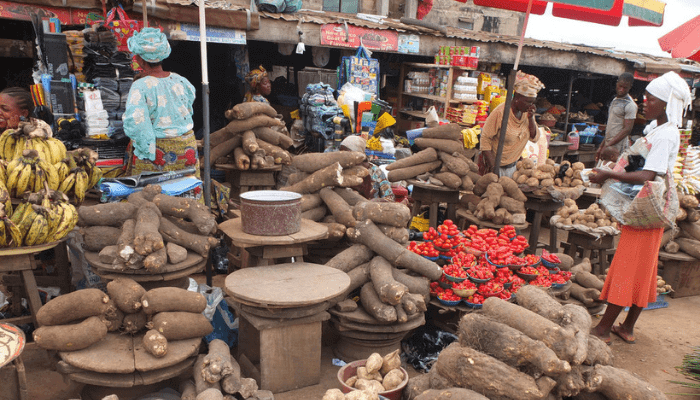
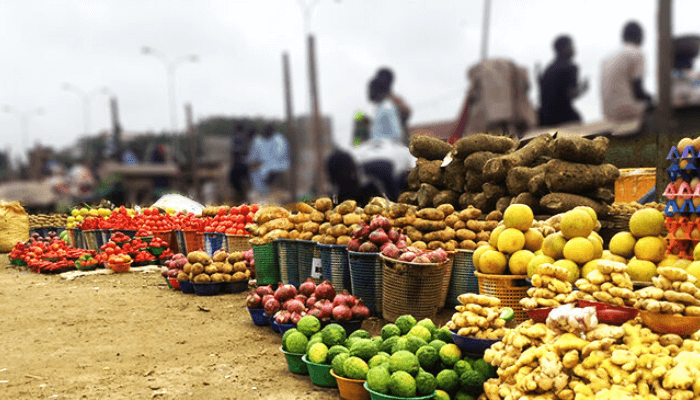
Nigeria has an estimated population of 190 million who must be fed with staple foods ranging from yams, rice, cassava to beans, bananas and tomatoes. But there is still much demand-supply gap in these staple foods, even as the population growth rate stands at 2.6 percent per annum.
The experts say that for Nigeria to attain higher levels of food sufficiency and reduce dependency on food imports, it has to adopt technology and innovation in its food production.
Josephine Okojie