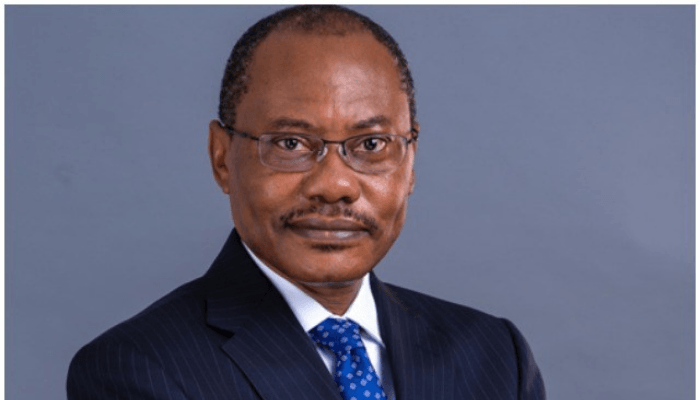
In order for Nigeria to take its rightful place in the comity of nations, the country would have to place priority on issues like expanding the tax net and ensuring transparency in government dealings, said Olakunle Alake, Group Managing Director, Dangote Industries Limited.
The country also needs to lay emphasis on placing a premium on infrastructure facilities as well as consistent review of its fiscal and monetary policies, amongst others, he said.
Alake noted this in his lead paper titled “Taxation and Economic Competitiveness: Imperatives For National Development”, presented at the ongoing 22nd Annual Tax Conference of the Chartered Institute of Taxation of Nigeria (CITN).
“Economic competitiveness is about ability to compete effectively in the global space. This would affect labour availability, provision of standard products and innovativeness. Economic competitiveness would help Nigeria to achieve economic prosperity.

Read Also: Airline operators accuse Ministry, NCAA of undue taxation
“However, this would involve deliberate government inputs as well as private sector participation.
“At the moment, Nigeria scores very low on the Global Competitiveness Index (GCI), no doubt as a result of issues like insecurity, corruption and infrastructure deficit”, he told participants at the annual tax conference holding in Lagos.
On why economic competitiveness matters, Alake said it is because it is a determinant of productivity, adding that rising competitive translates to rising prosperity. He also noted that competitive public policy would help the country to achieve economic growth; tax can either encourage or discourage imports; and fiscal policy can either increase or reduce disposable income.
While Nigeria has competitive advantage in its large market size and its labour market, lack of institutions, inadequate infrastructure and macroeconomic instability are still areas of concern.

On how to improve Nigeria’s global competitiveness, he noted the need for: regular review of the tax laws to align with current realities; accountability and transparency in government spending; and expanding the tax net to cover the informal sector.
The keynote speaker further said that improving infrastructure should be a priority – public/private partnerships should be considered. He also sees the need to consistently review the nation’s monetary policies and ease of credit to private non-financial sector and small and medium scale businesses.
To also improve Nigeria’s global competitiveness, Alake also sees the need to: balance between technology and human capital investments; reduce the number of taxes and focus on indirect taxes; improve talent adaptability and ability to contribute to the creative disruption process; and provide security for both lives and business to prevent security issues like terrorism and kidnappings.
“By the 2020 Doing Business Ranking, the World Bank confirmed that Nigeria has climbed 15 places on Ease of Doing Business Index from 146 to 131. The development shows a success in the reforms carried out by the government, and other countries that enjoyed similar elevations”, he said.
Speaking on the topic, Fatai Folarin, CEO, Deloitte & Touche, West and Central Africa said Nigeria must be competitive to have a nation. “In Nigeria we have the ministries and parastatals. The question is how solid are these institutions. We need to continue as Nigerians to focus on the areas the keynote speaker raised for the economy to remain competitive. The activities of the informal sector have not been fully brought into the economic space, this reflects on the GDP growth rate of the economy, he noted.