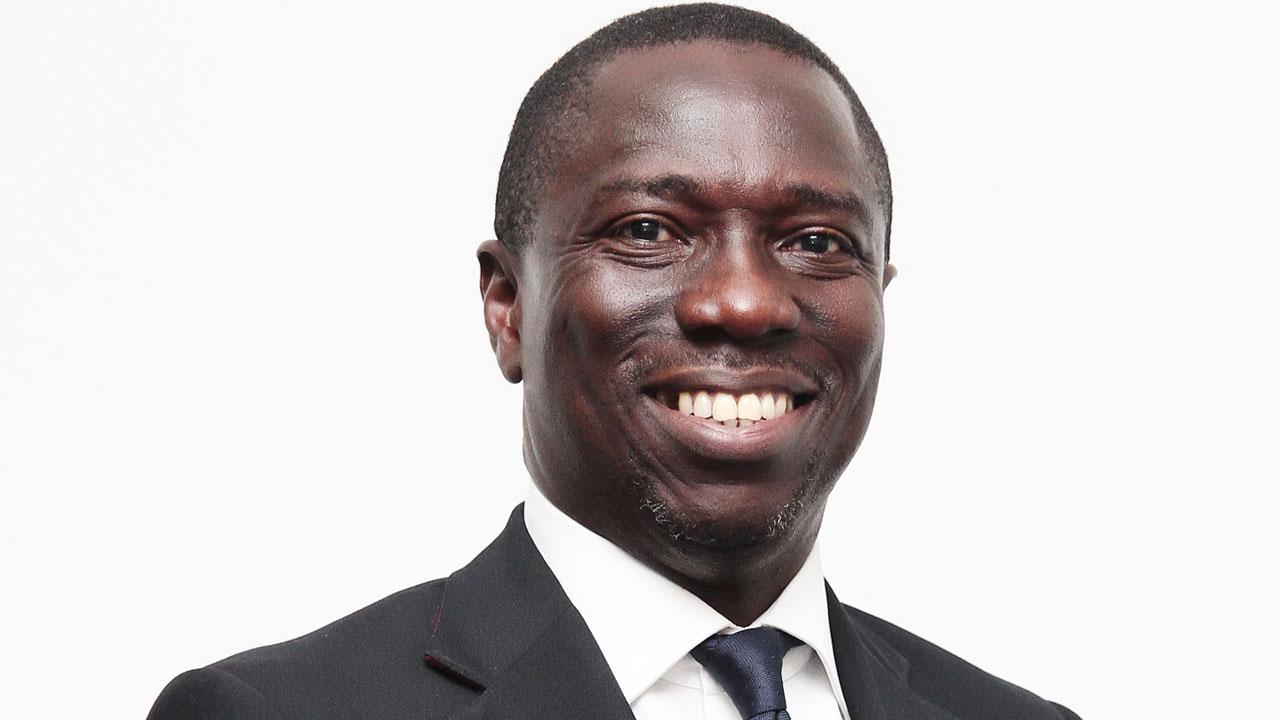
Asue Ighodalo, chairman, Nigerian Economic Summit Group (NESG), said Nigeria must address revenue mismatches and urgently address issues around growth and productivity.
At the 25th edition of the Nigerian Economic Summit, which commenced in Abuja on Monday, he said total revenue receipts for 2018 came in at about N3.5trillion, which was only 48.6 percent of the projected revenue figure for the year, while total debt service stood at about N2.2trillion, and had remained unchanged.
“If this imbalance persists, the availability of funds to drive infrastructure development and other social investment programs will remain challenged.
“As such, there is an urgent need to address not just our perennial revenue expenditure mismatches, but our overall productivity and growth as a nation.”

He said the world is now a place which now uses connected technology, green energy takes over from fossil fuels as a primary energy source, where robotics, artificial intelligence, Block chain, 3-D printing, and new-technologies transform the way we live and self driven cars become the new normal.
The summit holding under the theme ‘Nigeria 2050, Shifting Gears’, is converging amid concerns of slow and fragile growth, heightening insecurity and a projected population explosion, among other issues.
According to the NESG chairman, the kind of economy the country requires to earn a seat at the table with regional and global giants must therefore be both “deliberate and audacious.
In his welcome statement at the event, Ighodalo hinged his thoughts on the fact that Nigeria’s real GDP growth rates remain below expectations, even though it has improved marginally,
He noted Nigeria’s GDP growth rate of about 2 percent in the first half of the year and a decline in headline inflation from 15.1 % to 11 percent.

But the rate of inflationary decline has slowed considerably, largely as a result of food inflation which has remained at 13.2 percent.
“This has resulted in continued erosion of real income of most of our people,” Ighodalo stated at the event well attended by President Buhari, his ministers, governors, government dignitaries and private sector operators,” he said.
Read also: ‘2050 Nigeria’ threatened by current insecurity challenges
The United Nations projects that Nigeria’s population will double by 2050 to about 410million, and will then become the third most populous nation in the world, behind China and India.
“Basically our population is projected to grow by a little over 3 percent per annum,” he Ighodalo said, and “If these projections are true, and it does seem realistic, GDP must grow by at least that much year on year for us to just maintain our current GDP per capita, and this is without accounting for inflation.
“So clearly, we do not have the luxury of time to waist, at current GDP per capita, even at zero inflation on its own and more so, when we factor in wealth discrimination disparities, it’s not a metric, we can have standstill.”
Nigeria’s Inaugural Economic summit commenced in February 1993 out of deep concern to bring the private sector in for the country’s political-economic welfare and direction to enable it situate globally.
He said the NESG is convinced that only consistent economic growth underpinned by a competitive private sector-led productive economy can move the country towards growth progress.
“That is the world of today and that world that was described in 2005 and is nowhere.
Aside the global shift that which demands attention, Nigeria is also changing internally. “Despite rising poverty rates, our population growth continues at a trajectory that should be a cause for concern and calls for decisive policy measures.”
By 2050, majority of the country’s projected 410m people will be under the age of 35.
“We therefore need to confront our realities and craft a new National agenda that will reactively and urgently drive inclusive double-digit growth and development over the next three decades.
He said it sounds daunting, but it is not impossible, but warned that it is never done by accidents but through strategic plans.
“If we plan to just survive or maintain our current trajectory, we would have sacrificed the future of the one of the world’s largest inhabitants on the altar of inertia.
“But if we plan to thrive and excel in this new emerging world, we can work to restore glory to our country and lead this continent to a place of relevance in tomorrow’s economy.
He also cited Singapore, South Korea, and China all of which have undergone radical transformation and shown that is possible.
“Destinies can and do change, all it takes is a concerted effort, the urgency of now, and the will to change,” the NESG chair stressed.
He said the theme of this year’s summit ’ Nigeria 2050, Shifting Gears’ is deliberately set against this background, with the focus of setting a new agenda, tailored to Nigeria and defin8g the path we must collectively thread as we usher in the fourth industrial revolution.
“We must ramp up speed from where we are, and cannot go from one to five without a few shifts, but we must ramp up quickly and decisively, with the urgency of a driver who recognizes that he is already setting off late for an appointment.
“We must choose the fastest, not the most cynic routes and navigate it with great care, but also with great speed.
“We have a lot of work to do and we are committed to moving to do this work,” he further said.
He called for a new direction for a country that is devoid of finger pointing, name calling, or armchair qualifications— a path filled with empathy for our fellow citizens.
He emphasised the commitment from the private sector, that with an enabling environment, to ensure more capital is dedicated to economic initiatives and cutting edge technologies to speed our journey to becoming a 21st economy with a seat at the table among giants.
Let us not be deterred or lazy, he advocated.
He also pledged that the NESG, which convenes the annual event in partnership with government, holds a mandate to champion the development of Nigeria to a private sector led economy, that s globally competitive and sustainable.
Ighodalo told the summit that through the platform, there have been dialogues which led to a shift in the economy, from state control to free enterprise, even though an increasing participation of the private sector to improve lives is still desired.
Enumerating several feats through past Economic Summits, he recalled that at NES#1, the foreign exchange decree and indigenisation was promoted which opened the door to foreign direct investments flows into the country with huge impact on jobs and wealth creation.