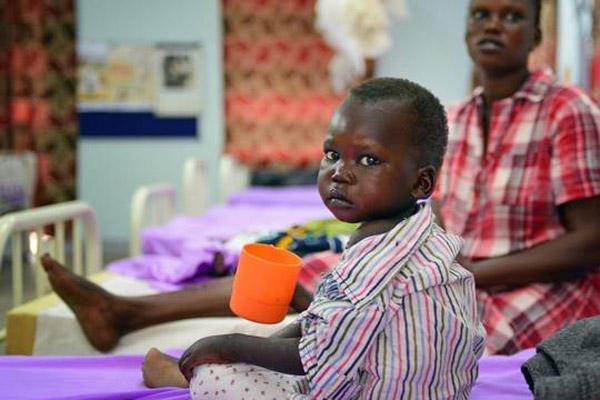
During the Great Depression, malnutrition was of the leading health issues. Victims of malnutrition are easily vulnerable to ill health. Child nutrition and malnutrition could be a major threat to the population of any society. Its symptoms include weight loss, tiredness, dizziness, brittle nails, constant diarrhea, slow wound healing, bone or joint pain and confusion. Children might become extremely thin, have stunted growth or have a swollen gut.
In Nigeria, the malnutrition situation, especially among children, is quite alarming. According to a UNICEF 2015 report, about 1.7 million severely underfed children are in ominous need of treatment in Nigeria. Experts have, indeed, revealed that malnutrition is a principal cause of death among children in the country. The problem with malnutrition in children is that it leads to diarrhea-related problems which make most children to lose immunity thereby making them vulnerable to any disease attack. Generally, when a child loses immunity, the possibility of losing such a child is high.
A recent study affirms that a great proportion of Nigerian children experience defective growth as a result of malnutrition. Similarly, a data from the Summary of Findings of National Nutrition and Health Survey conducted from 9th February to 5th May, 2014, showed that Nigeria has a stunting incidence of 32 percent among children that are under 5 years and about 21 percent underweight. Another report says that the proportion of children, who are wasted, or too thin for their height in the country, has progressively increased in recent years.
Experts have equally revealed that about 4 out of 5 Nigerian children fall below the WHO’s approval for exclusive breastfeeding during the first 6 months of life, while 70 percent of children ages 6 to 23 months are not receiving the minimum suitable diet. According to a UNICEF data, 1.1million Nigerian children are in danger of adverse malnutrition. Another report has revealed that chronic malnutrition is rampant among children in the northern part of the country. This, of course, has adverse effects on the learning ability of the children. Having been established that poor nutrition negatively affects the mental development and intellectual capacity of children, it should not be startling that we presently have poor educational culture in the country.
As previously stressed, malnutrition occurs as a result of too little food or a diet lacking in nutrients, but it could also be caused by a variety of other factors which could be physical, social or psychological. Other crucial causes of malnutrition could be a chronic illness, use of definite medications, difficulty swallowing or absorbing nutrients, a recent hospitalization, or a weakened sense of taste or smell.
Good nutrition is critical to the overall health and well-being of every human being. And unlike what many erroneously believe, it does not actually cost so much to imbibe a consistent balanced diet culture. What is really essential is for everyone to; first and foremost, appreciate the necessity for a balanced diet. Therefore, it is imperative for all and sundry to have a modest knowledge of why we eat what we eat, knowing the health benefits that various foods possess, how they affect our bodies, and how our bodies react when these types of foods become insufficient.
Malnourishment is not about the quantity of food a person eats, but actually about the nutritional quality of what he eats. A person can eat relentlessly, be obese, and still be malnourished, because the idea of proper nourishment is really about giving the body what it requires to function appropriately. Consequently, a malnourished person might need to steadily boost calories intake through numerous little meals at regular intervals during the day.
All tiers of governments, through relevant MDAs, must continue to collaborate with all major stakeholders in order to effectively deal with the problem of malnutrition. This could involve strategic use of communication for development as a vehicle to drive public enlightenment campaigns and achieve expected behavioural change. Equally, the Health and Information organs of all states and local governments in the country need to come up with the required enlightenment strategies that could speedily stem the tide of malnourishment in the country.
Recent partnership between UNICEF and the Federal Government which gave birth to a community based management of acute malnourishment (CMAM) for severely malnourished children in 11 northern states is a step in the right direction. However, necessary funding that is needed to properly drive the initiative should be adequately provided. This is particularly necessary in view of the not too exciting reports that that 2 out of every three children in the 11 northern states presently getting CMAM are yet to receive the treatment because of lack of fund.
Corporate bodies and other well meaning individuals could also come up with similar initiatives. The Bill gate polio initiative is a pointer to the fact that nothing should be spared in upholding the sanctity of life. This is the only investment that endures forever
Tayo Ogunbiyi
.
Ogunbiyi is of the Lagos State Ministry of Information and Strategy, Alausa, Ikeja.