



|
Getting your Trinity Audio player ready...
|
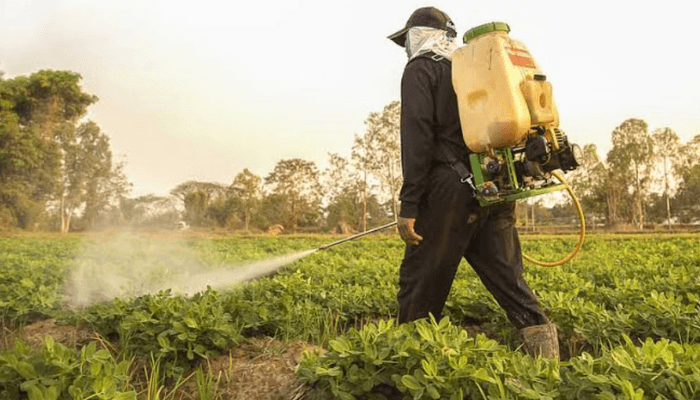
Nigeria is facing a growing crisis due to the widespread use of Highly Hazardous Pesticides (HHPs) in agriculture, with over 65% of active ingredients in pesticides used in the Country classified as highly hazardous, experts have said.
Simon Irtwange, Co-Founder of Alliance for Action Against Pesticides (AAPN), while briefing Newsmen in Abuja on Thursday, said “Nigeria’s current pesticide landscape is one where well-meaning support frequently turns dangerous—because dangerous inputs are normalised, lightly regulated, and distributed without consequence.”
He said the use of HHPs had resulted in significant financial losses, with Nigeria losing about $362.5 million yearly due to the ban on its beans exports to the EU because of high pesticide residues. Moreover, the Country’s agricultural exports are routinely rejected by the EU on safety grounds, including pesticides banned internationally but still legal in Nigeria.
He added that the health risks associated with HHPs are alarming, with up to 75% of surveyed women farmers attributing health challenges to pesticide use. Frequent health issues include respiratory problems, skin rashes, nausea, vomiting, and eye irritation, among others.

Also speaking, Oreoluwa Adelakun, Legal Lead AAPN, emphasised the need for accountability, stating that “legislators and philanthropists must move from unchecked benevolence to responsible, transparent, and answerable support.”
The stakeholders are calling for immediate action to regulate and reduce the use of HHPs, promote safer alternatives, and ensure accountability among distributors and regulators. They urge the Government to strengthen laws and enforcement, provide public awareness campaigns and ensure that farmers have access to non-toxic, affordable alternatives to chemical pesticides.
The call to action includes promoting and scaling up safer and affordable alternatives, stronger regulation, mandatory training and distribution oversight, public awareness, and rigorous enforcement and market monitoring.
The goal, according to the Group, is to prioritise safety, health, transparency and accountability in agricultural policies and support programmes.





