Nigeria employers say reputation-based global higher education ranking might not be fool proof but helps to spot trends in graduates’ ability to deliver but some global scholars have raised concerns about tendency to give undue weight to such criterion.
Higher education ranking organisation such as United Kingdom based duo of Times Higher Education (THE), QS World University and Shanghai based Academic Ranking of World Universities (ARWU) derive at least 40 percent of their results from the reputation of higher institutions among scholars and employers.
“Indeed, rankings are largely about reputation. According to QS, reputation is a calculation with 40 percent derived from the responses of academics and 20 percent from employers. An institution improves its position in the rankings if it scores big in these two indices based on perception. The THE reputation index is entirely based on a perception survey which requests subjects “to name no more than 15 universities that they believe are the best” wrote Damtew Teferra, professor of higher education, leader of Higher Education and Training Development, and founding director of the International Network for Higher Education in Africa, University of KwaZulu-Natal.
University rankings are one of the ways that universities can show their concern for delivering good research and teaching. However, they are not the only way universities can respond to the need to act responsibly.

“Education is global and if the ranking is based on surveying global scholars and we do not have many African scholars who can be surveyed, then we have a lot of work to do. It might be all around reputation but universities build their reputation overtime. For instance Stellenbosch University in South Africa has improved in its ranking over the past one year because they started doing a few things right” said Gossy Ukanwoke, founder of Nigeria-based Beni American University.
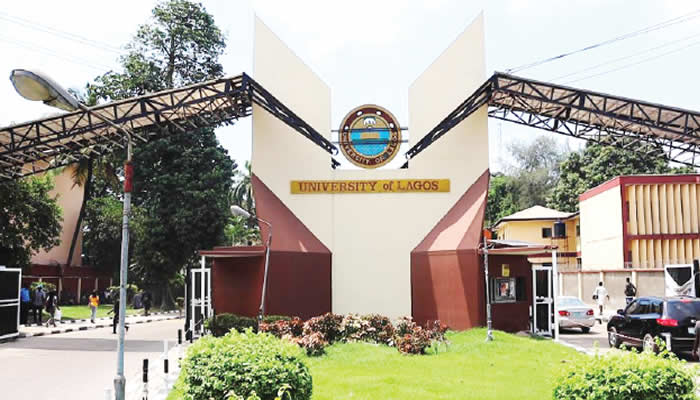
“Nigerian lecturers do not publish in five or four star peer reviewed journals in their respective disciplines. We still have lecturers who submit students’ research work for publication. This is not how to build reputation. If you ask an employer today in Nigeria whether they would rather higher a Harvard or University of Lagos graduate, they would go for the former. This is not just because of the name or reputation. It is also about delivery. I take those rankings serious. We need to find out what to do to get into those rankings” Ukanwoke added.
According a survey conducted by Philips Consulting, Lagos-based consulting firm in 2014, 62 percent of employers do not think tertiary institutions in Nigeria are doing a good job of producing successful graduate employees. These employers stated inadequate workplace skills, bad attitude to work, fake degrees, high cost of required training, volume of applicants, age limit and high salary expectations as the main challenges faced in recruiting graduates.
The views of employers surveyed in the course of BusinessDay’s investigation was captured succinctly by David Isiavwe, General Manager of Union Bank Plc. Isievwe said it is a combination of different things, reputation is one but also the capacity of the product of different institutions to demonstrate learning by applying what they have learnt in a work environment.
“You might have someone who graduates from a given university but is not able to effectively use the knowledge and skills acquired in school. If it is just one or three persons, it could be negligible but when you have products of particular institutions basically unable to apply the knowledge they have gained then it becomes a trend. This builds reputation” Isievwe said.

“Among employers, graduates of the University of Benin graduates were reputed to do very well in Information Communication Technology. Take the University of Ife, its engineering graduates have a reputation to do well, this is not one-off but a trend employers noticed over time. You find some students from specific universities do very well in particular areas at the work place. This dovetails into reputation. If take a Harvard university graduate for instance, the people that come from Harvard have a reputation of doing well in business and leadership related roles because of the depth and quality of study.”
Given a methodology that is reputation based some higher education experts contend that the final score from these survey responses lack rigor and skewed against African universities because according THE only 2 percent of the survey participations are Africans presumably located on the continent.
Something else that is considered is the mix of international students and lecturers in the various higher institutions. “If go to Harvard University for instance you have professors from China, Japan, England and some African countries. Come to Nigeria, how many foreign lectures do you see, let alone foreign students. It is a point based ranking system and all this contributes to the final score” Ukanwoke said.
BusinessDay survey shows only one or two Nigerian universities can boast of students from five countries. This means an average Nigerian goes through their entire university education in Nigeria without meeting a student from another country. The point of having international students in the class is that you learn and understand other people’s culture. And all of these things add up.
STEPHEN ONYEKWELU