In January 2025, the United States President Donald Trump announced the termination of USAID, a freeze on the PEPFAR programme, and America’s withdrawal from the World Health Organisation. The shockwaves rippled across the global health community. For Nigeria, which had for decades leaned heavily on donor largesse to keep malaria interventions, HIV treatment, polio vaccinations, and laboratory surveillance afloat, it was a wake-up call.
Since 2021, the US alone has poured nearly $20 billion into Africa’s health programmes. In 2023, Nigeria received more than $600 million in health assistance, about 21 percent of its total health budget for that year. But for a nation of over 200 million people and the continent’s largest economy, the dependency raised an uncomfortable question: how much longer could Nigeria outsource responsibility for its people’s health?
It was against this backdrop that the Federal Ministry of Health and Social Welfare convened a four-day high-level National Policy Dialogue in Abuja, themed “Reimagining the Future of Health Financing in Nigeria”.
Policymakers, legislators, development partners, civil society, and private sector leaders gathered at the Congress Hall of the Transcorp Hilton from 1 to 4 September 2025 to confront the question of how Nigeria could finally chart a path toward health self-reliance.

Across the sessions, presentations and panel discussions drilled into practical issues, from financing primary healthcare and strengthening state-level mobilisation to lessons on demand-side insurance and the future of external development assistance.
Figures such as the Minister of Finance and Coordinating Minister of the Economy, Wale Edun; Dr Murtala Umar-Sadiq of NSWP; Dr Kelechi Ohiri of NHIA; Dr Matthew Jowett of WHO; Dr Moussa Djeng of the World Bank; and representatives from GAVI, the Global Fund, and the US Government featured prominently, alongside Nigerian lawmakers like Hon. Akin Oyebode and Senator Ipalibo Banigo.
“With a figure of Pate’s international stature at the helm and a formidable team of reform-minded agency heads, exemplified by the NHIA’s DG, Dr Kelechi Ohiri, Nigeria stands on the brink of a true revolution in health service delivery.”
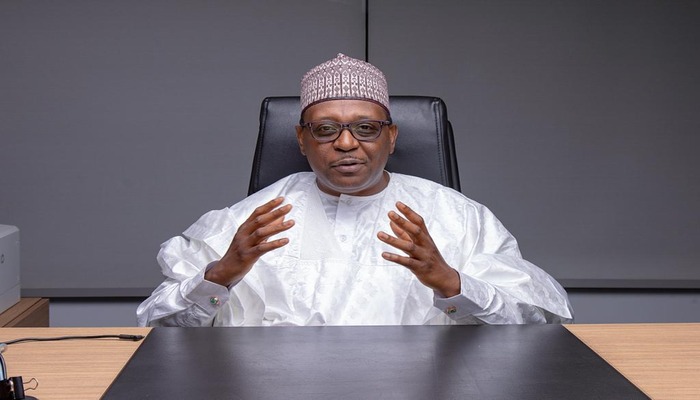
“Health must no longer be treated as charity. It is about human infrastructure and national security. A sick nation cannot prosper,” declared the Coordinating Minister of Health and Social Welfare, Professor Muhammad Ali Pate, in his keynote address.
He pointed to lessons abroad. “China, a few years ago, made a deliberate decision to prioritise health financing. They invested US$25 billion, shifted the burden from households to the public purse, and advanced rapidly towards universal health coverage. In Nigeria, with revenues now climbing to over 11 per cent of GDP for the first time in many years, we must seize this moment. Our goal is to cover at least 44 million Nigerians with health insurance by 2030, the largest pool in Africa.”

Pate also spoke highly of the progress already made at home. He paused, turned to acknowledge the Director-General of the National Health Insurance Authority (NHIA), and bowed to show him respect while the hall broke into thunderous applause.
“The expansion of the Basic Health Care Provision Fund and the billions of naira that have been disbursed, and the thousands of primary healthcare centres – we are now seeing the BHCF 2.0, which will add 4,000 facilities that will benefit from the direct facility financing over the next several months, expanding the footprints of our primary healthcare system, working with states and local governments to ensure that Nigerians access the basic care that they need.
“In expanding insurance, we have reached a critical milestone with more than 20 million Nigerians for the first time being covered by health insurance. Thanks to the Director-General of the NHIA and his team for the incredible work that they’ve been doing. This is amazing because we’ve been on the insurance journey for decades, and within a very short time, we’ve seen an uptick in enrollment.”
Yet challenges remain. Nigeria’s 2025 budget of ₦49.74 trillion earmarks ₦2.4 trillion for health, just 4.8 percent, lower than the 15 percent Abuja Declaration target African leaders once pledged. Worse still, three-quarters of the allocation goes to salaries and other recurrent spending, leaving little for infrastructure or medicines. Out-of-pocket payments still swallow the bulk of health expenses for ordinary Nigerians.
Pate argued reforms were creating fiscal space but called for states and local governments to rise to the occasion.
“The reforms have been painful, but now revenues are rising. We urge state and local governments to prioritise health in their budgets and release all allocations. Primary healthcare is their core responsibility, but the federal government will continue to provide pooled funds and support through the NPHCDA,” he said. The economic side of the story was picked up by Coordinating Minister of the Economy and Minister of Finance Wale Edun, who linked reforms directly to health financing. He credited the Tinubu administration’s removal of fuel subsidies, fiscal consolidation, and tax reforms with stabilising the economy and creating room for investment in people.
“These reforms are not abstract,” Edun said. “They create the fiscal space to invest in health, education, and social protection. Prepaid and preplanned healthcare eases the burden on households compared to out-of-pocket payments at the point of care. The more hospitals, diagnostic centres, and oncology facilities we build here, the less Nigerians will spend abroad. We can even attract foreign patients, turning Nigeria into a regional hub for specialised care.”
Senator Ipalibo Banigo, Chair of the Senate Committee on Health, pledged the National Assembly’s commitment to sustaining financing through stronger laws and oversight. She pointed to a milestone: the allocation of funds to the Vulnerable Group Fund, which has already provided free treatment and renewed insurance for more than 6,000 Nigerians.
International partners, too, weighed in with both encouragement and caution. “Reforms must not remain another declaration,” warned Dr Mohamed Janabi, WHO Regional Director for Africa. He invoked Achebe’s famous lament about leadership, adding, “Today in this room, we are witnessing the opposite. I only wish Achebe were here to see leadership rise to meet the challenge.”
Others pressed for accountability. WHO economist Francis Ukwuije called for stronger community scorecards, while civil society leaders urged greater grassroots participation in health financing.
In his closing remarks, Pate emphasised that “Health is national security. If we treat it with that sense of urgency, the assets we build will not just be hospitals and clinics but economic assets. This is our opportunity to reimagine the future and make health financing sustainable, equitable, and Nigerian-owned.”
And perhaps that future has never felt closer. With a figure of Pate’s international stature at the helm and a formidable team of reform-minded agency heads, exemplified by the NHIA’s DG, Dr Kelechi Ohiri, Nigeria stands on the brink of a true revolution in health service delivery.
For the first time, the country appears ready to turn from reliance on donors to reliance on itself. It is a long road, but if the applause that echoed through Congress Hall is any guide, it is a journey Nigerians are eager to walk.