There are few topics in economics more important than productivity. For if the purpose of economic management is to generate prosperity and improve the welfare of citizens, then productivity growth is the answer. While the size of the economy, the GDP, is important, it is how well-off people are, measured by GDP per head, that really matters. But how well-off people are depends on how productive the economy is.
Paul Krugman, the renowned economics Nobel Laureate, puts it this way: “Productivity isn’t everything, but, in the long run, it is almost everything. A country’s ability to improve its standard of living over time depends almost entirely on its ability to raise its output per worker.” So, productivity matters!
But what is productivity? Well, economists talk about labour productivity and Total Factor Productivity (TFP). Labour productivity is the “output per hour worked”, that is, the value of the output generated by a single worker per hour. In contrast, TFP measures how efficiently all inputs – land, labour and capital – are used in producing goods and services.
Whichever way one measures productivity, our main interest is how it promotes economic prosperity and general welfare. So, how does productivity improve living standards? The simple answer is that because higher productivity means more efficient way of producing goods and services, that efficiency gains translate into better salaries for workers and lower prices of goods and services, both of which increase household incomes – thereby raising living standards.

For any sector, if productivity is rising, one should expect rising wages and falling prices of goods and services. For instance, growing productivity in the agricultural sector should lead to higher income for farmers and lower food prices; equally, higher productivity in the industrial sector should mean industrial workers are paid well and the prices of industrial products are falling. All of these lead to higher living standards as workers and consumers see their incomes rising, and firms grow and make more profits.
The government simply fails to distinguish between production and productivity. It often talks of increasing local production, i.e., producing more of a product, such as rice, but what about increasing productivity, what about producing it more efficiently, with fewer people but better methods
Of course, the facts that firms are productive does not mean the economy is productive. But if the whole economy is productive, the average of all prices will fall, not just those for one sector. Higher productivity in the whole economy generates wider prosperity and improves general welfare.
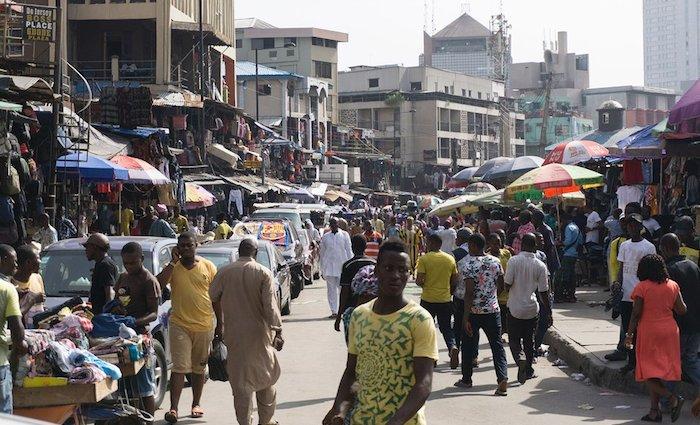
But this is not the story in Nigeria, where productivity is abysmally low at both firm and whole-economy levels. Thus, most of those who are lucky enough to be employed are stuck in low-productivity, low-paid jobs, and the prices of goods are beyond the reach of ordinary Nigerians. Furthermore, because the economy as a whole is not productive, there is deterioration of living standards and deepening of poverty across the country. Indeed, Nigeria earned the epithet: poverty capital of the world!
In its 2019 “Nigeria Economic Update”, the World Bank laid bare the nature and extent of the productivity crisis in Nigeria. In the report, the bank says, “Nigeria’s growth and jobs challenges stem from its low levels of productivity.” Nigeria’s economic productivity, the report says, is “low by international standards”, and “deteriorated dramatically” after the recession of 2016. In fact, in September 2016, Nigeria’s labour productivity reached a record low of -3.82%; since then, it has not grown much beyond the 1.14% it reached in September 2018, while labour productivity is 5.85% in Egypt, 4.74% in South Africa and 4.15% in Ghana. Indeed, one data put the average productivity of a Nigerian worker at $3.24/hr, compared with $19.68/hr in South Africa.
Of course, it is somewhat misleading to talk about measuring labour productivity in Nigeria when nearly 60% of the labour force are in the informal sector, and an estimated 75% of all new jobs are informal, according to the World Bank. It went further to say that “many low-income households depend on subsistence agriculture or low-productivity self-employment in services and industry, a significant share of the population moves in and out of poverty.”

Think of it: how does one describe an economy in which just 10% of the working-age population is employed in formal labour, over half of who are employed in the public sector? The World Bank said: “Nigeria has the largest installed manufacturing base in West Africa, yet wage employment in industry is rare.”In other words, the private sector is not strong enough to support growth, productivity gains and job creation.
The World Bank concludes, rightly: “Without robust productivity growth, poverty in Nigeria will continue to rise, and living standards will continue to deteriorate”, adding: “If labour productivity remains on its current path, workers will not be able to earn enough to reduce the number of Nigerians living below the poverty line”, which is currently over 90m, nearly half the population. And unless productivity is increased, additional 39m people could fall into extreme poverty within ten years, the World Bank said.
Well, President Muhammadu Buhari has repeatedly stated that his administration would lay the foundation for taking 100 million Nigerians out of poverty over the next decade. To achieve that, Nigeria would need an annual growth rate of about 7%, but, even so, unless Nigeria’s acute productivity problem is successfully tackled, the 100 million Nigerians would be stuck in low-productivity, low-paid jobs, and, therefore, would remain poor.
Think of what we know today. The government says it has created millions of jobs in the agricultural sector. But, apart from the politically connected rent-seekers, who are massively enriching themselves through the government agricultural subsidies, virtually all the ordinary farmers are barely able to eke out a living, while food prices are rising rather than falling. The government simply fails to distinguish between production and productivity. It often talks of increasing local production, i.e., producing more of a product, such as rice, but what about increasing productivity, what about producing it more efficiently, with fewer people but better methods, new technologies etc, so that food prices can fall?
But why is productivity so low in Nigeria? Well, the answer is simple. The stocks of human and physical capital are extremely low; Nigerian industries and the whole economy are not exposed to the competitive pressures; and there is little genuine attempt to boost private-sector dynamism, reduce investment risk and, generally, create an enabling environment that is conducive for productivity growth. So, put simply, Nigeria lacks the policies and institutions than can incentivise productivity growth.
Take the human capital first. In his book, ‘Capital in the 21st Century’, the French economist, Thomas Piketty, said, “Knowledge and skill diffusion is the key to overall productivity growth.” Basically, the more educated, knowledgeable and skilful workers are, the more productive they will be. But what is the situation in Nigeria? According to the World Bank, most of Nigeria’s labour force are low-skilled. About 50% of workers have only a primary education or less, and 30% never attended school. How can such an economy be productive?
Then, there are the well-known supply-side constraints: non-existence of basic infrastructure, such as road and electricity; lack of access to finance, including foreign exchange; lack of policy transparency and predictability, and excessive government intervention and regulatory discretion. All of these are barriers to productivity growth.
Above all, productivity is low in Nigeria because, both at firm and wider-economy levels, there is an utter lack of competitiveness and allocative efficiencies. By protecting the economy and industries from international competition, the Buhari government removes a key driver of innovation and productivity. As Piketty argues in his book, “autarky has never promoted prosperity.” Openness to foreign competition and influences helped the Asian countries to catch up with the West. But Nigeria hates economic openness.
Yet, Nigeria won’t leap forward in productivity unless it adopts best practices in human and physical capital development, governance and economic openness. Nigeria needs the right policies and institutions to spur productivity growth.