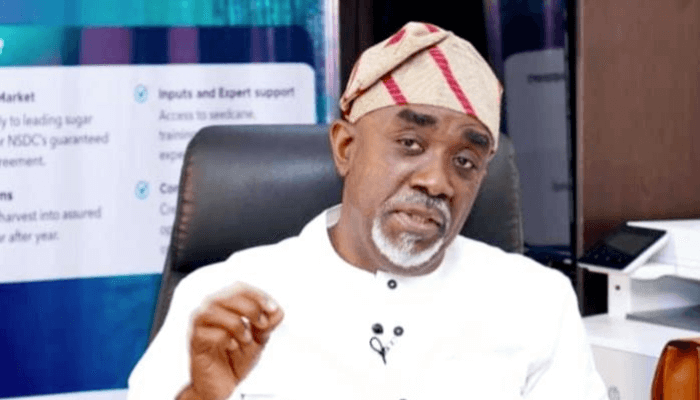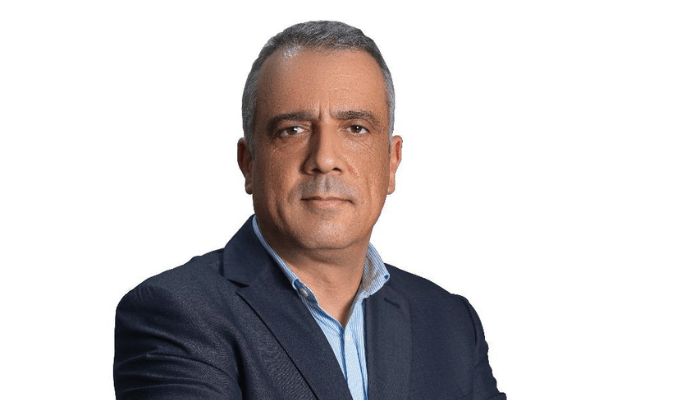
HAITHEM DEBBICHE is the managing director of Tetra Pak West Africa who, in the last 21 years, has built his career in the company, contributing to operations across Tunisia, Algeria, and other North African markets. He has played high level roles including shaping decisions and being at the forefront of strategy in collaboration with global headquarters in Lausanne, Switzerland, and our manufacturing and innovation hub in Italy. In this interview with CHUKA UROKO, Debbiche speaks on the opportunities in the Nigerian market, the company’s services and their impact on the people and the economy. Excerpts:
As a food processing and packaging solutions provider with operations across West Africa and headquarters in Lagos, Nigeria, what has been your impression of Nigerian market 12 months after?
Since assuming the role of managing director for Tetra Pak West Africa in May 2024, I’ve been struck by Nigeria’s immense potential. Believe it or not, when I came in May, it was my first time in Nigeria, though I had earlier visited some East and South African countries.
Nigeria as Africa’s largest economy offers a dynamic market brimming with opportunities, albeit accompanied by unique challenges. Nigeria’s market is dynamic with a lot of room for impactful initiatives that drive the economy. From the growing online e-commerce expansion to technological advancement and an ever-growing fast moving consumer goods (FMCG) sector to Nigeria’s urbanization and population, Nigeria is the land of opportunity.

The challenges inspire innovation—pushing us to develop tailored solutions for our customers and communities. Nigeria’s scale and diversity align with Tetra Pak’s strategic focus on driving sustainable growth in high-potential regions. The challenges and opportunities presented by Nigeria’s market drive us to make strategic and sustainable innovations on office solutions that are tailor-made for the consumers and for meeting local needs.
Recently you relocated your office. What prompted that action and what does it mean for your growth strategy and goals?
The relocation is part of Tetra Pak’s global ‘Activity-Based Working’ strategy, designed to enhance operational agility and customer responsiveness. With our former Lagos office lease concluding, we seized the opportunity to adopt a workspace aligned with our future work experience principles. Our future work experience is an initiative developed to empower all our employees to achieve their optimal work-life experience, while meeting the needs of the company’s customers and the planet. It was driven by a comprehensive analysis of post-pandemic workplace dynamics, which highlighted critical themes for modernizing work environments.
Key insights included adapting to flexible hybrid models, redefining offices as hubs for cultural connection and collaborative innovation, and prioritizing sustainability through eco-conscious design. Additionally, the research emphasized integrating wellness initiatives, advanced digital ecosystems, and talent-centric spaces to attract and retain skilled teams in a competitive landscape. These themes collectively underscored the need for workplaces that balance employee well-being, operational agility, and environmental responsibility.
In specific terms, what is the redesigned office building aimed to achieve and does that align with the company’s vision?

By aligning global trends with Tetra Pak’s mission, the initiative crystallised into four strategic focus areas: fostering collaborative innovation, embedding sustainability into daily operations, enhancing employee well-being through holistic design, and leveraging technology to create seamless, future-ready workspaces.
This approach ensures Tetra Pak’s offices not only reflect evolving workforce expectations but also advance the company’s commitment to protecting people, the planet, and long-term business resilience.
The redesigned office optimizes spatial efficiency, fosters cross-functional collaboration, and integrates advanced connectivity tools. These upgrades empower our teams to deliver faster, more innovative solutions which are key to accelerating growth in West Africa.
We were honoured to have a member from the Tetra Pak global team inaugurate the new office. The executive vice president, services, Roberto Franchitti, led the staff at a ceremonial ribbon-cutting to open the office which was followed by a brief tour of the facility.
Besides aligning with global trends and crystalising your strategic focus, how does this relocation benefit your clients and partners?
A modern, efficient workspace directly translates to better service for our clients. By equipping teams with cutting-edge tools and collaborative environments, we’ve streamlined communication and problem-solving. Recently, we hosted a strategic half-day session with one of our customers in our new facility. The seamless connectivity and professional ambience enabled productive dialogue, underscoring how intentional design supports partnership success.
Unarguably, collaboration and innovation are key to enhanced productivity. But how does the redesigned office foster those themes?
Transitioning from traditional cubicles to an open-plan layout has dismantled silos, encouraging spontaneous interaction and knowledge-sharing. Proximity between departments—from Research and Development to commercial teams—sparks creativity and accelerates decision-making. This approach mirrors global best practices, fostering a culture where collaboration isn’t just encouraged, but also embedded in our daily operations.
Sustainability is, increasingly, becoming the new normal in modern office development. How compliant is the new office to your sustainability commitment?
Sustainability is central to our brand promise. The Lagos office incorporates energy-saving motion sensors, recycled furniture, and paperless workflows, reducing our environmental footprint by 30 percent compared to the previous space. Additionally, our advanced teleconferencing systems minimize travel, aligning with global carbon-reduction targets. These measures are part of Tetra Pak’s broader ambition to achieve net-zero emissions across operations by 2030.
This new office must have been equipped with eco-friendly features. Tell us about those features.
The office reduces the need to travel through virtual collaboration tools, utilizes 85 percent recycled materials in furnishings, some of the furniture and equipment are made from Eco- boards made from recycled UBC. We have also deployed smart energy systems. Space optimization ensures minimal resource waste, reflecting Tetra Pak’s global ‘Green Office’ standards. Collectively, these steps underscore our commitment to planetary stewardship while enhancing operational efficiency.
As campaign for sustainability continues to grow in Nigeria as a sure step towards reducing carbon footprint, what initiatives have you planned for Nigeria?
We’re building a circular economy for used beverage cartons (UBC) by partnering with local recyclers and waste collectors. To amplify awareness, we’re hosting dual stakeholder workshops in Lagos and Abuja this month, convening government agencies, NGOs, and global recycling experts.
These forums aim to replicate successful models from Brazil and Southeast Asia, adapting them to Nigeria’s context while supporting national waste-reduction efforts. We are trying to replicate this in Nigeria, specifically in Lagos where there is a concerted effort by the state government to reduce waste and keep the city clean.
Last year we partnered with Wecyclers Nigeria Limited- which focused on promoting environmental sustainability activities aimed at addressing the challenge of urban waste by providing low-income households with opportunities to generate value from recyclable waste.
The model includes a rewards-for-recycling platform, where subscribers earn points which they exchange for essentials like food. The partnership aimed at educating consumers that UBC are recyclable and can be given a new lease of life to create new items from Eco-boards like chairs and tables.
You, as a company and as an individual, must have your priorities post-relocation of your office. What are these priorities?
My focus is threefold and they include, strengthening customer partnerships, scaling sustainability initiatives, and empowering our teams through continuous learning. With the new office as a catalyst, we aim for double-digit growth by 2026. Tetra Pak’s success in West Africa hinges on enabling local food producers to meet rising demand safely and sustainably—a vision we’re advancing through innovation and engagement.
Curiously, Tetra Pak isn’t a household name in Nigeria despite its market presence. Why?
As a B2B leader, our packages are often “invisible heroes.” Consumers recognize brands like Chivita, or Peak, while Tetra Pak’s role in safely delivering their products remains behind the scenes. To elevate our visibility, we’re working together with our customers on co-branded sustainability messaging, educating consumers about recyclable cartons. Initiatives like “Green Steps,” to be launched later this year, will further highlight our environmental contributions.
For the interest of the man out there who is outside your circle of friends and clients, tell us, first, your mission and then a little bit of yourself?
Tetra Pak’s mission, ‘Protect what’s good,’ guides every decision, from workspace design to partnerships. In West Africa, we’re not just building a business; we’re fostering a sustainable ecosystem where industry growth and planetary health go hand-in-hand. We aim to make food safe and available everywhere.
As for myself, I am Haithem Debbiche, a Tunisian national with deep roots in North Africa. Over the past 21 years, I’ve built my career at Tetra Pak, contributing to operations across Tunisia, Algeria, and other North African markets. While I am geographically distant from Tunisia, Nigeria’s vibrant culture and entrepreneurial spirit resonate closely with my African heritage, making Lagos my second home.