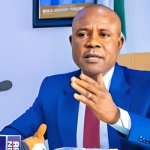
One of Nigeria’s policy groups, the Independent Media and Policy Initiative (IMPI), has said the new economic model deployed by the Bola Tinubu administration is expected to drive the country’s gross domestic product higher in 2026 and beyond.
In a policy statement signed by Omoniyi Akinsiju, chairman of IMPI, the group projected that Nigeria’s economy would grow by 5.5 percent in 2026, above the forecasts by the World Bank and the International Monetary Fund (IMF).
According to IMPI, “We made it clear in that statement that the Nigerian economy under the current administration has engendered a paradigm shift from perennial dependency on crude oil earnings to policy-driven economic facilitation.
“This refers to the deliberate use of governmental policies, regulations and institutional frameworks to reduce obstacles, lower costs and speed up economic activities, particularly in trade and investment.

Read also: Building a digital-first economy: The pathway to Nigeria’s $1 trillion GDP goal
“The facilitation, in this context, aims to foster sustainable and inclusive growth by improving efficiency and reducing red tape.
“Seven months after that questionable projection by the International Monetary Fund, we have seen a volte-face. In an epiphany-like realisation, the IMF now speaks of a resurgent Nigerian economy, as reflected in the global multilateral institution’s revised outlook of a projected 4.4 percent economic growth for Nigeria in 2026.
“This is the highest GDP growth projection by the IMF over the last 17 years and a real expression of confidence in the Nigerian economy.”
The think tank also referenced what it described as a growing consensus on Nigeria’s growth prospects, attributing it to the economic model adopted by the Bola Tinubu administration.

“Beyond the IMF’s new GDP projection, we have observed a consensus around a higher-than-4 percent economic growth performance expectation of the Nigerian economy by virtually all known individual and public economic commentators.
“While the Nigerian government projected a 4.68 percent growth rate for 2026, the Lagos Chamber of Commerce and Industry projected a massive 7 percent, which is 1.5 percent higher than the Nigeria Economic Summit Group’s 5.5 percent forecast for the same year.
“PwC maintained a more conservative outlook, projecting 4.3 percent growth, conditional on higher oil prices, while the World Bank also revised its earlier 3.7 percent projection to 4.4 percent.
“The agglomeration of these positive economic growth outlooks by domestic and global institutional players points to an emerging economic paradigm that emphasises increased production and productivity momentum, foreign exchange stability, dis-inflation, galvanised foreign direct investment inflows, and an unobtrusive regulatory environment, anchored on policy-driven economic facilitation,” IMPI added.