|
Getting your Trinity Audio player ready...
|
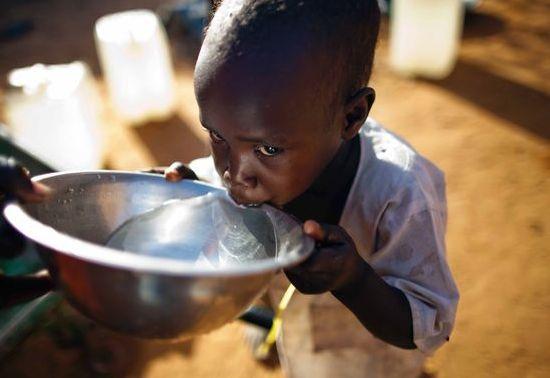
Several statistics show that about 70 percent of Nigerians or about 120 million of the 170 million population live below poverty line. Poverty line refers to those who live on less than $1 a day. This category of people cannot come to terms with their conditions in a rich country like Nigeria with abundant resources.
To an average Nigerian born 50 years ago, nothing has changed positively. Instead, social life is getting worse in a country that is blessed with abundant human and mineral resources. Standard of living has dropped and various sectors, including health, education, electricity, roads and other infrastructure are operating at awful levels.
Unemployment rate is as high as over 13.3 percent; electricity supply is epileptic; roads are appalling; forex exchanging at N420 to a dollar; nation’s external reserves falling; Foreign Direct Investment (FDI) inflow into Nigeria plunging, and nominal GDP growth in the manufacturing sector at negative year-on-year.
Indeed, it is alarming that such high percentage of Nigerians out of 170 million population live in poverty. In fact, Nigeria is a country that has no real reason to account for its high percentage of poverty rate.

Government after government; policy after policy, an average Nigerian does not feel any development impact. Since 1999, the democracy has meant nothing to an average citizen. The impact they could point out thus far was the Global System for Mobile communication (GSM), with which they could make calls.
The EU Ambassador to Nigeria and ECOWAS, Michel Arrion, last year, reminded President Muhammadu Buhari that democracy meant nothing to the common man except it led to the improvement in their standard of living. “Democracy only makes meaning to the common man to the extent that it delivers good governance, creates opportunities and improves the quality of living,” he said, regretting, “Nigeria is rich, but Nigerians are poor.
Poverty in the midst of plenty
In his published report recently, David Auge-Ani said most worrisome is the fact that while the states are experiencing financial downturn resulting in the backlog of salaries of workers, mineral resources worth billions of dollars are currently left untouched in soils across the 36 states of the federation including the Federal Capital Territory (FCT).
“Recently, the Nigeria Labour Congress (NLC) noted that some state governments currently owing workers have many untapped natural resources deposits in their areas, still, their people are poor,” he recalled.

For instance, Sokoto, Katsina, Adamawa, Gombe and Jigawa are rated as the poorest states in Nigeria but these five states have in abundance resources of gold, gypsum, salt, limestone, kaolin, marble and many more deposits in the bellies of their states.
Countries like UAE, Hong Kong, Singapore and Switzerland and others do not have the natural resources such as Nigeria, but they have shown the world how to survive from creative ability and ingenuity.
In the last few years, Nigerian government official data indicated that the economy experienced a growth rate of between 5 percent and 7 percent but this is without a corresponding increase in the lives of Nigerians, as economic institutions are worried that the number of Nigerians living in poverty is instead, increasing significantly.
In the midst of this plenty, unemployment is rising, hunger is on the increase and frustration and crime are also on the rise.
According to Auge-Ani report, “federal, states and local governments in the country are losing about N50 trillion annually from untapped resources that abound in the nation’s soil. The estimates are monies that should have accrued to the federation account from royalties, taxes, charges and other fees from companies and individuals operating in the solid mineral sector if the Federal Government had paid enough attention to the development of solid minerals in the country.”
Simply said, Nigeria has become spoon-fed as the oil money has made the country lazy to think. Perhaps, the thinking in some circles is that if states are allowed to exploit their resources, (Resource control), the Niger Delta will own the whole oil resources deposit which is presently feeding the nation.
So long as the nation holds tight to all the untapped resources without allowing the states to exploit them, so also the poverty rate will continue to heighten with its attendant consequences.
Tackling poverty in Nigeria
Nigeria may not have properly dealt with fundamental causes of poverty. There was a time experts made Nigerians believe that huge external debt was Nigeria’s major economic problem which led to poverty. Mismanagement and lack of effective institutions are equally being fingered as cause of poverty. Corruption has always been identified as responsible for poverty rate.
While these factors, no doubt, contribute significantly to the high rate of poverty, researches point to many other reasons of high level of poverty in Nigeria in the midst of plenty. For instance, reliance on mono-product such as oil, even when the international price is low, cannot take Nigeria and Nigerians far.
Various strategies abound on how to deal with poverty, unemployment, and grow the Nigeria’s economy. However, the first strategy is the determination by the ruling class to engage in uncommon practices for the common good.
For instance, Federal Government absolute control of critical sectors is stifling development. In 2001, government loosened its tight hand and deregulated the telecommunication sector and today, Nigerians are experiencing exponential growth of that sector with massive employment and GDP contribution. This could happen in other sectors.
The control, exploration and exploitation of mineral resources in Nigeria placed in the hands of Federal Government are basically making the states to rely on Abuja’s feeding bottle, which is not sustainable, and the result is poverty in the land.
“In 2012, the Nigeria Extractive Industries Transparency Initiative (NEITI) published an audit report which suggested that there were about 40 different kinds of solid minerals and precious metals buried in Nigeria’s soil waiting to be exploited. The report noted that commercial value of Nigeria’s solid minerals has been estimated to run into hundreds of trillions of dollars, with 70 percent of these buried in the bowel of northern Nigeria,” Auge-Ani further said in his report.
It was this poverty level and an attempt to alleviate it that gave rise to the recent call for restructuring. The President of Nigerian Institute of Management (NIM), Jubril Munzali, recently said that restructuring should not be misconstrued to mean political restructuring, but economic where resources could be controlled and exploited where they are found.
“Restructuring means different things to different people. The incursion of military in to politics is the main part of our problems, because their command structure is highly centralised. All powers emanate from the Supreme Commander and it trickles down and the people below have no initiative of their own. Up till now, we have not come out of that structure. The polity has been militarised and centralised and the Federal Government has acquired too many powers. In fiscal federalism, they are getting a lion share. I am all for devolution of powers and in support for resource control,” Munzali said.
In addition to fight against corruption and focus on agriculture, government should allow states to exploit resources in their domain. It is believed that this would increase employment and put more funds in the hands of the states for development. Oil money has made Nigeria lazy and increased the rate of poverty. States should be made to work by exploiting their resources.
Daniel Obi