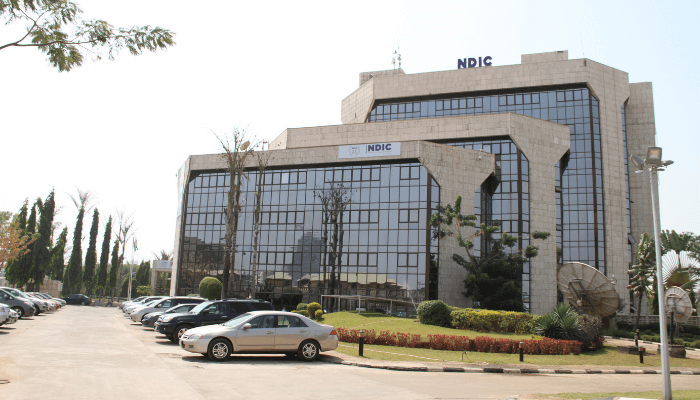
The Nigeria Deposit Insurance Corporation (NDIC) on Monday deepened its engagement with Judges of the Federal High Court, National Industrial Court of Nigeria, and members of the Investment and Securities Tribunal (IST) to promote deposit insurance awareness and ensure faster judicial resolution of banking sector cases.
The move formed part of a sensitisation seminar organised by the Corporation in Lagos, aimed at equipping judicial officers with the knowledge required to effectively adjudicate deposit insurance-related matters. The event was themed “Strengthening Adjudication and Depositor Confidence in the Banking System.”
Emily Osuji, acting Managing Director/Chief Executive of NDIC, said the growing global reliance on deposit insurance systems highlights their critical role in stabilising banking systems and protecting depositors from losses in the event of bank failures.
She explained that the NDIC was established as a risk minimiser, with powers to monitor the health of insured financial institutions through off-site surveillance and on-site examination, in collaboration with the Central Bank of Nigeria (CBN) and other financial safety-net participants.

Osuji noted that the NDIC and the CBN had recently recorded notable achievements, particularly in the seamless and orderly resolution of Heritage Bank. According to her, the Corporation’s swift and efficient intervention in the closure process reflected its dedication to excellence and stakeholder protection.
She added that the former directors and management teams of failed banks are always subject to investigation by the appropriate government agencies to determine their culpability and are prosecuted where prima facie evidence of wrongdoing is established.
Despite these achievements, she highlighted ongoing legal challenges faced by the Corporation. These include prolonged judicial processes and enforcement of judgments against NDIC assets for liabilities incurred by banks in liquidation.
Osuji pointed out that the recent resolution of Heritage Bank allowed the application of the new NDIC Act 2023, particularly Section 69, which limits the issuance of certain court orders against the NDIC when performing its statutory duties such as reimbursing depositors or acting as liquidator.
Delivering her remarks at the event, Justice Kudirat Kekere-Ekun, Chief Justice of Nigeria said the knowledge shared during the engagement would help strengthen adjudication processes, bolster depositor confidence, and enhance the broader stability of Nigeria’s banking system.

Represented by Justice John Inyang Okoro, Chairman of the Education Committee, Board of Governors of the National Judicial Institute (NJI), she stressed that the complexity of banking-related litigation including insolvency and regulatory cases demands a judiciary well-grounded in financial law and deposit insurance principles.
She said, “The courts serve as the final arbiters in financial disputes, and as such, our role in ensuring fair, timely, and legally sound resolutions cannot be compromised. The complexities associated with banking litigation—ranging from insolvency proceedings to regulatory interventions—demand a judiciary that is well-versed in the nuances of financial laws and deposit insurance policies.”
Also speaking, Salisu Garba Abdullahi, administrator of the National Judicial Institute, underscored that depositor confidence is the foundation of a thriving banking system, and judicial rulings play a pivotal role in reinforcing that trust.
He noted that court decisions on deposit insurance and financial matters set critical legal precedents that influence regulatory policies, enhance investor protection, and promote institutional stability.
“A major focus over the next few days will be identifying strategies to strengthen deposit insurance mechanisms and streamline judicial responses to financial instability,” he said.
Abdullahi stressed that judicial officers must not only grasp the technical aspects of financial laws but also understand their broader implications on economic stability and systemic trust.