|
Getting your Trinity Audio player ready...
|
As the oil and gas industry continues to move into the hands of Nigerians since the 2010 Nigerian Content Law (through the NOGIC Act), more efforts have continued to be made to empower Nigerians with skills to take up more technical responsibilities even at the seabed.
This could be why Nigeria is said to have moved from a mere 5% participation in the industry in 2010 to 56% by 2024. Many say the transfer of SPDC to Renaissance Africa in March 2025 may have upped the figure.
This must be why skills acquisition and human capital development are key areas the Federal Government is focusing on to engage the youths and help improve the lives of people in the Niger Delta region by developing sustainable entrepreneurial skills even beyond the oil and gas sector.
This trajectory is understandable because entrepreneurial, vocational and leadership value enhancement is the key to unlock the potentials and possibilities available to the youths in the Niger Delta region.

The objective is to equip youths with meaningful and self-sustaining skills that will improve their lives, support their families and communities, and thereby reduce criminality in Nigeria’s oil-rich region.

For years, the oil executives have complained that the youths of the region lacked the requisite training and competencies to take up technical and skilled jobs in the oil and gas industry.
The interventionist agency created in 2000 to boost development in the oil region, the Niger Delta Development Commission (NDDC) identified the task of helping youths of the region to acquire technical skills that would enable them pay strategic roles in the industry.
This is said to have prompted the Commission to establish a database of all interested youths in the region and to initiate training schemes to prepare them for the industry.
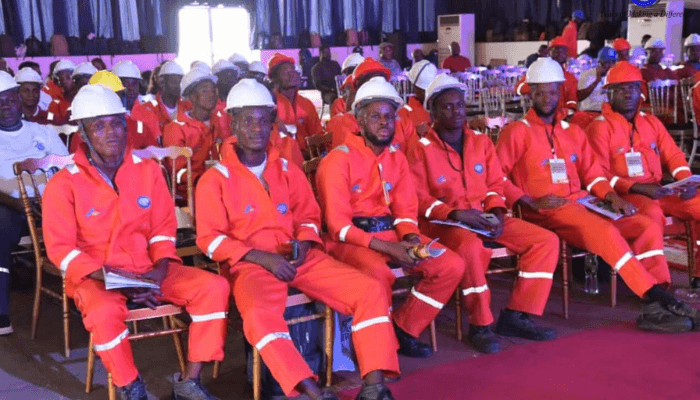
The media team of the Commission said in July 2025, the NDDC launched a comprehensive technical skill acquisition programme to equip participants with practical in-demand skills. By last week of August, a total of 300 youths who participated in the training programme in various skill areas graduated at a ceremony organised by the NDDC.

At the official flag-off of the programme in Port Harcourt, Samuel Ogbuku, the NDDC Managing Director, stated that it aligned with President Bola Ahmed Tinubu’s Renewed Hope Agenda and the efforts to address youth unemployment and restiveness in the Niger Delta.
Ogbuku, who was represented by Victor Antai, executive director in charge of projects, described the programme as development in action.
He stated, “What we are doing today is laying the groundwork for the skills, vision, and effort to build the Niger Delta of our dreams. These are no routine empowerment but strategic investments in human capital. When we teach scaffolding, we are not just building structures; we are raising futures. When we teach pipe coating and fitting, we are sealing the lips of unemployment and poverty.”
Ogbuku said these skills were essential and marketable in oil and gas and in other sectors like construction and industrial services, both locally and internationally.
In her remarks, Lynda Okara, a lawyer and director, commercial and industrial development unit of the Commission, reaffirmed the NDDC’s commitment to building a capable and employable youth population.
Also speaking, Blessing Olodiama, the Chief Operating Officer of Thompson Best Nigeria Limited, the lead consultant for the programme, described the training as timely and relevant in today’s skill-driven world. “NDDC has invested so much in each of you. Pay attention and stay focused, and avoid distractions. What you gain today will determine your tomorrow,” she advised.
At the graduation, Antai said the training was part of the Commission’s efforts to reduce youth restiveness, create employment opportunities, and alleviate poverty among the people.
Antai explained that the training in the areas of pipe fitting, scaffolding, forklift operations and sand blasting was meant to fill the job vacuum in the oil and gas industry. He situated the scheme, saying it is in line with the provisions of Section 7 of the NDDC Establishment Act 2000, as amended. He too insisted focus and consistency on the part of the beneficiaries.
He added that the development would further lead to a decrease in the demand for white-collar jobs, as well as growth in SMEs, among others, in line with the ideals of the United Nations Sustainable Development Goals (SDGs).
In his goodwill message, Ifedayo Abegunder, the Executive Director of Corporate Services, urged the beneficiaries to apply their knowledge productively, create wealth, and contribute to
In a goodwill message, the representative of the Federal Ministry of Labour and Productivity, Mr. Timothy Iyenabo urged the graduands.to develop a road map towards upscaling and training others.
The ceremony was witnessed by Winifred Madume, NDDC director, Agriculture and Fisheries, and other Directors. It featured the presentation of certificates to the graduands.
Officials recalled that in January 2024, a total of 200 youths across the Niger Delta region were trained in welding and fabrication, in recognition of the importance of the skills in the engineering sector, especially in oil and gas, construction and manufacturing. The aim was said to be to make the youths of the region relevant in certain skills and open opportunities to them.
The graduation ceremony was said to have been held simultaneously in four centres where the training was conducted: Port Harcourt (Rivers State); Eket (Akwa Ibom State); Warri (Delta State); and Benin (Edo State). The 200 trainees were drawn from the nine states covered by the NDDC.
A statement from the Commission said NDDC donated welding equipment, comprising a welding machine, a grinding machine, a toolbox, and a cash grant of N100,000 each to support the trainees.
Earlier, in 2023, the NDDC said it introduced a youth development and empowerment scheme designed to create a comprehensive resource database of the Niger Delta region’s youth population known as Holistic Opportunities, Projects, and Engagement (HOPE), designed to provide a platform that empowers the region’s youth on a sustainable basis. This is data-driven and would help development agencies see clearly what the youths want.
Youths in the Niger Delta are expected to register on the database to benefit from jobs created in areas such as agro-allied production, technology, and others.
The project HOPE is said to have helped the Commission to develop a comprehensive digital repository, comprising important information about the youths of the Niger Delta region, including their qualifications, skills, interests, needs, and current employment status.
Youth Development Scheme
As part of its strategies to bring sustainable change, the Commission is said to have developed a new programme of working with the Niger Delta Chamber of Commerce to train youths and young entrepreneurs in the Niger Delta region. The plan is to collaborate with the Niger Delta Chamber of Commerce to support Small and Medium Enterprises in the Niger Delta region.
It will focus on empowering young entrepreneurs because the government cannot employ everybody. The Youth Internship programme is envisaged to discourage sedentary lifestyles among the youth of the Niger Delta region.