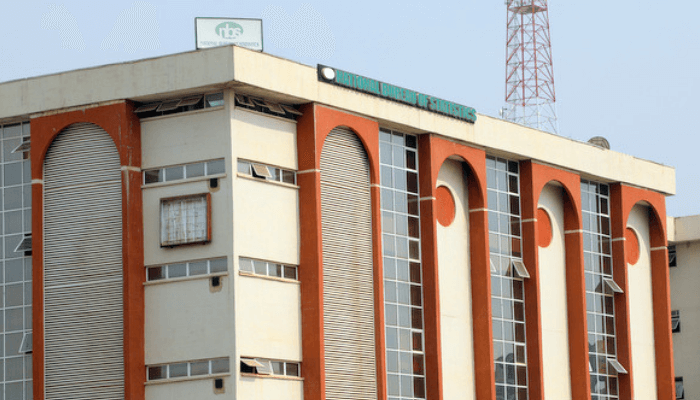
The National Bureau of Statistics (NBS) has commenced a very important National Agriculture Sample Census (NASC), which has been due for almost 20 years now but constrained by funding.
BusinessDay gathered that the last was conducted in 1993, a lag of almost thirty whole years contrary to the recommendation by the Food Agriculture Organisation (FAO) that it should be conducted every 10 years.
The census is intended to provide holistic and vital information about the sector, in terms of what Nigeria produces, and which parts of the country they are produced. NBS would be collaborating with its technical partners – the World Bank and FAO in the process.
The exercise would also help to provide information on the kinds of inputs needed; the size of manpower engaged, and the sorts of challenges encountered and what other potentials exist within the sector.

“All these kinds of information are what the NASC exercise seeks to collect,” according to statistician-general of the Federation, Adeyemi Adeniran who spoke Monday in Abuja at a Training of Trainers Programme to kick-start the census.
Read also: ThriveAgric wins 2022 Visa Everywhere Initiative for start-ups
Nigeria’s Agricultural sector is quite critical in its economic development, and accounts for approximately 25 percent of the economy, and employs over 50 percent of the workforce both directly and indirectly. Despite its relevance, the sector lacks, amongst other things critical statistics to enable adequate planning and required interventions.
Adeniran said when completed, NASC would provide a statistically sound base of data for the policymakers, both public and private, to take important decisions on how to increase the total output and develop such to maximise potentials throughout the entire value chain.
It would also be complemented by other statistical activities, both surveys and administrative data collection, to serve as major input to the proposed Gross Domestic Product (GDP) rebasing.

“The results of the census would also form a statistical framework for the conduct of subsequent agricultural surveys in Nigeria, capturing all aspects including crop production, livestock, poultry, fishery, and forestry,” the statistician-general added.
According to him, the design and methodology for the conduct of the exercise is advanced, and for the first time in Nigeria, the entire process would be digitalised.
He further assured that the NBS has secured newly demarcated digitised enumeration area maps from the National Population Commission (NPC), which would be deployed.
The newly carved out maps would serve as a basis for the segmentation of the areas which would be visited for data collection, to not only ensure a seamless process of locating selected enumeration areas and communities but deliver high efficiency.
He, however, warned that the NBS trainees must approach the entire process with every seriousness and deliver quality results considering the enormous financial, material and Human Resources that have been invested.
In her speech, Olusola Idowu, permanent secretary ministry of budget and national planning, said the census was long overdue as the agricultural sector remains critical in Nigeria’s economy as well as its enormous potential.
She said the aim of the census is ultimately to increase output in the entire agricultural value chain and meet the country’s food demand, employment and export earnings.
Reiterating the need for support for the sector, Idowu noted that a rapidly growing population like Nigeria must be able to grow what the citizens consume.
She further pointed out that the dual impact of the COVID 19 pandemic and the Russia-Ukraine war on food has clearly shown that it is no longer business as usual and that there is a need for the country to be self-sufficient in food production.
“We need to produce what we eat leveraging our vast human and natural resources,” she stated, noting, however, that all these cannot be done without adequate data, which should be a key driver of government sound policies and programmes.