|
Getting your Trinity Audio player ready...
|
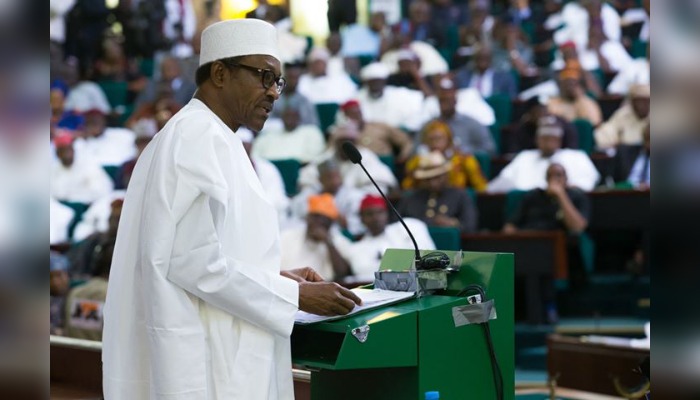
As President Muhammadu Buhari presents the 2018 Budget estimates to a joint session of the National Assembly on Tuesday, November 7, 2017, strong indications have emerged that the appropriation bill may not be passed by December 31st, 2017.
This is because there is a deluge of executive proposals the National Assembly must approve within the next seven weeks.
They include the 2018 to 2020 Medium Term Expenditure Framework (MTEF) and Fiscal Strategy Paper (FSP), approval of N135.6billion virement, $5.5billion foreign loan as well as the 2017 budgets of 28 Federal Government agencies. Besides MTEF/FSP, the other three proposals are linked to 2017.
Analysts say the development could halt efforts of the government at ending the life of the budget on December 31st, 2017 to bring back the January-December financial year in line with the recommendations of the Senate Committee on Budget Reform.

READ ALSO: Buhari to present 2021 budget to National Assembly Thursday
In a chat with BD SUNDAY, a member of the Senate Public Accounts Committee, Foster Ogola, ruled out the possibility of passing the 2018 budget into law before the end of the year.
According to him, the December 31-target of the government is not feasible due to poor implementation of the 2017 budget.
Ogola also expressed worry that late submission of MTEF to the National Assembly as well as refusal to comply with relevant laws guiding budget preparations had always been the causes of challenges dogging Nigeria’s budgeting process.
His words: “I assess that the implementation of 2015, 2016 and the 2017 budgets have been poor because of the burden that comes with the budget.

“What I think has gone wrong is that the planning is done yearly under the Medium Term Expenditure Framework (MTEF). The countries that achieve milestones in budgeting have a five-year budget plan. You review and carryover. But you know what you will achieve in five years. You know what you will achieve in 10 years.
“Again we must plan effectively on how to fund budget. Instead of bringing up an N8trillion budget and achieving 20 per cent, we should say N2trillion budget and you are ensuring that you do everything possible to achieve. From the beginning of the year, you knew there would be another budget for 2018 so you plan who to send you money, who to lend you, what else you do to generate foreign exchange. Because if you don’t export industrially, the implication is that nobody will be able to import and there will be no import duty Customs will charge. Nobody will be able to produce so Customs cannot charge Excise Duty. If people are now closing shops, FIRS cannot generate and tax income of people to be able to survive”.
READ ALSO: Nigerian states budget for 2019 so far
Lawmakers are not also keen on the plan of the Federal Government to roll over 60 per cent of this year’s budget into 2018.
At an interactive session with the Finance Minister, Kemi Adeosun and her counterpart in Budget and National Planning, Udoma Udo Udoma, on the implementation of the 2017 budget, members of the Joint Committee on Appropriation and Finance vehemently opposed rolling over 60 per cent of this year’s budget to 2018.
According to them, it would be better to ensure gradual transit to January-December financial year, than sacrifice over half of the 2017 budget.
Those who spoke against it include Danjuma Goje, John Enoh and Abdullahi Gumel.
In its recommendation, the joint committee urged the Executive not to embark on selective implementation of the budget under the guise of completing priority projects. This, it pointed out, contravenes the spirit of the appropriation act.
OWEDE AGBAJILEKE, Abuja