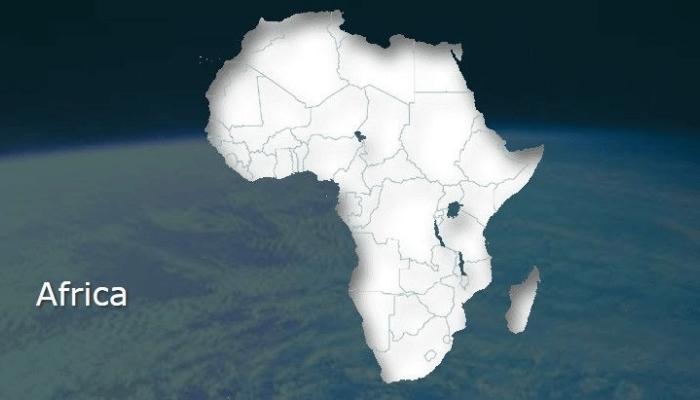
Every civilisation is shaped not only by its resources or political structures but also by the story it tells about itself. Narrative is not cosmetic; it is structural. It influences confidence, investment, leadership, and long-term development. When people control their narrative, they control perception. And when they control perception, they influence destiny.
For centuries, Africa’s story has largely been told through external lenses. Explorers, colonial administrators, foreign correspondents, international institutions, and global media networks have shaped much of the dominant narrative about the continent. While many accounts have documented real challenges, they have often presented incomplete pictures – highlighting instability and poverty while under-representing resilience, innovation, and institutional capability.
The issue is not that Africa’s challenges are imaginary. The issue is imbalance. When struggle becomes the primary frame through which a continent is viewed, it distorts perception. And perception has consequences.
Investors make decisions based partly on narrative signals. Young people build aspirations based on what they see validated. Policymakers operate within frameworks shaped by prevailing assumptions. If Africa is consistently associated with dependency and dysfunction, it affects not only how the world sees Africa but also how Africans see themselves.

Narrative control, therefore, is not about pride. It is about power.
Throughout history, civilisations that rose to global prominence invested deliberately in preserving and projecting their intellectual output. They documented their systems, codified their ideas, and amplified their successes. They institutionalised their stories.
Africa has always had systems worth documenting. Long before colonial disruption, African societies developed governance structures, trade networks, legal traditions, and economic systems suited to their contexts. Across the continent today, entrepreneurs build businesses under constraints that would cripple less adaptive environments. Communities solve problems with creativity and collective intelligence. Professionals compete globally in finance, technology, medicine, and academia.
Yet many of these stories remain underpublished and underamplified.
When resilience is not documented, it becomes invisible. When innovation is not recorded, it becomes anecdotal. And when excellence is not systematically highlighted, it appears exceptional rather than normal.

The psychological implications are significant. Repeated exposure to limiting narratives can gradually shape internal belief systems. Over time, external description becomes internal identity. A generation that grows up consuming predominantly deficit-focused portrayals may unconsciously narrow its own sense of possibility.
This is why Africa must tell her story authentically and unapologetically.
Authentically – because credibility demands honesty. Africa’s narrative must not ignore governance failures, infrastructure gaps, or institutional weaknesses. Sanitised storytelling is propaganda, and propaganda lacks longevity. Balanced truth is more powerful than selective truth.
Unapologetically – because confidence should not require permission. Africa does not need external validation to document her competence. The continent does not lack intelligence, expertise, or entrepreneurial capacity. What it has often lacked is coordinated narrative infrastructure.
Publishing sits at the heart of this infrastructure.
Books, long-form journalism, research publications, and serious cultural documentation transform individual experience into collective memory. A speech may inspire a moment; a publication can shape decades. Nations that influence global thought do so partly because they produce, distribute, and institutionalise their ideas at scale.
For Africa, strengthening indigenous publishing ecosystems is not merely a cultural ambition. It is a strategic necessity. Local publishers, writers, researchers, and media platforms must deliberately document African-built companies that have scaled successfully, leadership models that have delivered results, policy experiments that have worked, and communities that have demonstrated effective grassroots organisation.
This is not about competing with global media. It is about complementing and correcting it.
When African business leaders document their strategies, they create case studies for the next generation. When African scholars publish rigorous research grounded in local realities, they shape policy conversations. When African entrepreneurs tell transparent stories of both failure and recovery, they normalise resilience.
Narrative control also affects Africa’s global engagement. A continent that consistently communicates competence attracts partnerships rather than paternalism. Balanced storytelling enhances credibility, and credibility attracts opportunity.
Importantly, narrative control is not the responsibility of governments alone. It belongs to institutions – publishers, universities, think tanks, media houses, and cultural organisations. It belongs to business leaders willing to document their journeys. It belongs to professionals willing to articulate lessons learned in African markets.
It also belongs to the next generation. The African child who reads stories of local innovation and excellence grows up with a broader sense of possibility. The young founder who studies documented African success models operates with greater confidence. Identity, once strengthened, becomes a multiplier.
Africa’s future competitiveness will depend not only on infrastructure and capital flows but also on belief systems. And belief systems are shaped by narrative.
The restoration of Africa’s narrative is not about rewriting history. It is about completing it, ensuring that stories of competence sit alongside stories of challenge, and ensuring that Africa is not reduced to her interruptions but understood in her continuity.
When Africa becomes the primary author of her own story, she strengthens her intellectual sovereignty. She moves from being interpreted to becoming the interpreter. From being defined to becoming the definer.
The task is urgent but achievable. The tools already exist: writers, thinkers, entrepreneurs, publishers, scholars. What is required is deliberate coordination and sustained commitment.
Africa must speak – clearly, truthfully, and confidently. Not to impress the world, but to accurately represent reality.
Because when a continent controls its narrative, it strengthens its identity. And when identity is strengthened, development becomes not only possible but also sustainable.
Godswill O. Erondu is a Pan-African cultural renaissance advocate. Founder, Brisk Legacy Group