|
Getting your Trinity Audio player ready...
|
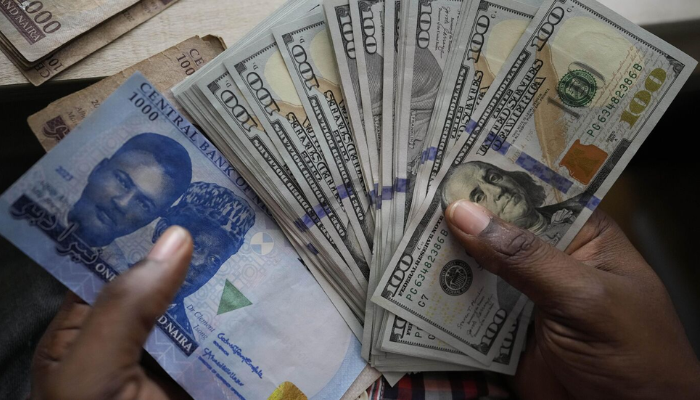
The naira continued its stable run on Thursday, appreciating against the dollar in the black market as confidence in the Central Bank of Nigeria’s (CBN) reform agenda helped calm speculative activity.
By the close of trading, the naira gained N5 or 0.3 per cent to settle at N1,545 per dollar in the parallel market, also known as the black market, compared to N1,550 the previous day.
In the official Nigerian Foreign Exchange Market (NFEM), the naira slipped slightly by N5.24, with the dollar quoted at N1,525.98, reflecting a 0.3 per cent depreciation from N1,520.74 on Wednesday, according to data from the CBN.
Currency traders attributed the continued naira stability to sustained FX reforms by the CBN, which have helped temper excessive demand previously driven by speculation.

As of Wednesday, the naira had gained 1.4 per cent year-to-date in the official market, with the dollar quoted at N1,520.74 compared to N1,541.36 at the start of the year. In the parallel market, the currency appreciated even more significantly by 7 per cent, trading at N1,550 on Wednesday versus N1,660 in early January.
Read Also: Yield on 1-yr treasury bills heads back to normal, drops to 19.4%
Ayokunle Olubunmi, head of Financial Institutions Ratings at Agusto & Co, said the CBN’s reforms, including exchange rate unification, have helped curb speculative activity that previously inflated demand. “What we’re seeing now is a more genuine and transparent demand for dollars. The arbitrage that fuelled spurious demand in the past has been mostly eliminated,” Olubunmi said.
Analysts at FSDH Merchant Bank noted that the naira’s gradual appreciation and the narrowing gap between the official and parallel rates reflect growing confidence in the FX market. According to them, the CBN’s foreign exchange policies and clear policy direction have reduced speculative demand, improved FX inflows, and weakened incentives for rent-seeking and arbitrage.
However, they warned that external vulnerabilities remain. Without deeper structural reforms, short-term stability could be undermined by global interest rate shifts, oil production volatility, and limited external buffers.

They emphasised the need for new sources of FX inflows such as diaspora bonds, concessionary multilateral financing, increased foreign direct investment, and growth in non-oil exports to sustain reserves and support the naira into the second half of 2025.