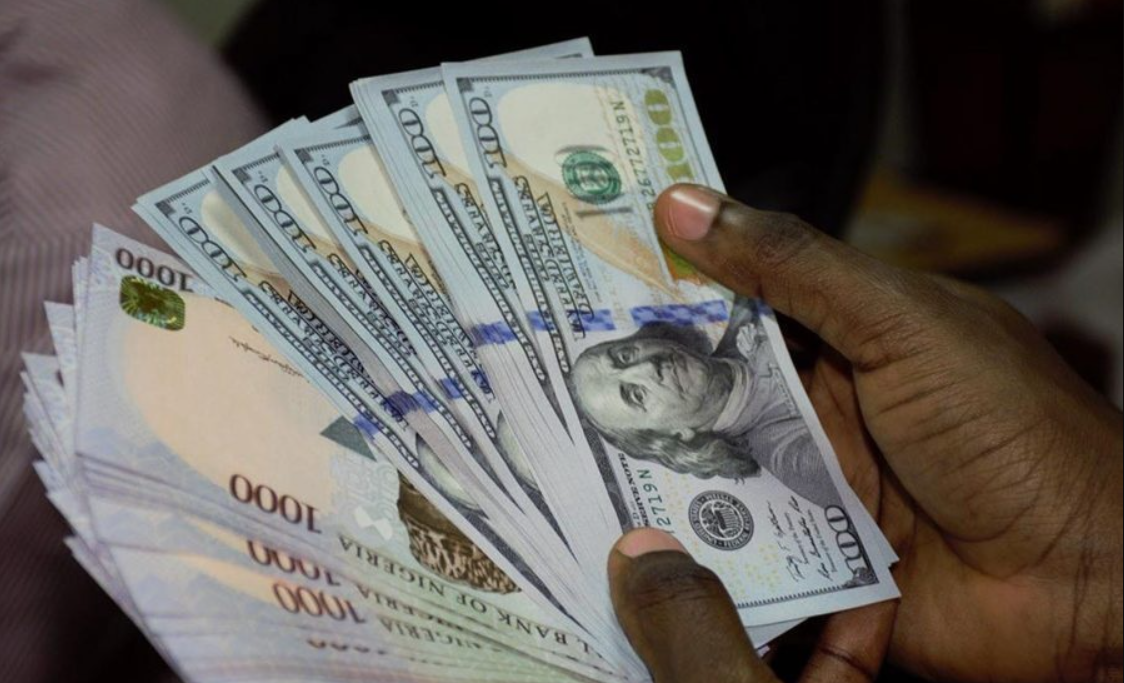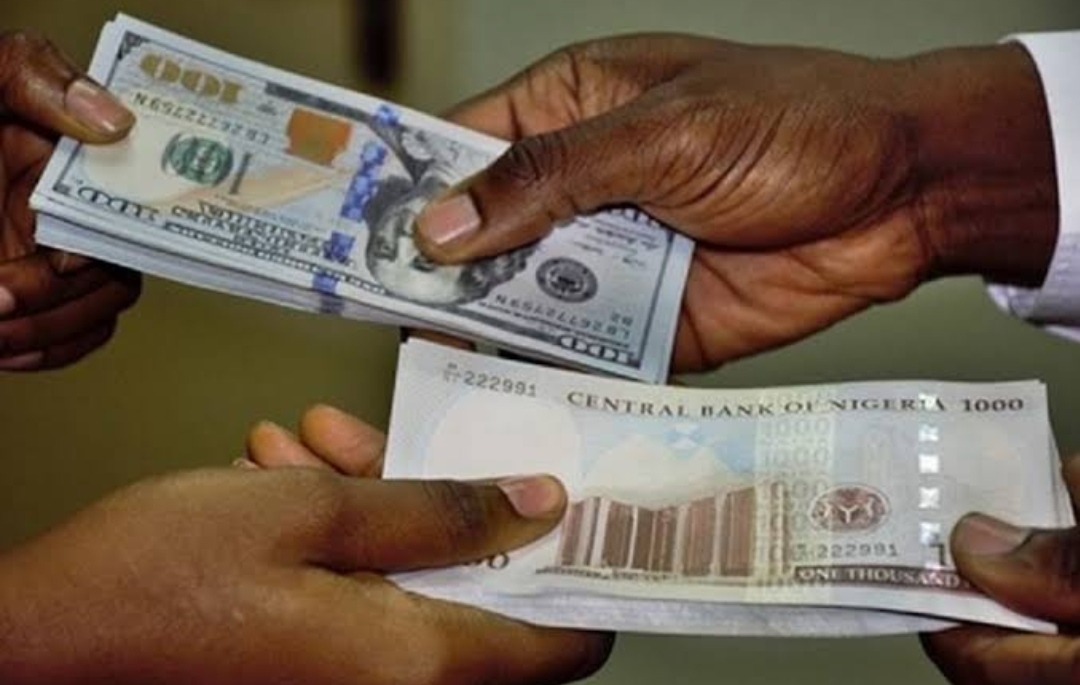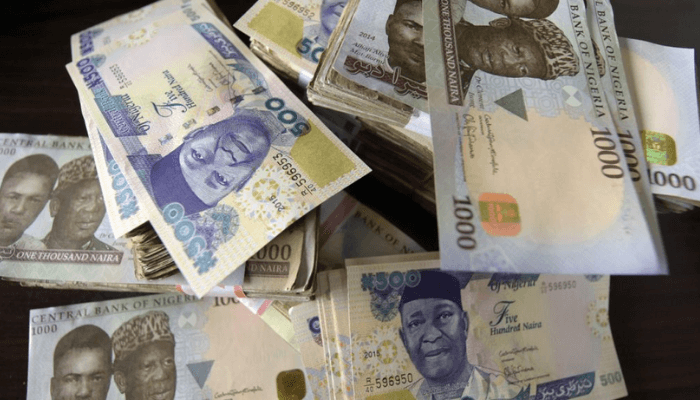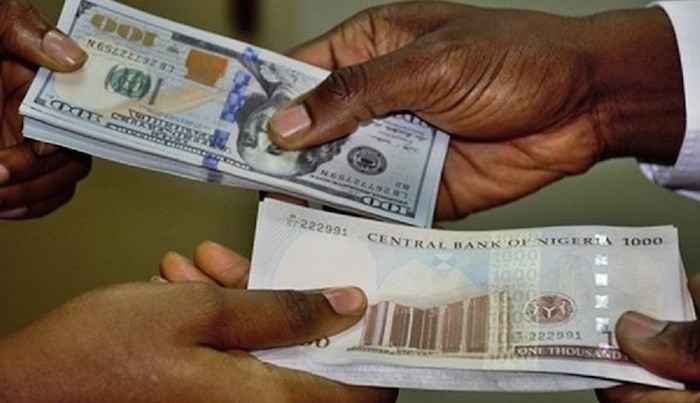
Nigeria’s currency on Wednesday regained the N3 it lost to the dollar on Tuesday at the parallel market popularly known as black market.
After trading on Wednesday, naira closed at N502 per dollar as against N505 traded on Tuesday and Wednesday intraday trading on the black market.
The Naira has depreciated on the black market following the adoption of N410.25k as official rate by the Central Bank of Nigeria (CBN).
Naira steadied at N500/$ at the Bureau De Change (BDC) segment of the foreign exchange on Wednesday after deprecating by N2 on Tuesday.

At the Investors and Exporters (I&E) forex window, naira weakened marginally as the dollar was quoted at N412.00k on Wednesday compared to N411.75k quoted on Tuesday, data from the FMDQ revealed.
Currency traders who participated at the trading session on Wednesday maintained bids at between N387.67k and N420.97k per dollar.
The foreign exchange daily market turnover declined by 23.44 percent to $131.86 million on Wednesday from $172.24 million recorded on Tuesday.
Nigeria’s external reserves have declined to $33.84 billion as at June 15, 2021 according to the data on the CBN’s website. This is despite the recent increases in the price of crude oil. The price of Brent crude stood at $74.12 per barrel on Wednesday.
Nnamdi Nwizu, co-managing partner/head, trading, Comercio Partners Limited, said what Nigeria needs to do is to grow its foreign exchange reserves.

“What has happened now is that we have very little participation from the foreign investors. As long as that continues to happen, you will continue to see depreciation of the currency and reduced participation from them in the fixed income space even in the equities space,” he said.
Nwizu said if Nigeria’s reserves can start growing, getting more dollar receivables, there would be a lot more interest in foreign investors then the currency will appreciate or stabilise, which also would reduce the imported inflation in the market.