A good news about Nigeria, Africa’s largest economy, has been rarer than hens’ teeth in recent years.
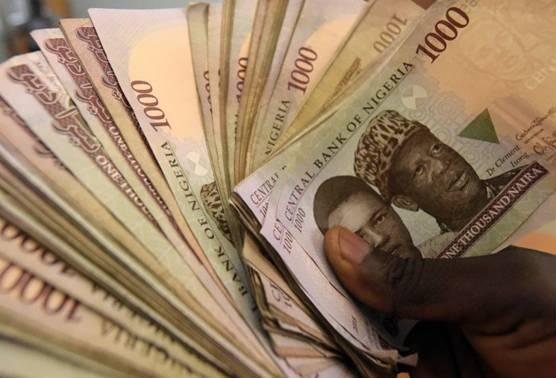
But here is one. Alan Cameron, economist at Exotix Partners, an investment bank focused on smaller markets, says the Nigerian currency, the Naira has reached a “watershed moment” at N315/$.
According to him, “there are more things that can go right than wrong at this point, but people are locked in to only thinking things can go wrong,” he says.
Although there are many who believe that the official naira rate is still unsustainable and is destined to fall further towards the parallel, black market rate, Mr Cameron disagrees.

According to his calculations, at 315/$ the naira is now modestly undervalued on a real effective exchange rate basis. On this basis, investors should be far more worried about the wildly overvalued currencies of Laos, Uruguay and Vietnam, his analysis, depicted in the second chart, suggests.
“Having long been one the most overvalued currencies in this universe, often by 40 per cent or more, Nigeria is now trading below its ‘fair value’,” Mr Cameron says. “While such measures are admittedly not all that helpful in determining short-term market direction, we think they act as an important benchmark for investors looking to make inwards investments — both portfolio and direct.”
On a more anecdotal level, he says luxury hotel rooms in Lagos, the business capital, have fallen to $200 a night, a “remarkable adjustment” from the $500-$800 charged until recently.
“The dollar cost of living in Lagos has already fallen by 40 per cent in the last decade. Are we really saying that it needs to fall another 40 per cent in order for people to feel like they’re getting their money’s worth?” he asks.
A first recession in 20 years, inflation at a decade high of 17.6 per cent, collapsing oil production, a slumping currency and a severe shortage of dollars have grabbed the financial headlines.

With the naira having slumped from 435 to the dollar on the black market to 460 in less than a week, taking it still further away from the official, controlled, rate of 315/$, most analysts are still resolutely downbeat.
As to why the black market rate has fallen to 460/$ if 315/$ is around fair value, Mr Cameron points to a lack of liquidity. If all restrictions were removed, the currency would settle somewhere around the current interbank rate of 345/$, rather than 460/$, Mr Cameron believes.
For the disparate exchange rates to converge, Nigeria needs a readier supply of dollars. One source, Mr Cameron believes, will be a return of foreign portfolio investors to the country.
Nevertheless Cameron believes that yield-hunting western investors may be drawn to Nigeria’s local currency government debt, particularly its Treasury bills, which yield between 17 and 23 per cent, up from just 1-8 per cent in January.
Sovereign debt would become more attractive if Nigeria’s inflation rate, which has surged to 17.6 per cent a year off the back of the weakening currency, was to fall. Again Mr Cameron is confident this will be the case, noting that the month-on-month inflation rate fell to 1 per cent in August, from a high of 2.75 per cent in May.
John Ashbourne, Africa economist at Capital Economics, says Exotix’s argument is “not unreasonable”, but that it may be premature, with Nigeria unlikely to begin its turnround until the end of this year or early 2017. Indeed, he sees a likelihood of third quarter economic growth data being worse than the 2.1 per cent contraction recorded in the year to the second quarter.
Mr Ashbourne believes the modest increase in forex flexibility generated by the ending of the rigidly fixed dollar peg will help ameliorate the shortage of dollars, helping steady the black-market exchange rate and bring inflation down. “If inflation hasn’t peaked, it’s very close to peaking,” he says.
That should help the economy “bounce back a bit,” as would any stabilisation in oil production.
“Oil production has fallen a lot. The chance of that happening again by as much is unlikely,” says Mr Ashbourne. “We are probably near the bottom of oil production. If it stabilises or even starts to rise, that will help the oil component [of GDP].”
He is sceptical about any pick-up in portfolio inflows, however, noting that the bulk of the capital inflows seen of late has simply been due to Nigerian companies borrowing abroad, rather than inbound foreign direct or portfolio investment.
BBH’s Mr Thin is more sceptical. He regards the allegedly “floating” forex regime introduced by the central bank in June as mere “window dressing”, arguing that importers and foreign investors are still not getting access to the dollars they need.
Mr Thin is one of those expecting the official naira rate to plunge towards the black market rate, even though that would represent an “overshoot”, arguing that “the longer the adjustment is put off, the bigger the move that eventually happens”.
If such a devaluation was to occur, this would push inflation higher still and necessitate “aggressive” rate rises, he suggests. This in turn could prolong Nigeria’s recession.
And although Mr Ashbourne is somewhat more upbeat, even he does not conjure up a happy picture of Nigeria’s immediate fate.
“Even if things turn around, next year is probably still a pretty bad result. Growth of 2 per cent for a country that is as poor as Nigeria and with the level of population growth it has [2.4 per cent] is really not very good,” he argues.