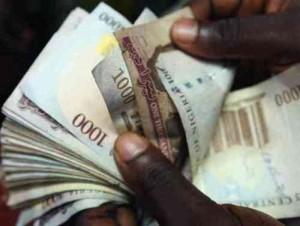
Lately, the naira exchange rate has experienced significant bouts of depreciation so much so that it has raised the hackles of pundits and even loud criticisms of the exchange management capability of the Central Bank of Nigeria. At a one-day colloquium organized by The Cable, an online newspaper, Adams Oshiomhole, governor of Edo state struck at the right cord by maintaining, among other things, that the naira exchange rate movement reflects the economic realities on ground, characterized by the heavy intensity of import demand by virtually all economic agents (individuals and industry). The governor has said it all.
This brief is aimed at giving theoretical rationalization for the governor’s statement and for the inevitability of naira depreciation in the present circumstances of heavy demand for, and shrinking supply of, foreign exchange. The Naira, and indeed, any currency mirror the strength or weakness of the home economy.
Determinants of real exchange rate movement
In theoretical literature, movements in the real exchange rates, that is, nominal exchange rates deflated by relative inflation rates, have been linked to the difference between the prices of tradable and non-tradable goods, changes in the current account of the balance of payments and changes in nominal interest rate differentials between the home country and her trading partners. The three major determinants of movements in exchange rate are changes in relative prices across countries, changes in the current account and changes in relative interest rate.

However, while the above models particularly emphasize prices, current account position and interest rate differentials as major determinants of real exchange rate, it is possible in general to group a number of causative factors otherwise known as economic fundamentals. They include the “wrong” and the “right” fundamentals as their sustained increase leads to depreciation or appreciation, respectively:
The fundamentals may be grouped into structural and short term factors. The wrong structural fundamentals include International terms of trade, world real interest rate, import intensity of industry and high propensity of Nigerians to import basic needs. The right ones include Net flows of capital, Technical progress, Trade/commercial policies, Exchange and capital controls and GDP growth rate. The wrong short term factors are inflation differential, Inflationary expectations, Fiscal and monetary policy actions, and Market expectations, etc.
When any of these fundamentals (structural or short-term) changes, the real exchange rate will also change. In particular, real exchange rate also responds in the short and even medium run to monetary and fiscal expansion.
Basic lessons
- Exchange rate is not an immutable statistic; it changes from time to time. When there are sustained changes in any of the economic fundamentals, there will also be changes in the real rate. In other words, the problem of exchange rate depreciation will always rear its head especially in a fledgling democracy such as ours so long as there are explosive increases in economic fundamentals. The Governor of CBN cannot stop the depreciation; he can only mitigate it by taking measures to control demand. The measures, however, while mitigating the depreciation, may have unintended negative side effects in some sectors of the economy. This is understandable, reflecting the fact that in this part of the world economic management is pursued, too often, using the tractable tool of partial equilibrium analysis. Advanced economies on the other hand rely on general equilibrium analysis which identifies discontinuities and vulnerabilities and adjusts policy decisions, accordingly. Developing countries do not, as at today, have the capacity to cope with the data intensiveness of the general equilibrium model.

- The exchange rate mirrors the economy. A weak economy with expanded “wrong” fundamentals produces a weak or depreciated currency, because the exchange rate evolves from the movement of the economic fundamentals. The Central Bank alone cannot cause the exchange rate to appreciate unless its actions are supported by complementary actions of government. Indeed, all hands must be on deck to boost economic performance and shore up the exchange rate.
- Following from above, there is urgent need for the monetary and fiscal authorities to make constant adjustments to policies, review monetary implications of any intended huge lump sum releases to the economy, in order to avoid unsustainable monetary expansion which further depreciates the exchange rate through higher price inflation.
- Exchange rate appreciation cannot be done by fiat; appreciation will result from sustained substantial reduction in inflation, increased external reserves, reduced interest rates, reduced government deficit/GDP ratio to not more than 3 percent, greater accountability/transparency in governance, reduced import demand especially of goods/food that can be produced locally etc. In other words, exchange rate movements inexorably respond to movements in economic fundamentals. It is the economy which imparts appreciation or depreciation on the exchange rate. Where the wrong economic fundamentals are allowed to move to “excessive” levels and where the country is unduly import dependent and afflicted by prolonged foreign exchange shortages, the exchange rate will experience worrisome episodes of depreciation such as the Naira has experienced. Where however economic fundamentals are religiously controlled and sources of foreign exchange diversified as in countries with convertible currencies, e.g. UK, USA, Japan, exchange rate stabilizes and even appreciates.
If the wrong economic fundamentals persist the naira exchange rate may depreciate further regardless of the rescue exchange management efforts of the Central Bank. We believe that government, the major source of monetary expansion, will not allow that episode to materialize. But if it does happen, the gods are not to blame.
In conclusion, if the naira is allowed to depreciate to worrisome level, this outcome will be very unfortunate. We all have to face the consequences of an uncompetitive economy and high unemployment. The basic reality is that the naira, like any other currency must seek its fundamental equilibrium exchange rate (FEER). A change in our mindset and lifestyles is imperative if we must tone down the fundamentals for a lasting solution to the naira woes. But how do we and government specifically tame the monster? We must work on both the supply and demand sides of foreign exchange, over a varying time horizon.
The Supply side actions include:
- Diversify the economy away from oil so to get foreign exchange from non-oil sources;
- Internalize remittances and foreign aid; and
- Look into our LNG resources and reform NNPC.
Demand side actions on the other hand include, among others:
- Reduce import intensity of industry: encourage industry to source an increasing number of their raw material inputs locally;
- Reduce high propensity of Nigerians for imported goods, including food – farm out selective prohibitively high import duties and import quotas;
- Use more actively the Public Private Partnership (PPP) arrangements to finance infrastructure; and reduce pressure on the regular budgets;
- Increase the level of accountability and transparency in governance;
- Aggressive support for the agricultural sector and SME;
- Government must control spending and remunerative packages for the political class; and
- Minimize cost of bureaucracy.
- There is need to boost Central Bank of Nigeria’s operational autonomy in order to enhance the banks’ effectiveness in the management of money supply which is largely outside the control of the monetary authorities as it is driven by government spending and the developments in the external sector.
It is my conviction that if these issues are addressed in the medium to long term, the naira will gyrate towards its desirable fundamental equilibrium exchange rate.
Sam Omoruyi