* For more than four decades, oil has dictated naira stability
* But in 2025, when oil prices plunged, the naira didn’t flinch!
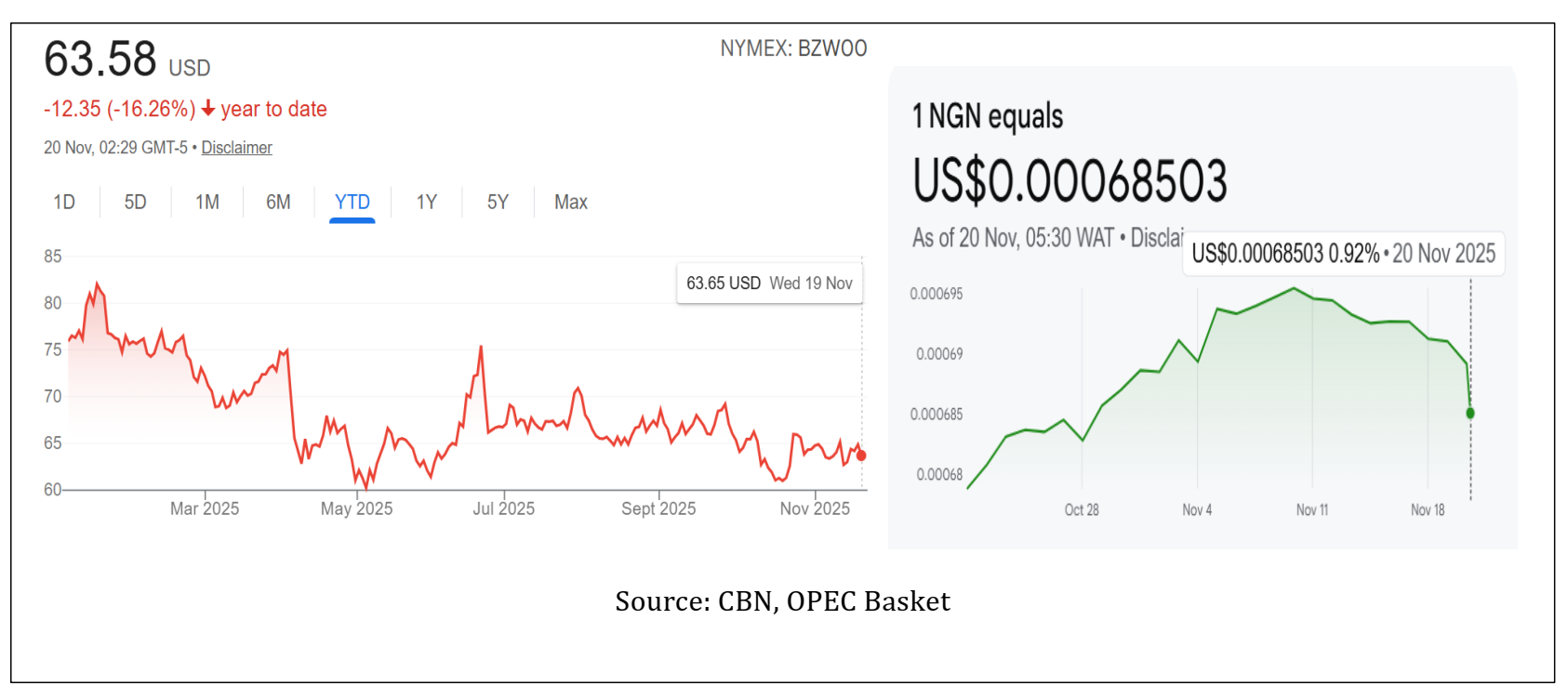
For the first time in many decades, Nigeria is experiencing a significant shift: the naira is starting to detach from the influence of global oil prices. Previously known as a typical “commodity currency,” the naira’s value historically fluctuated with Brent crude. However, recent developments indicate a quiet revolution. Despite lower oil prices for most of 2025, market data show the currency remained stable, an early sign of decoupling driven by FX liberalization, stricter fiscal discipline, rising non-oil inflows, and renewed investor confidence. This change is tangible; it is transforming real lives. After some initial volatility in the first half of 2025, the second half saw the naira stay stable even as oil prices declined.

The moment is complex. While consumers experience relief at checkout, farmers face collapsing producer prices that threaten long-term productivity. Nigeria is at a strategic crossroads: a stronger naira signals resilience, but it also reveals structural gaps that must be closed for true economic independence.
Decoupling the naira is more than a financial event; it is an opportunity to redefine Nigeria’s economic destiny. The question is whether the country will seize this moment to build a diversified, shock-proof, self-determined future.
Historical Dependency: Oil-price trap.
For more than four decades, the naira has lived in the shadow of crude oil. This dynamic effectively turned the naira into what analysts call a commodity-linked unit: its strength rising with bullish oil markets and collapsing whenever global prices dipped.
This tight correlation meant the naira was never truly anchored to domestic productivity, export diversity or manufacturing depth; instead, it floated on the tides of a commodity Nigeria did not control. The result was a structurally vulnerable currency, acutely sensitive to geopolitical risk, OPEC decisions and fluctuations in global demand.

The consequence was chronic volatility: each oil-price crash, from the early 1980s recession to the 2014 shale-glut and the 2020 pandemic shock, triggered sharp depreciations, inflation spikes, and fiscal distress.
Reliance on oil also reduced incentives to develop strong non-oil industries. Easy petrodollar inflows masked underlying economic issues, discouraged export diversification, increased costs for local businesses, and reinforced a pro-import economic attitude.
However, the pattern has only recently started to reverse as the naira stabilizes, even amid falling oil revenues, indicating that other factors are playing a larger role in determining exchange-rate (FX) movements. As one Deutsche Bank strategist noted, “The currency has shown remarkable resilience in recent months despite the pressure from weaker oil prices. … This is a clear indication that the naira is beginning to break free from its traditional correlation with crude oil.”
Notably, Nigeria’s heavy reliance on oil created a vicious cycle in which naira fragility reinforced oil dependence, and oil dependence in turn deepened naira fragility.
Evidence of decoupling: what is changing
Since July, evidence has been mounting that Nigeria might be entering a new monetary era, one where the naira is no longer subject to the fluctuations of global oil markets. It should be noted that in 2025, Brent crude prices dropped significantly, yet the naira remained stable and even appreciated at times. This represents a notable reversal of the long-standing pattern in which every decline in oil prices led to immediate currency stress.
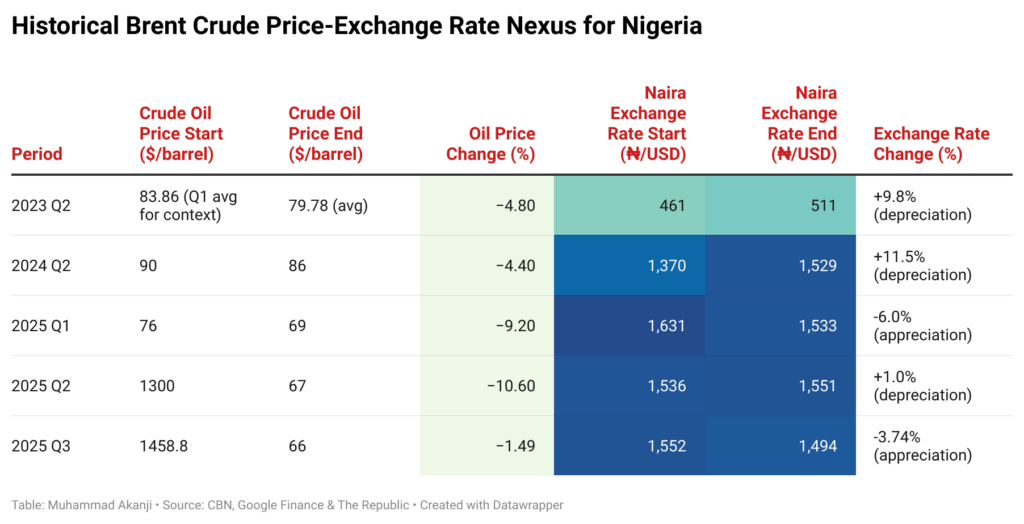
Nigeria’s FX dynamics are undergoing a structural break. In Q2 2023, the naira depreciated by 9.8%, sliding from ₦460.93/$ in Q1 to ₦511.23/$, mirroring a simultaneous dip in Brent crude from $83.86 to $79.78, a textbook confirmation of the long-standing naira–oil linkage. The pattern held through 2024: in Q2, crude hovered between $86–$90, while the naira swung sharply between ₦1,370–₦1,529. But by 2025, despite softer oil markets, the currency showed pockets of resilience. The stability of the naira amid softer oil markets is the clearest sign yet that decoupling, a structural divergence between the naira’s behaviour and global crude dynamics, is underway.
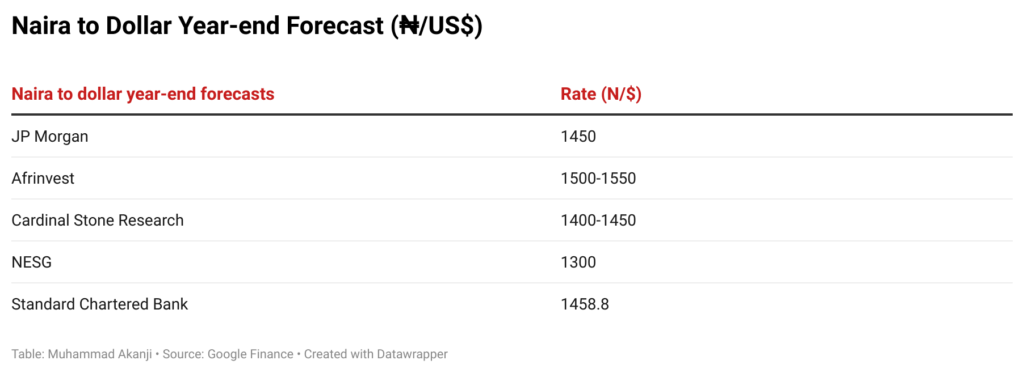
Several forces are driving this change. FX liberalization has reduced distortions and improved price discovery. Stronger fiscal discipline has narrowed imbalances and restored some policy credibility. Non-oil export receipts, from agro-processing to services, are starting to build more depth in Nigeria’s external accounts. Meanwhile, improved investor confidence, seen in stronger portfolio flows and more stable market sentiment, has created a psychological anchor that the naira has historically lacked.
Decoupling does not imply immunity from global shocks, but it does suggest a maturing currency regime- one in which the naira’s fate is shaped less by oil market volatility and more by domestic fundamentals. It is, potentially, the first step toward absolute economic sovereignty.
New Anchors and Macro Implications
Nigeria’s currency remains stable due to new factors reflecting more profound structural changes. Three key factors stand out: a more flexible FX regime that has enhanced transparency and reduced arbitrage; increased non-oil inflows that are gradually diversifying Nigeria’s external earnings; and a more credible mix of fiscal and monetary policies that has boosted market confidence. These changes are influencing macroeconomic outcomes in real time.
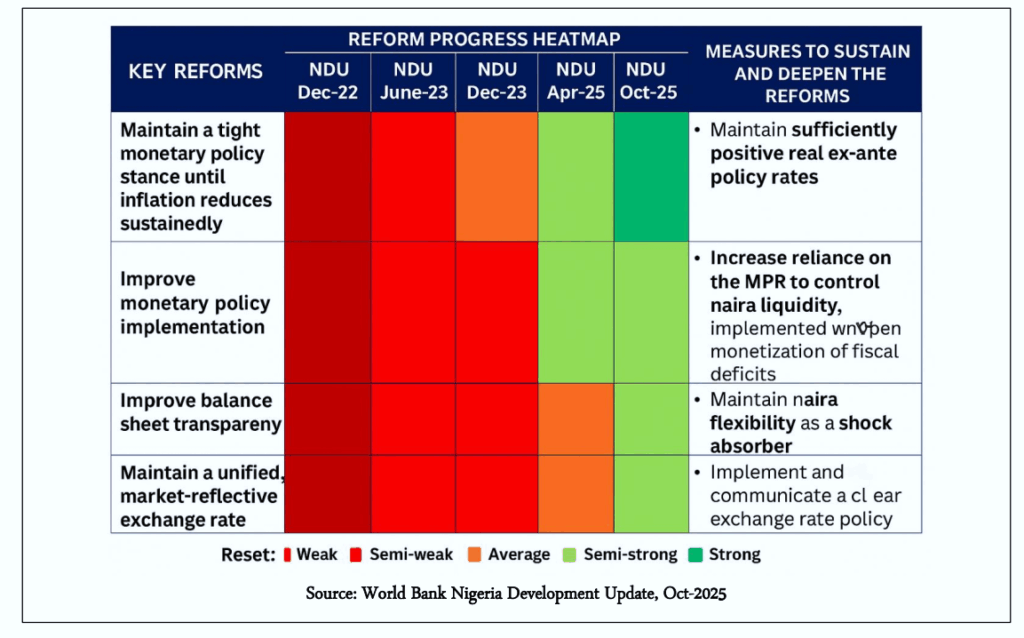
Inflation eased to 16.05% in October 2025, driven by moderating food prices and a firmer naira, which is lowering the cost of imported essentials. This disinflation marks a significant departure from the turbulence of previous years and signals that the naira’s new anchors are gaining traction.
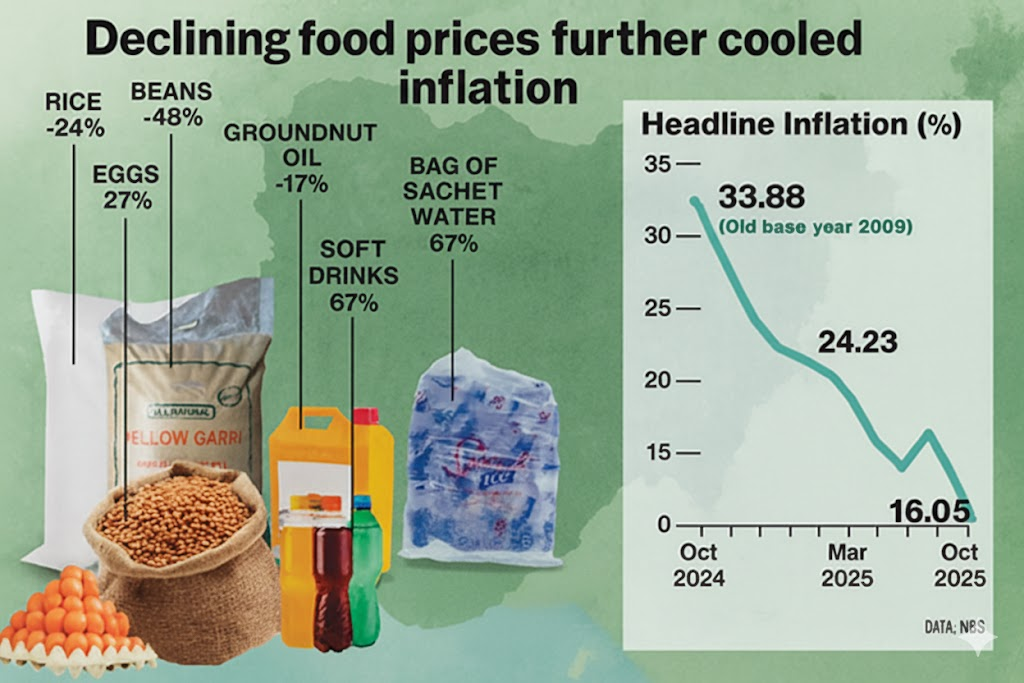
The gains come with trade-offs. While falling food prices benefit consumers, they also squeeze farmers, threatening margins, production cycles, and long-term agricultural sustainability. This serves as an early warning that stability must not come at the expense of sectoral resilience.
Risks, Opportunities, and Path to Independence
Nigeria’s push toward a more decoupled naira presents a rare window to redefine its economic trajectory. Opportunities abound: greater exchange-rate independence can stabilise the macro environment, reduce exposure to oil-price swings, and accelerate diversification into agriculture, manufacturing, logistics, and digital services.
A more predictable FX system lowers planning uncertainty for firms, attracts long-term capital, and improves competitiveness, particularly for agro-processors, exporters, and service companies seeking regional scale.
But risks remain material: Inflation pass-through has not disappeared, and firms in import-dependent sectors-pharmaceuticals, automotive, food processing- still face cost volatility. Limited FX liquidity and weak social protections could magnify shocks, squeeze SMEs and heightening rural distress, especially among farmers already hit by falling food prices.
A credible policy roadmap must anchor stability: sustained monetary-fiscal coherence, institutional trust-building, investment in productive capacity, and targeted safety nets for vulnerable groups. Only then can naira uncoupling mature into true economic independence, not a fleeting macro anomaly.