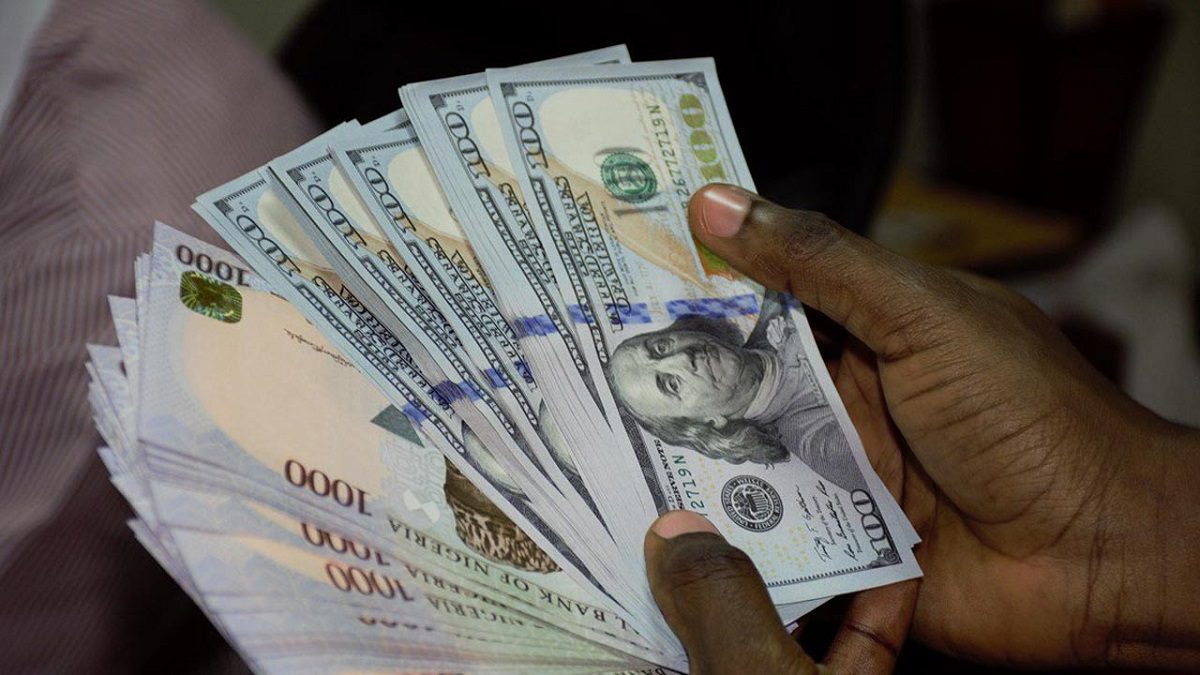
The naira appreciated against the dollar across the foreign exchange (FX) markets on Tuesday, the first trading day of July 2025, continuing a trend of relative currency stability driven by ongoing reforms.
At the Nigerian Foreign Exchange Market (NFEM), the naira strengthened marginally by N0.14, closing at N1,529.57 per dollar compared to N1,529.71 on Monday, according to data from the Central Bank of Nigeria (CBN).
The naira recorded gains in the parallel market, appreciating by N10 to close at N1,560, representing a 0.6 percent increase from the N1,570 recorded the previous day.
The foreign exchange market recorded a notable boost in United States dollar liquidity last week, driven by increased inflows from Foreign Portfolio Investors (FPIs) and stronger sell-side participation. The improved supply supported a modest appreciation of the naira, which gained N6.43 to close at N1,545.20 per US dollar, according to a report by Access Bank.

Looking ahead, sustained FPI inflows are expected to keep downward pressure on exchange rates in the near term, provided the current momentum in capital inflows is maintained, said analysts at Access Bank.
Africa’s foreign exchange landscape continues to reflect divergent economic realities across the continent, with Nigeria, Zimbabwe and South Sudan recording the sharpest currency depreciations against the US dollar in 2024, according to exchange rate data compiled by Afreximbank and other sources.
The data shows that while some currencies remained relatively stable, others saw steep declines due to inflationary pressures, monetary policy shifts, fiscal imbalances, and in some cases, major exchange rate reforms.
According to the report, Nigeria’s naira posted the worst performance among African currencies, weakening by 131.8 percent against the US dollar between 2023 and 2024. The naira fell from N636.13 to N1,474.60 to the dollar, following ongoing efforts by the Central Bank of Nigeria to unify exchange rates and attract foreign inflows amid persistent FX shortages and high inflation.
Closely following Nigeria was South Sudan’s pound, which depreciated by 131.1 percent over the same period, from 930.33 to 2,150.00 per dollar. Analysts attribute this to continued fiscal instability and conflict-related disruptions affecting oil revenues, the country’s main foreign exchange earner.

Zimbabwe’s currency also continued its troubled trajectory, falling by 55.6 percent from 3,509.17 in 2023 to 5,460.00 in 2024, after an astronomical 835.9 percent depreciation the year before. Despite ongoing reforms, the country continues to battle with hyperinflation, low confidence in monetary authorities, and dollarisation pressures.
Other notable depreciations were recorded in Malawi (53.7 percent), Ethiopia (51.7 percent), and Egypt (47.9 percent). In all three cases, local currencies lost substantial ground as governments grappled with rising debt costs, subsidy reforms, and IMF-backed policy adjustments.
The Ghanaian cedi, which was among the worst-performing currencies in 2022, weakened by another 28.6 percent in 2024, reflecting ongoing balance-of-payments challenges and tight external financing conditions.
Meanwhile, Angola’s kwanza depreciated by 27 percent, and the Zambian kwacha lost 29.4 percent of its value, underscoring the fiscal and external vulnerabilities across several commodity-dependent economies.