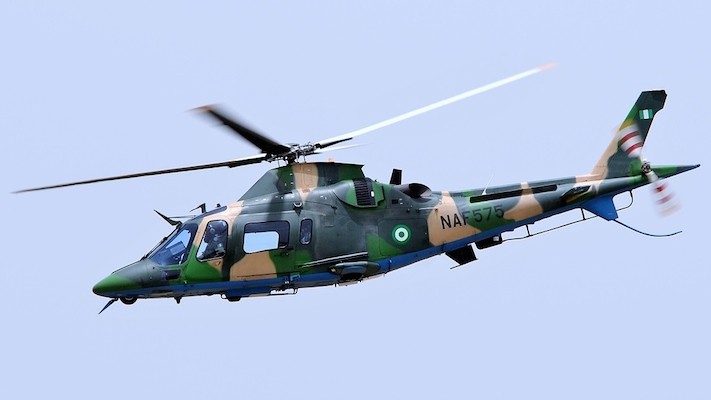
The Nigerian Air Force (NAF) is saddled with the responsibility of ensuring the integrity of the airspace by gaining and maintaining control of the air while retaining a credible capacity to fulfil other airpower tasks demanded by national defence and security imperatives.
It therefore becomes worrisome when a key security arm of the country is being repeatedly attacked by bandits and terrorists, gradually casting fears and doubts in the minds of citizens who look up to the force for some level of security.
The NAF is the youngest arm of the Nigerian military, having been established on April 18, 1964. In the course of its 57 years of operations, defending the air space of Nigeria and the country’s territorial integrity, the NAF has experienced several air crashes, with four of these crashes happening within a space of four month in the year 2021.
Between August 29, 2015, and now, Nigeria has suffered several military plane crashes with no fewer than 33 military officers perishing. Military air crashes in Nigeria have been linked to technical error, sabotage and inclement weather.

On September 26, 1992, a Nigerian Air Force Hercules C-130 crashed just a few minutes after it took off from the Lagos Airport, leading to the death of all 158 persons on board. The Hercules C-130 aircraft cost about $14 million.
On September 12, 1997, a Dornier 228-212 belonging to the NAF also crashed with 10 persons on board. No one survived. Nine years later, on September 17, 2006, a Dornier 228 military plane crashed at Vandekiya, Benue State, claiming the lives of 14 military officers, including 10 generals.
In August 2015, another Dornier 228-212, NAF 030 crashed in Kaduna, and all seven persons on board died. The Dornier 228-212 aircraft cost about $7 million. This implies that for three Dornier 228 crashes, the country lost about $21 million as money spent purchasing the aircraft.
On September 28, 2018, a NAF pilot died after two aircraft crashed around Katampe Hill, Abuja, while rehearsing for the nation’s 58th Independence Day celebrations. This also cost the country some millions of dollars. The country lost over $6 million on the cost of these aircraft.
However, the year 2021 is the year with the most frequent military air crashes in Nigeria.

On February 21, 2021, seven NAF officers died onboard a Beechcraft KingAir B350i aircraft when the jet crashed in Abuja. The jet en route Minna in Niger State crashed close to the runway of the Abuja airport after reporting engine failure. The Beechcraft KingAir B350i aircraft cost about $4.5 million.
Forty days later, on Wednesday, March 31, 2021, NAF spokesman, Air Commodore Edward Gabkwet, announced that an Alpha-Jet aircraft on a mission against Boko Haram had lost radar contact.
Two officers were on board the missing jet that was later declared crashed. Days later Boko Haram released a video showing the crashed jet and the dead crew members. An Alpha-Jet cost about $12 million.
Less than two months after, the country recorded another incident involving the same aircraft type, which went down in Kaduna, killing 11 people, including the Chief of Army Staff, Ibrahim Attahiru, three other generals, two majors and other army and flight crew officers also on board the ill-fated Beechcraft 350i. This Beechcraft 350i aircraft type costs about $4.5 million.
On Sunday, one of NAF’s Alpha Jet aircraft crashed in Zamfara State at about 12.45pm while returning from a successful air interdiction mission between the boundaries of Zamfara and Kaduna states. This crash was caused by intense enemy fire from armed bandits, and thankfully, the pilot of the aircraft, Abayomi Dairo, successfully ejected from the aircraft. The cost of this aircraft is about $12 million.
This implies that since NAF commenced operations in 1964, it has lost over $74 million to air crashes (on cost of aircraft).
However, respite may soon be here for the troubled force with its soon possession of the first batch of six A-29 Super Tucano aircraft, which have departed the United States of America en route Nigeria.
The Federal Government in February 2018 placed an order for 12 Super Tucano aircraft at a cost of $496 million.
The fighter jets are expected to boost the operations of the military in its anti-terrorism war against Boko Haram and splinter group, the Islamic State in West Africa Province, in Nigeria’s North-East.
The acquisition of these fighter jets comes shortly after recent NAF crashes, which whipped up questions about the quality of the nation’s military air assets and also created doubts about the capability of NAF pilots.
Stakeholders have raised concerns that these crashes were becoming too frequent and the arm may need urgent intervention.
The Accident Investigation Bureau Nigeria (AIB-N) had earlier called for more effective and stronger collaborations among stakeholders in the aviation industry as means of enhancing safety of air travels in Nigeria.
Tunji Oketunbi, manager, public affairs, said the need for effective and strong collaborations among stakeholders within the aviation industry to ensure safety cannot be over emphasised.
“Safety is the backbone of aviation and without it, aviation loses its meaning. This is why every organ or unit in the industry works tirelessly to ensure the safety of air travellers,” he said.
Akin Olateru, commissioner/CEO, AIB-N, while remarking on collaborations the Bureau has been able to garner with some major stakeholders such as the Nigerian Air Force and Federal Road Safety Corps, stressed why all stakeholders within the industry need to work as one as AIB alone cannot do the job.
The Bureau will not relent in its vigorous pursuit of adding values that will up the ante of safety in Nigeria and Africa, he said.