|
Getting your Trinity Audio player ready...
|
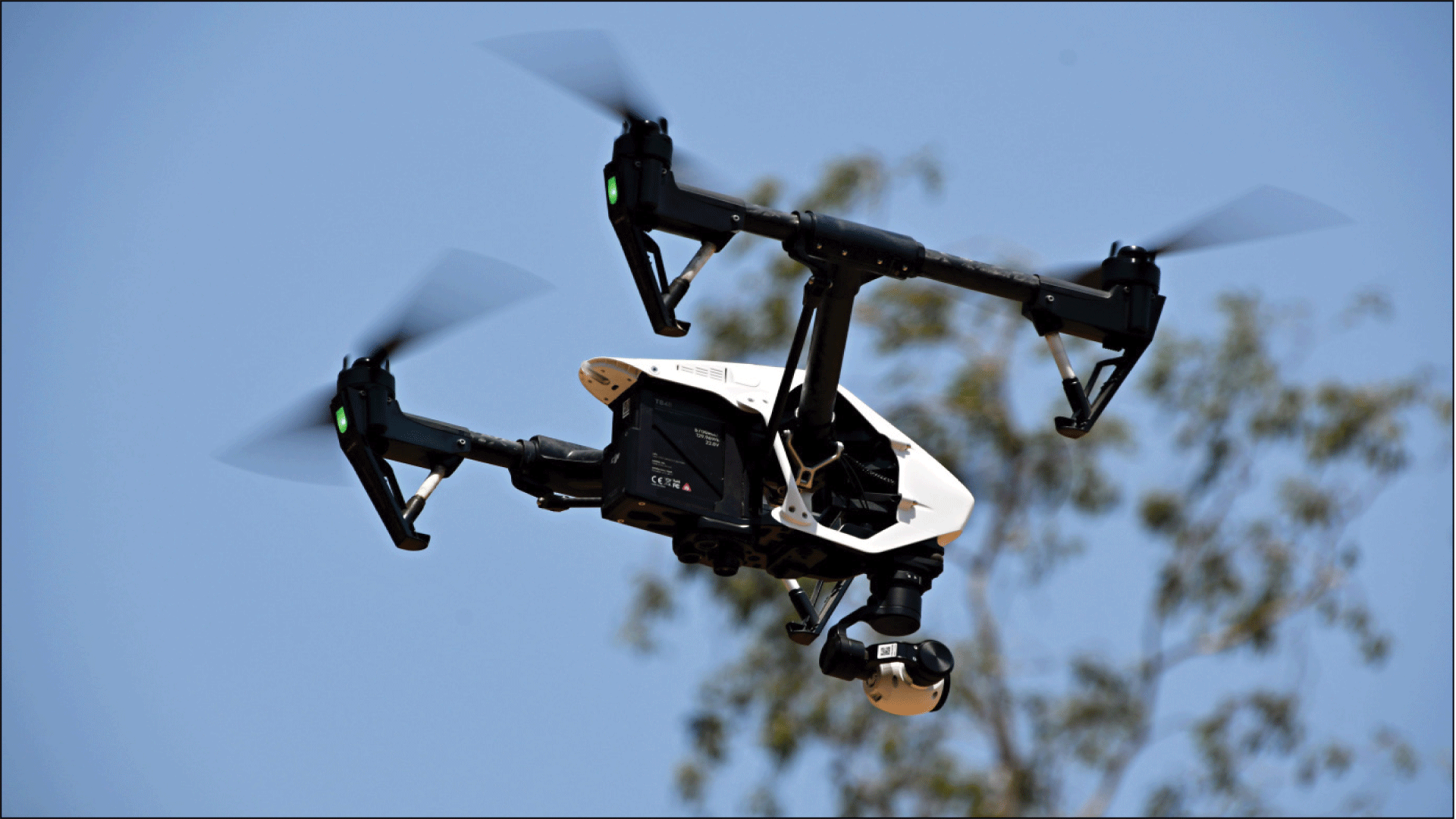
The growing threat of unmanned aerial vehicle (drone) technology and its use as an attack vector in warfare by both state and non-state actors has brought the need for a robust national counter-unmanned aerial vehicle (C-UAV) strategy into sharp focus. We first saw glimpses of the usage of drones in movies, but recent events have since shown that what was thought to be only possible in film studios is now a reality, with both state and non-state actors showing the capacity to deploy drones in theatres of conflict across the world, including in Africa.
“Nigeria’s rapid advancements in its Unmanned Aerial Vehicle (UAV) capabilities have been a critical development in its counter-terrorism and counter-insurgency efforts.”
As depicted in American films like Angel Has Fallen (2019), where a swarm of weaponised drones executes a devastating attack, and the chilling short film Slaughterbots (2017), which portrays autonomous microdrones targeting civilians, the potential for drones to be used as tools of terror is no longer speculative fiction but a pressing reality. Recent advancements in drone technology, coupled with their increasing accessibility, have heightened the urgency for nations to develop comprehensive C-UAV measures to safeguard against terrorism and protect public safety.
The character of warfare has fundamentally changed. Recent military operations like Ukraine’s “Operation Spiderweb” and Israel’s “Operation Rising Lion” demonstrate the overwhelming strategic and tactical value of unmanned aerial systems (UAS), or drones. These events represent a new reality where inexpensive, commercially available drones are transformed into precision strike platforms capable of inflicting mass casualties and disrupting critical infrastructure. And more worrisome is that this style of attack, where swarms of drones are deployed for offensive targeting, is capable of circumventing almost all forms of currently available air defence systems. The lesson is clear: air superiority no longer belongs exclusively to those with multi-million-dollar fighter jets.
For Nigeria, with its ongoing counter-insurgency and counter-terrorism operations, this is not a theoretical threat; it is a lived reality. We have already seen the clear intent and capability of ideological non-state armed groups in parts of Borno State. Their use of drones for surveillance and as vectors for incendiary materials is a chilling indicator of their propensity for acquiring and weaponising this technology.

Nigeria’s rapid advancements in its Unmanned Aerial Vehicle (UAV) capabilities have been a critical development in its counter-terrorism and counter-insurgency efforts. The nation’s strategic acquisitions of advanced offensive platforms like the Adcom Yabhon Flash-20 from the UAE, Bayraktar TB2 from Turkey and CASC Rainbow CH-3A, CASC Rainbow CH-4A, and CAIG Wing Loong II from China have provided the military with a significant technological edge, enabling precise intelligence, surveillance, and reconnaissance (ISR) as well as effective kinetic strikes against insurgent groups. More importantly, Nigeria has demonstrated a commendable commitment to technological self-reliance by spearheading the indigenous production of armed and unarmed drones. Projects such as the Tsaigumi and the more recent collaboration to produce the Damisa Combat Drone, and the ongoing development in partnership with Briech UAS, as well as others such as the Gulma, Amebo, and Ichoku, illustrate a deliberate and successful policy of building a domestic defence industrial base, circumventing the complex geopolitical and bureaucratic hurdles often associated with foreign arms procurement.
The same urgency and foresight that fuelled Nigeria’s local drone manufacturing must now be applied to a comprehensive Counter-UAS (C-UAS) strategy. The rapid proliferation and weaponisation of low-cost, off-the-shelf drones by non-state actors present a distinct and immediate threat. The nation’s offensive drone superiority is only half of the equation. A robust and indigenously developed C-UAS framework is now crucial to protect critical infrastructure, military installations, and civilian populations from this asymmetric threat. By leveraging its existing research and development infrastructure, Nigeria can lead the way in creating tailored, cost-effective solutions for drone detection, jamming, and neutralisation, turning the nation from a consumer of security technology into a producer of vital counter-terrorism capabilities.
The time for a reactive approach is over. Nigeria must be intentional and proactive in developing a comprehensive national strategy for mitigating hostile drone capabilities. This requires a multi-faceted approach that goes beyond simply buying more weapons. The security sector leadership, with the support of the National Assembly, should focus on:
1. Developing indigenous counter-UAS (C-UAS) capacity: We must invest in and deploy a range of C-UAS technologies, from signal-disrupting “drone guns” and radio frequency jammers to more sophisticated kinetic and non-kinetic interceptors. Crucially, this effort must prioritise the development of locally made solutions to ensure technological self-sufficiency.
2. Strengthening regulatory and enforcement frameworks: The current regulatory environment is insufficient. We need a robust framework that controls the sale and distribution of drone components, especially those from the easily accessible DIY market. We must close the anonymity gap by regulating the acquisition of parts and potentially digital blueprints.

3. Enhancing intelligence and threat assessment: A key component of any C-UAS strategy is understanding the threat. We must improve our intelligence-gathering capabilities to track the procurement and operational patterns of these groups. This requires a collaborative effort between our defence forces, intelligence agencies, and law enforcement.
The proliferation of this technology means the threat to Nigeria’s security is no longer confined to the ground. Nigeria’s national security, critical infrastructure, and population are increasingly vulnerable from above. Nigeria cannot afford to be complacent; we must urgently build the capacity to secure our skies and our future.