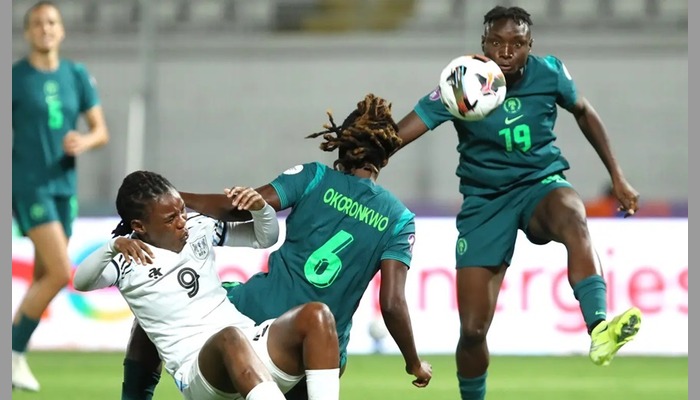
Nigeria’s Super Falcons are on the brink of history as they face hosts Morocco in the final of the 13th Women’s Africa Cup of Nations (WAFCON) at the Prince Moulay Abdellah Stadium in Rabat on Saturday, July 26.
From the first blast of the whistle, Nigeria will be all business, allowing no space for error or intimidation, as they chase a record-extending tenth continental crown.
Read Also: Madugu: Super Falcons determined to reclaim WAFCON title
With their eyes firmly set on the prize, the Super Falcons are determined to silence the home crowd and avenge their dramatic 2022 semi-final exit to the Atlas Lionesses.

Super Falcons captain Rasheedat Ajibade has led by example and is a strong contender for the Player of the Tournament award. Forward Chinwendu Ihezuo is in the race for the Golden Boot with three goals, just one behind Moroccan skipper Ghizlane Chebbak.
Both sides are brimming with talent, with a taste for titles and fearless young stars. The motivation is sky-high, with backing from their respective governments and widespread support from the football community.
Morocco have grown stronger under Spanish tactician Jorge Vilda, who famously guided Spain to the FIFA Women’s World Cup title two years ago in Australia and New Zealand.
Vilda has brought structure, intensity, and flair to the Atlas Lionesses, making them even more dangerous than the side that beat a nine-woman Nigeria on penalties in the 2022 semi-finals in Casablanca.
But Nigeria’s head coach, Justine Madugu, remains confident and composed. Speaking as the team departed Casablanca for Rabat, Madugu made it clear that the mission remains unfinished.

“We thank God for making it to the final. I want to assure you that we are not going to relent or take our eyes off the ball,” Madugu said. “Our focus is on lifting the trophy in Rabat on Saturday.”
The Super Falcons reached the final after a tense and tactical 1-0 semi-final victory over defending champions South Africa, sealed by Michelle Alozie’s stoppage-time screamer.
Madugu lauded his team’s discipline and mental fortitude against a battle-hardened Banyana Banyana side.
“We knew South Africa, as Cup holders, would be difficult, but we were ready for them. I’m glad our tactics paid off,” he said.
“We assess every opponent and apply the approach that best suits our objective. That strategy has worked well for us throughout the tournament, and we’ll stick with it for the final.”
The Super Falcons have impressed throughout the campaign, scoring 11 goals and conceding just once (a penalty against South Africa).
The squad has been buoyed by Ajibade’s leadership, Ihezuo’s attacking threat, the creative spark of Esther Okoronkwo and Jennifer Echegini, Ashleigh Plumptre’s defensive solidity, and the safe hands of Chiamaka Nnadozie, recently crowned Africa’s Best Goalkeeper for the second consecutive year.
Saturday’s showdown is being billed as the tournament’s blockbuster finale and marks Nigeria’s second major final against a host nation in just 17 months, after the Super Eagles’ AFCON clash with Côte d’Ivoire in February 2024.
Morocco, who narrowly beat Nigeria three years ago and are making back-to-back final appearances, have proven they are no longer underdogs in women’s football.
Still, Madugu insists the Falcons are focused and unfazed by the pressure.
“We are not distracted. Our goal is to bring the trophy back home.”
Despite early doubts surrounding his appointment, Madugu has vindicated himself by applying a pragmatic, match-by-match approach, consistently tailoring tactics to each opponent.
Except for their group-stage draw with Algeria (after already securing a quarter-final spot), every other opponent has exited with nothing but bruised pride and blurred vision.
Now, the final mission awaits, Mission X, as Nigeria looks to etch their name even deeper into the history books of African football.