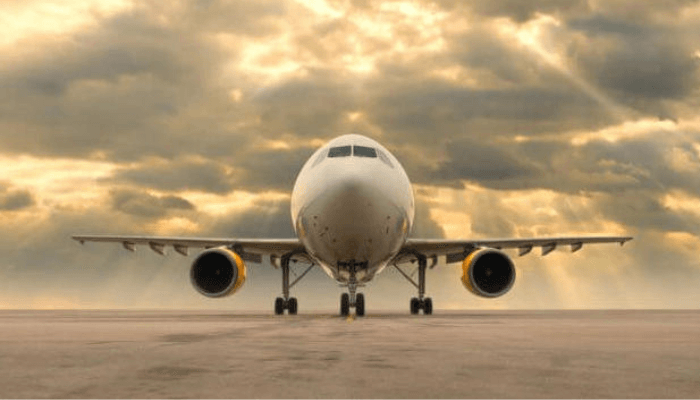
The lack of automated bridges is forcing airlines operating in Nigeria to tow their aircraft after landing.
In other countries, airlines taxi their planes into the aerobridges after landing, as their bridges are automated and align with their aircraft.
In Nigeria, however, airlines pay to tow their aircraft to the aerobridges, which are old, un-automated and do not align with aircraft.
While this process has continued to constitute unnecessary delays to passengers who are forced to remain in the aircraft for 15 to 20 minutes after landing, the airlines have kept on paying ground-handling companies over $3 million annually to tow their aircraft to the aerobridges.

A reliable source told BusinessDay that in 2014, during the remodelling of the airports, about 28 aerobridges were acquired from China.
The source disclosed that 14 of the aerobridges were supposed to be installed at the Murtala Muhammed International Airport (MMIA), with other airports allotted 14 as well. Up till now, the bridges have not been brought into the country.
“The then airport manager was one of those that went to check the bridges in China, and those bridges are still there. We have been begging them to bring them in. When we have something like that still hanging, it is very difficult to request new ones,” the source, which is close to the federal government, said.
“To us, it is not easy because the airlines are always on our neck. Passengers wait in the aircraft for several minutes for the aircraft to be towed into the aerobridge.
“The main issue is that the bridges are old and are not meant for the current aircraft type that we are operating. The bridges are not manual but they are automatic,” the source further said.

Ground handling fees
BusinessDay’s checks showed that a passenger boarding bridge currently costs an average of $450,000. The 28 aero bridges would cost about $12.6 million. With an exchange rate of at least N1,500 to a dollar, the 28 aero bridges could cost N18.9 billion.
Data provided by the Federal Airports Authority of Nigeria (FAAN) show that at MMIA, there is an average of 21 flights’ take off in a day from 18R/36L runway and an average of 12 landing in a day from 18R/36L in a day.
BusinessDay’s checks show that all international airlines operating in Nigeria pay nothing less than N4.5 trillion annually to tow their aircraft into the stairways, which is the disembarkation point for passengers.
Read also: NCAA approves take-off for five prospective airlines with issuance of air certificate
Ground handling companies charge airlines nothing less than $250 per towing. This implies that for 21 take-offs and 12 landings, airlines pay nothing less than $8,250 daily to ground handling agents. For 365 days (one year), airlines pay over $3 million dollars to tow their aircraft to the bridges. With an exchange rate of N1,500 to a dollar, this will amount to N4.5 trillion.
John Ojikutu, industry expert and the CEO of Centurion Aviation Security and Safety Consult, said Nigeria’s aviation sector has continued to suffer from poor maintenance culture
“There is no programme for maintenance. If the bridges are considered to be old, they should be replaced, or there should have been programmes for their replacement,” Ojikutu said.
He hinted that the impact of not installing the automated bridges is that it would continue to lead to flight delays for the airlines that are slotted into and outside the parking areas to the bridges.
FAAN’s response
Abdullahi Mahmood, director of airport operations at the Federal Airports Authority of Nigeria (FAAN), “When the rehabilitation starts, part of the rehabilitation will be the installation of those aerobridges. The airport rehabilitation is part of President Bola Tinubu’s infrastructure fund projects. Under this, there will be infrastructure upgrade, comprehensive rehabilitation, improvement in terminals, and perimeter fencing will also be done.”
He noted that the reason the aero bridges haven’t been installed is because the authorities are waiting to do the complete rehabilitation of the old terminal.
He said the number of aerobridges that will be installed at the airport will be determined by the new designs of the airport.