|
Getting your Trinity Audio player ready...
|
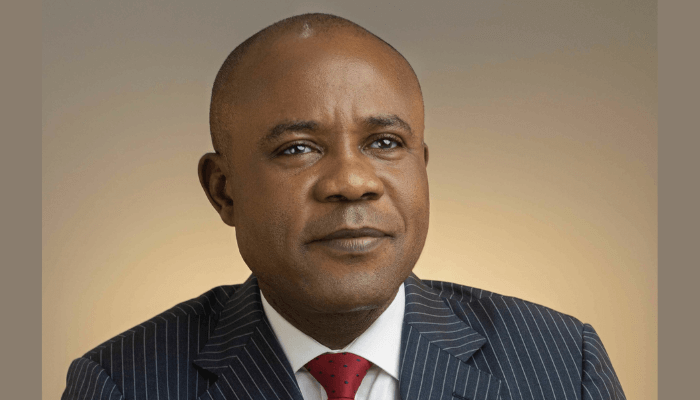
Five years to the 2030 Sustainable Development Goals (SDGs) deadline, leaders across the world who are conscious of the need to implement the “shared blueprint for peace and prosperity for people and the planet” are working round the clock to ensure that no one in their communities is left behind. In Nigeria, as most governors at the subnational level mark two years in office, the impact of leadership on development must be assessed beyond the idea of GDP growth or infrastructure provision. It must embody a holistic vision where policies are people-centred, inclusive, and sustainable. To interrogate how subnational leaders are embracing the ethos of a development that meets the needs of the present without compromising the ability of future generations to meet their own needs, the mantra and promise of Governor Peter Mbah’s “Tomorrow is Here” comes to mind.
With a security threat that shut down the southeast in a weekly sit-at-home non-state actors order, the southeast region was partially paralysed at the time Governor Peter Mbah assumed office as Governor of Enugu State alongside the Governors of Ebonyi State and Abia State in 2023.
“With an understanding that development cannot happen in an atmosphere of insecurity, Governor Mbah’s declaration on June 10, 2023, of an end to the sit-at-home order reflected a daring leadership committed to restoring social order and discipline against the odds of an entrenched problem.”
Winning the war on the sit-at-home order has situated Enugu State as the preferred route for many socio-economic and cultural engagements in the region.

Read also: Mbah renders account, says his is laying foundation for Enugu’s prosperity
By 2031, Governor Mbah’s compelling and ambitious manifesto seeks to grow Enugu State’s economy from $4.4 billion to $30 billion, anchored on a development philosophy that is grounded in practical action and forward-thinking policy – a rare blend in the landscape of Nigerian subnational governance. Two years into his tenure, the Mbah administration has already begun to show signs of transformation that align strongly with international development norms, particularly the Sustainable Development Goals (SDGs) and the right of Ndi Enugu to development, whether in healthcare, education, clean water or other physical infrastructures. At the heart of Mbah’s development agenda is infrastructure renewal. Roads are not just built; they are planned strategically to open up rural areas, facilitate trade, and improve accessibility. Over 71 urban roads, including critical arteries in Enugu metropolis such as Chime Avenue, College Road, and parts of Independence Layout, have undergone major rehabilitation. Rural access roads in Ezeagu, Uzo-Uwani, and Nkanu East have also seen significant improvements, linking farm clusters to urban markets.
But roads are only one part of the picture. The Enugu Urban Water Scheme, once a symbol of governmental neglect, has been revived. Within 180 days of taking office, the Mbah administration successfully restored the daily water supply to parts of Enugu City, ending decades of scarcity. This isn’t merely an infrastructure achievement – it speaks to the right to health, hygiene, and dignity.
To catalyse private sector participation, Governor Mbah established the Enugu State Investment Development Authority (ESIDA) and launched the Ease of Doing Business Reforms Council. These institutions are cutting through red tape, standardising land administration (with digital C-of-Os issued within 72 hours), and implementing investor-friendly reforms that align with global indices for competitiveness.
Perhaps no segment of the population has been more actively targeted by Governor Mbah’s policies than the youth. With over 60 percent of Nigeria’s population under the age of 30, youth empowerment is no longer a social policy – it is a development imperative. To this end, the Mbah administration launched the Enugu Tech Hub and Innovation Centre. Designed as a digital skilling and entrepreneurship hub, the Centre trains young people in software engineering, data science, AI, and product design. Since inception, over 5,000 youths have been enrolled, with many securing remote jobs, internships, or founding startups. Dr Bosun Tijani, the Minister of Communications, described the Enugu Tech Festival as the largest tech conference in Nigeria’s history, signifying a major step towards building a robust digital economy.

Agriculture remains the backbone of Enugu’s economy, and the Mbah administration is breathing new life into the sector. Through the Agro-Industrialisation for Food Security and Export Programme, the government is transitioning from subsistence to agro-commercial production, securing 1000 tractors to boost agriculture in all local government areas in Enugu. Mechanised farm clusters have been established in Nsukka, Oji River, and Aninri LGAs, with smallholder farmers trained, aggregated, and linked to markets. A recent partnership with a European agro-processing firm aims to establish an export-oriented cassava and oil palm processing plant in the state. This project alone is expected to create over 4,000 direct and indirect jobs. Enugu’s strategic shift toward agri-value chains is aligned with global sustainable development strategies that prioritise local livelihoods, food security, and export diversification.
Read also: Enugu: Two years of Mbah’s obsession with building infrastructure
No development model is sustainable without strong investment in education. Governor Mbah’s “Smart School” initiative is a revolutionary shift from rote, outdated systems to digitally enabled classrooms. With smart boards, internet access, e-libraries, and retrained teachers, these schools are being rolled out across the three senatorial zones. The state’s education budget for 2024 was increased by 45%, with a special focus on girl-child education and special needs inclusion. This is in sync with SDG 4 (Quality Education) and the African Union’s Agenda 2063, which both highlight education as the cornerstone of sustainable development.
Governor Peter Mbah’s administration exemplifies a holistic approach to development, aligning with the global standard that recognises the right to development as an inalienable human right. Through strategic investments in infrastructure, education, healthcare, youth empowerment, and economic diversification, Enugu State is on a transformative path toward inclusive and sustainable growth. This model serves as a blueprint for other regions aiming to actualise the right to development for all citizens, and this is the reason that the second edition of the Nigeria Human Rights Conference is scheduled to be held in Enugu State, to enable members of the human rights community to amplify that the right to development is not abstract; it is water running from a once-dry tap in Achara Layout; it is a young graduate coding from a co-working space in Independence Layout; it is a cassava farmer earning three times more because she now has access to processing and markets. In Enugu State, development is becoming what it should be everywhere – a right, not a privilege. And that is a legacy that may well endure beyond Governor Mbah’s tenure.
God bless the Federal Republic of Nigeria.
Ekpa, Stanley Ekpa, Executive Director, Call a Lawyer, wrote via ekpastanleyekpa@gmail.com.