|
Getting your Trinity Audio player ready...
|
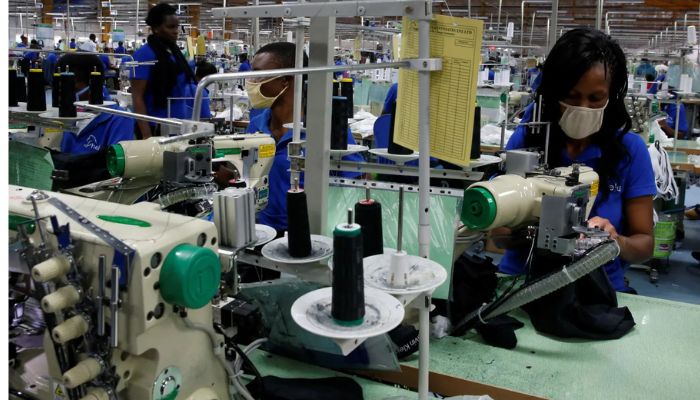
Manufacturers in Nigeria will likely have access to more funds in 2020 owing to the current favourable credit policies by the Central Bank of Nigeria (CBN), the Lagos Chamber of Commerce and Industry (LCCI) has said.
In a statement signed by Muda Yusuf, director-general of the LCCI, the chamber projects that the manufacturing sector will continue to benefit big from CBN’s aggressive credit push to the real sector.
It, however, says that competition between foreign and local producers will fade on prolonged closure of land borders.
The CBN has raised loan-to-deposit ratio from 60 to 65 percent to force deposit money banks to lend to the real sector. The CBN last week debited deposit money banks about N600 billion for non-compliance with the 65 percent LDR, BusinessDay reported last Friday. The bank had given banks up to December 31, 2019 to comply with the 65 percent LDR or face sanctions.

The LCCI sees this posture as positive for the economy.
But it warns that it may raise non-performing loans ratio as the domestic economic landscape is still fragile and borrowers might find it difficult to fulfil obligations. The LDR compares bank’s total loans to its total deposits for the same period. If the ratio is too high, as the case, it means that the bank may not have enough liquidity to cover any unforeseen fund requirements, Investopedia says.
The LCCI adds that early budget implementation for capital projects is positive for the manufacturing sector.
“We are of the view that failure by government to fix structural constraints with regards to fixing power challenges and rehabilitating deplorable road networks will perpetuate the poor productivity and performance of the sector,” the statement says.
It also expects the CBN to raise the LDR from 65 percent to around 70 percent by 2020, in a push to improve credit flows to the real sector to stimulate economic growth.

On the closure of Nigeria-Benin border since August 2019, the chamber projects that government will maintain its protectionist economic policies in 2020.
“While protectionist policies might help local industries stay afloat, it makes them remain less competitive to their foreign counterparts,” the statement says.
“It is probable that government will leave the land borders shut till it gets the desired level of commitment from neighbouring countries. The economy will continue to feel the heat of the policy action in 2020 in terms of higher food prices due to supply shortages,” the chamber notes.
It maintains that effective border policing, not shutting the borders, is a better approach to curtailing smuggling.
“In furtherance, we see the Central Bank of Nigeria maintaining status quo in 2020 by restricting forex supply to the 43 items on the exclusion list. While the policy has benefited some investors, it has penalised others,” the LCCI says.
The chamber foresees high cost of doing business in Nigeria, infrastructural challenges such as erratic power supply, congestions at ports, inefficient road and railway system, combined with the multiplicity of levies, inconsistency in government policies and excessive regulations as constraints that may continue to hinder ease of doing business in 2020.
“While Nigeria may record improvement on the ease of doing business ranking, as a result of some recent policy measures, realities on ground will continue to differ if the challenges highlighted are not properly addressed,” the LCCI also says.
It further predicts that the CBN, like it did in 2019, will maintain status quo by not relenting in supporting the agriculture sector with much-needed funds to ensure that the wide gap between local demand for food and supply is bridged.
“We also see improved credit flow to agriculture on the back of proposed increase in deposit money banks’ loan to deposit ratio to 70 percent,” it adds..