|
Getting your Trinity Audio player ready...
|
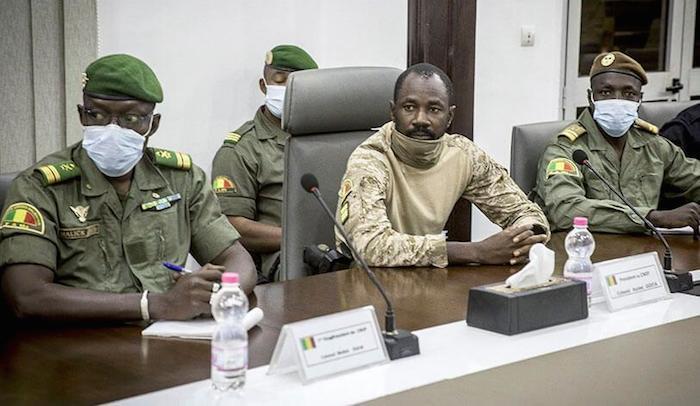
The coup d’état is back. Last month in Mali, soldiers overthrew President Ibrahim Boubacar Keita (IBK). IBK was elected by a landslide in 2013, but by 2019, most Malians were exhausted by his government that had promised so much in terms of economic upliftment, but had failed, so woefully, to bring either peace or progress to their long-suffering country.
The coup against IBK’s government brought months of turmoil including massive street protests, to an end. The tragic thing is that it did not come as a surprise as not only had IBK lost the support of the public but also of the military. What is difficult to predict is if this coup will change the security picture despite rising insecurity being one of the major reasons for Keita’s ouster. But it is important to make a distinction between this coup and that of 2012 which removed one of IBK’s predecessors, Amadou Toumani Touré. That coup was instigated by the rapid fall of northern Mali to jihadist militant groups and a rebellion by the Tuareg ethnic group, while this one took place amid an escalating security crisis and contentions following highly disputed parliamentary elections.
The long-term international reaction will also tell us where the rest of West Africa will go. You see, while the coup enjoyed, and continues to enjoy, the popular support of Malians, it is a mistake that shows a big failing in the practice of democracy in West Africa. Governments come in via the popular vote, go on to alienate a significant portion of their population, and then rig the polls to remain in office, creating a loop of voter apathy, which in turn builds support for illegal military interventions.
ECOWAS condemned the coup and quickly moved to isolate Mali, but tellingly, it sent President Goodluck Jonathan on a mediation mission, a sign that it can accommodate coup plotters. Meanwhile, in a sign of geopolitical interest, the Russians sent a delegation to visit Assimi Goita and his merry band of plotters. That, along with silent Turkish support will, despite the condemnation by other countries such as erstwhile colonial master, France, give the mutinous soldiers hope. Turkey is increasingly involved in geopolitical games on the opposite side of France in places like Libya, Syria, and more recently, the Eastern Mediterranean, where France has come in on the side of Greece in a spat against the Turks.

SEE ALSO: Marine Beach Bridge: FG explains why completion of repair work is delaying
There are multiple risks involved in permitting military interventions. There is the risk of Goita’s junta shrinking the civic and democratic space if allowed to stay in office without a definite timeline for returning the country to democratic rule. In addition, there is the risk that it is unlikely to honour the timeline if one is eventually reached.
But most importantly for us in Nigeria, is the risk of contagion.
Coups beget coups. Many of Africa’s “longest-serving” leaders, including Bouteflika in Algeria (he got 81 percent of the vote last time out), Mubarak in Egypt and Mugabe in Zimbabwe were essentially toppled by coups after popular discontent followed elections in which they “won” handsomely. The same applied to Bashir in Sudan, while in Nigeria’s immediate abroad, Cameroon, Paul Biya, who has been re-elected handily on a number of occasions is presiding over an undeclared civil war. When a democratic rule is so brazenly undermined, provide cover for soldiers to seize power in the name of restoring — not disrupting — democracy.
Burkina Faso, Côte d’Ivoire and Guinea, all sharing borders with Mali, have elections coming soon and possess similar political dynamics as Mali did before the contentious vote that saw IBK retain power. In Guinea, Alpha Conde has just decided to toss the Constitution, “democratically” of course. In Côte d’Ivoire, Alassane Ouattara is playing similar games. In both countries, there are powerful groups that are unhappy and have supporters in their militaries. If the junta in Mali is allowed to remain in power, it could encourage the militaries or other non-state actors in these countries to have ideas, and from there it could spread. That is how the disease of coup making spread in the region shortly after the rash of independence celebrations in 1960.

So, what is Nigeria’s interest you might ask?
Nigeria is the behemoth in West Africa and is just as unstable as any of these countries. Indeed, Ouattara’s Côte d’Ivoire is arguably more stable. If the disease of coups begins to spread, if ECOWAS allows the Mali junta to get away with it, then the risk of some discontented idiots in our barracks here having ideas goes up. At a time when our military is active in operations in all states of the federation bar Kebbi and Abuja, the last thing we need is a misguided attempt at “steadying the flagging ship of state”. What we need is for us to learn to dialogue with each other in this democratic experiment, no matter how obnoxious we find people from the other side to be.
I can give two examples of how, and why the best military government is worse than the worst democratic government, no matter how bad things may appear. On 15 August 1947, two countries were born in South-East Asia, both colonised by the British. In both of them, the first set(s) of elections were heavily contested and rigged in favour of the party in power. In both of them, there were games of musical chairs of politicians after each rigged election. In one of them, however, by October 1958, the military in one of these countries had had enough and conducted a coup. That country went on to have a total of four successful changes of government via the instrument of coup d’état. In the other, despite all the political higi-Haga, the military never intervened.
So, what are their outcomes? Today, Pakistan in which the military intervened four times successfully and quite a number of times without success, has a GDP of $284 billion, and most tellingly, HDI of 0.56. Its next-door neighbour, India, where the military stayed away, has a GDP of $2.93 trillion and an HDI of 0.65. India’s GDP is 10 times that of Pakistan alongside whom it started the journey to nationhood, and despite having six times Pakistan’s population, its people live better. If these statistics don’t provide an illuminating verdict on the outcomes of military intervention, I don’t know what else will.
It is in Nigeria’s strategic interest, to ensure that the thugs in Mali do not get away with it.