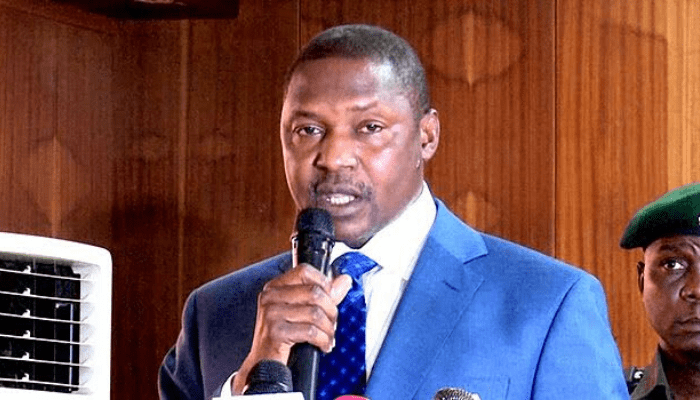
Nigeria’s Attorney-General of the Federation and Minister of Justice, Abubakar Malami (SAN), has decried the level of acrimony and slander that currently dominate the nation’s social media space.
READ ALSO: Hate speech, social media bills face imminent death
He said the consequences could be dangerous, noting that “no society will fold its arms to allow such ominous trend to go unchecked”.
Malami disclosed this on Monday at African Independent Television News Town Hall meeting on hate speech and media regulation bills held in Abuja.
He urged Nigerians to use the opportunities provided by the information communication technology in promoting unity and national integration.
Malami noted: “We need social media more in the areas of enhancing national unity, patriotism, human capacity development, including entrepreneurial skills, and not for tearing the nation apart”.
“Some turned the platforms into avenues for committing heinous internet fraud and cybercrimes,” he noted.
Represented by the Special Assistant on Media and Public Relations, Office of the Attorney-General of the Federation and Minister of Justice, Umar Gwandu, the Minister noted that the emergence and proliferation of information and communication technology tools have come with both positive and negative implications.
“With the absence of gatekeeping process of the conventional media, individuals with neither the skills of information verification and no clues of what the reality is, take it upon themselves to be the purveyors of fake news, hatred and animosity,”’ he noted.
“It is the role played by the conventional media which at all times is expected to be targeted at good governance, national integration and enlightenment of the society for the better that distinguishes the mainstream media from the predator miscreants that are bent on creating global information disorder characterized by misinformation, mal-information, disinformation and hate speeches; the natural consequence of which is societal disorder that blows ill-wind to the detriment of all,” he said.
Malami maintained that it is a common knowledge that the media contributed immensely to the struggle for the nation’s independence and that the media has strived vigorously in the entrenchment of democratic governance and has been instrumental in the process of ensuring good governance through the fight against corruption, upholding the rule of law and keeping government accountable in line with Section 22 of the 1999 Constitution of the Federal Republic of Nigeria.
“It is essential to note that Nigeria operates a constitutional democracy that guarantees freedom of expression thereby providing a conducive atmosphere and veritable platforms” that enable Nigerians to exercise their inalienable fundamental right to unhindered ventilation of opinions, he noted. “Section 39 of the 1999 Constitutions of the Federal Republic of Nigeria is categorical in its provisions regarding freedom of expression,” Malami added.
According to the Minister Nigeria is a signatory to a number of conventions that advocate for freedom of expression: Article 19 of the Universal Declaration of Human Rights, Article 19 of the International Covenants on Civil and Political Rights, Article 9 of the African Charter on Human and Peoples’ Rights among others.
Malami recalled the recent developments where Nigerians freely expressed varied viewpoints on numerous national issues which he described as clear testimony to the commitment of the Federal Government of Nigeria to the doctrine of freedom of expression.
The AGF recalled that the legal framework for the Nigerian media practice emerged from multiple sources, including Received English Laws, International Conventions, Charters, the Constitution of the Federal Republic of Nigeria, Statutes, Decree and Edicts, Acts of Parliaments, Judicial Precedents and Codes, among others.
The Minister assured the gathering that the Office of the Attorney-General of the Federation and Minister of Justice awaited the recommendations of the town hall meeting in order to key into factors brought forward in enhancing vertical and horizontal integration in the process of making people-oriented legislations in the country.