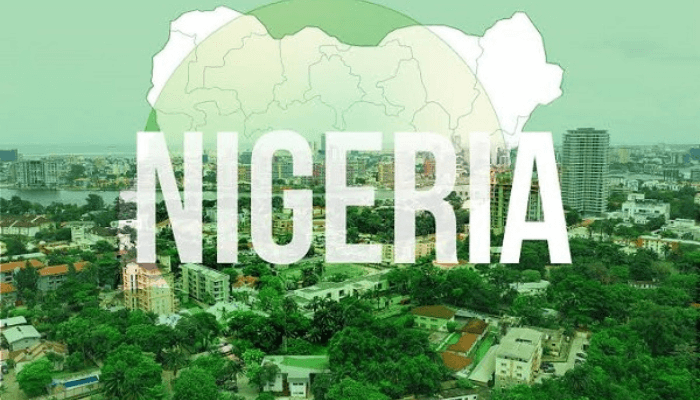
Nigeria’s 2025 political calendar will be remembered less for elections and more for moments of rupture, when power was tested, authority stretched, and the country’s democratic instincts confronted deep structural anxieties.
From the declaration of emergency rule in Rivers State to a coup scare and an unprecedented escalation in Nigeria–U.S. security relations, and gale of defections, the year unfolded as a series of stress tests for Africa’s most populous democracy.
Together, these events did more than dominate headlines; they shaped national conversations about federal power, civil-military relations, sovereignty, and the fragility of political settlements in a deeply polarised polity.
Read also: Governor Yusuf set to dump NNPP for APC, reshaping Kano’s 2027 political battlefield

Rivers’ State of emergency
The political crisis in Rivers State has been simmering for months before it finally boiled over in March 2025. At the heart of the turmoil was a bitter power struggle between Governor Siminalayi Fubara and Nyesom Wike, his predecessor, now a powerful figure in President Bola Tinubu’s cabinet as minister of the Federal Capital Territory (FCT).
What began as a rift within the state’s political elite quickly metastasised into institutional paralysis. The Rivers State House of Assembly split along factional lines, governance stalled, and political violence loomed in the background of daily governance.
By March 18, Tinubu stepped in, invoking his constitutional powers to declare a state of emergency in the oil-rich South-South state.
Fubara was suspended alongside all elected officials, a move that instantly divided legal minds and political analysts. Supporters argued that the president acted to prevent a total breakdown of law and order.

Critics countered that suspending an elected governor crossed a constitutional red line and threatened Nigeria’s federal balance.
The controversy soon moved from public debate to the courts. Governors elected on the platform of the Peoples Democratic Party (PDP) sued the president, challenging the scope of his powers under emergency rule.
The Supreme Court recently delivered the landmark judgment, affirming that the president could suspend elected officials during a declared state of emergency.
To administer Rivers during the emergency period, Tinubu appointed Vice Admiral Ibok-Ete Ekwe Ibas (rtd.), a former chief of Naval Staff, as sole administrator.
Ibas’ six-month tenure was marked by both administrative calm and political controversy, especially when he oversaw a local government election that produced new chairmen across the state.
By September, power was formally returned to Fubara, marking the end of emergency rule. But the crisis itself was far from resolved.
In a move that was earlier predicted by analysts, Fubara, elected under the PDP, defected to the ruling All Progressives Congress (APC), further reshaping the state’s political equation. Yet, Wike and his allies continued to issue pointed public statements, signalling that the battle for Rivers’ political soul remains unfinished.
Fubara’s defection was one of the several others that happened this year under circumstances that have remained controversial.
Coup rumour
In October, reports emerged that security agencies had arrested at least 16 military officers accused of plotting to overthrow President Tinubu and end Nigeria’s 26-year experiment with uninterrupted civilian rule.
Although the federal government stopped short of officially confirming the plot, the ripples were immediate and profound.
Perhaps, the most telling signal of official concern was the cancellation of the annual October 1 Independence Day military parade.
According to reports, the event had allegedly been identified by the plotters as the moment to assassinate the president and other top officials, a claim that heightened public anxiety, even in the absence of formal government disclosure.
Read also: Jang dismisses defection rumours, reaffirms PDP loyalty amid Plateau political uncertainty
The scare did not occur in a vacuum. Since 2021, West Africa has witnessed a troubling resurgence of military takeovers.
Mali, Niger Republic, and Burkina Faso had all fallen to juntas and, by 2024, dramatically exited ECOWAS to form the Alliance of Sahel States. Democratic norms in the region were already under strain.
Weeks after Nigeria’s own scare, soldiers seized power in Guinea-Bissau following a controversial general election, reinforcing fears that coups were again becoming contagious.
In Benin Republic, a deadly attempt to overthrow the government was thwarted with Nigerian support, underscoring Abuja’s role as both a regional stabiliser and a potential target.
Re-designation of Nigeria as CPC and first US airstrikes
On October 31, U.S. President Donald Trump redesignated Nigeria as a ‘Country of Particular Concern (CPC)’ over allegations of widespread violations of religious freedom, including claims of a Christian genocide. The CPC label, reserved for the world’s worst offenders, came with a warning that military options were not off the table.
It was not the first time Nigeria bore the designation. Trump had first applied it in 2020, before President Joe Biden lifted it months later, a decision that drew criticism from conservative lawmakers and religious advocacy groups in Washington. The 2025 re-designation reopened fierce debates over how to interpret Nigeria’s complex security crisis.
Abuja pushed back strongly. Nigerian officials insisted that violence across the country is driven by criminal banditry, competition over land and resources, and the opportunism of armed groups, not a state-sanctioned campaign of religious persecution. Still, the diplomatic temperature rose sharply.
Behind closed doors, Nigeria intensified engagement with US authorities. That diplomacy culminated in a stunning development on Christmas Day: the first confirmed US airstrikes on Nigerian soil. According to the federal government, the strikes targeted terrorist enclaves in the Bauni forest axis of Tangaza Local Government Area, Sokoto State.
While uncertainty remained over whether missiles were launched from maritime platforms in the Gulf of Guinea, debris from the operation reportedly fell in Jabo, Tambuwal Local Government Area of Sokoto State, and as far as Offa in Kwara State. The government confirmed that no civilian casualties were recorded.
The strikes marked a new and controversial chapter in Nigeria’s security partnerships, raising difficult questions about sovereignty, intelligence sharing, and the precedent of foreign military action within Nigeria’s borders.
ADC emerges as new ‘Third Force’
Amid prolonged internal wrangling that weakened opposition parties and limited their capacity to effectively challenge the ruling All Progressives Congress (APC), opposition politicians formed a coalition that eventually fused into the African Democratic Congress (ADC) in early 2025.
The coalition followed nearly a year of strategic, closed-door discussions among opposition leaders who agreed on the need for a common political platform to confront the APC and challenge the current administration ahead of the 2027 general election.
Read also: Year of defections, real and imaginary hunger, and political abracadabra
The opposition bloc was led by prominent political figures, including Atiku Abubakar, former vice president; Chibuike Amaechi, former minister of Transportation; Peter Obi, former Labour Party presidential candidate in the 2023 election; and Nasir El-Rufai, former Kaduna State governor, among others.
The politicians said the decision to unite under the ADC became imperative in order to present a unified opposition front and avoid further fragmentation of opposition votes in future elections.
In the months that followed with 2025, the ADC gained increased prominence nationwide, emerging as a rallying point for opposition politicians.
In Lagos State party officials confirmed ongoing discussions on membership expansion and structural reorganisation to accommodate new entrants.
The party also opened a new national headquarters and announced a new leadership structure, with Rauf Aregbesola, former Osun State governor and ex-minister of Interior, elected as national secretary, while David Mark, former Senate president, emerged as national chairman.
Mass defection to the ruling APC
One of the most striking political developments of 2025 was the mass defection of opposition politicians to the ruling APC.
The scale of the defections is continuing to raise concerns in some quarters about the prospect of Nigeria drifting toward a one-party system ahead of the 2027 elections.
Several state governors elected on the platform of the Peoples Democratic Party (PDP) defected to the APC, alongside numerous federal and state lawmakers and other political figures who were not holding public office.
The governors who defected during the year include Delta State Governor Sheriff Oborevwori; Rivers State Governor Siminalayi Fubara; Akwa Ibom State Governor Umo Eno; Enugu State Governor Peter Mbah, and Bayelsa State Governor Douye Diri.
Reports in recent week stated that the governors of Plateau and Taraba states were considering or had concluded moves to join the ruling party.
The defections continued through the year and is expected to extend into 2026, significantly altering the political landscape ahead of the next general election.
Suspension of Senator Natasha Akpoti-Uduaghan
Another major political event in 2025 was the suspension of Senator Natasha Akpoti-Uduaghan, who represents Kogi Central Senatorial District, by the Nigerian Senate.
The suspension followed a heated confrontation between the lawmaker and the Senate leadership during plenary over procedural disagreements, which escalated into exchanges on the Senate floor.
The matter was subsequently referred to the Senate Committee on Ethics, Privileges and Public Petitions for investigation.
After its deliberations, the committee presented a report recommending disciplinary action against the senator.
The Senate adopted the report through a voice vote, approving her suspension on grounds of alleged misconduct, violation of Senate rules, and actions deemed inconsistent with legislative decorum.
As a result of the suspension, Senator Akpoti-Uduaghan was barred from participating in plenary sittings, committee activities, and other legislative engagements.
Her office activities within the National Assembly complex were also affected, in line with Senate disciplinary procedures.
The decision generated widespread reactions from political actors, civil society organisations, and rights groups.
However, Senator Akpoti-Uduaghan subsequently filed a lawsuit against the Senate, challenging the legality of her suspension and urging the court to determine whether the action was lawful.
The legal dispute between the senator and the Senate leadership remained unresolved, with both parties continuing to pursue the matter in court.