Phillip Isakpa
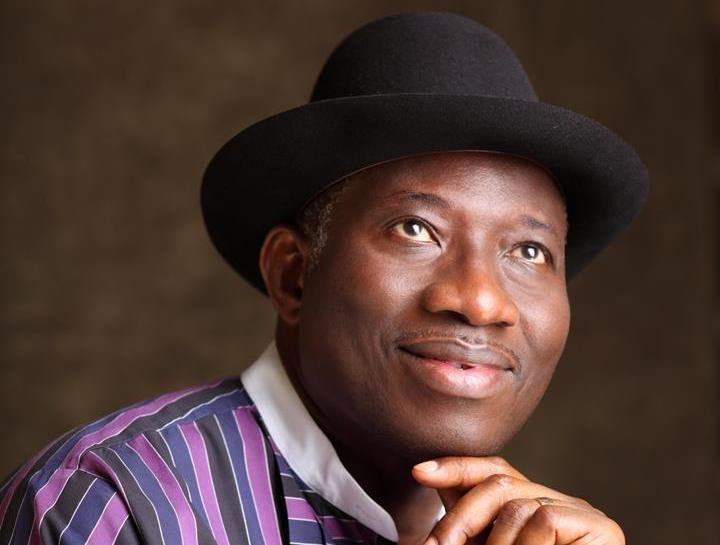
There was a time when there was a whole rash of conferences on investing in Nigeria, especially when the FDI bandwagon really got going in the second term of President Obasanjo (and how long ago that seems!), Now, in the changed global economic climate, with all the talk of credit crunch and toxic assets, they are only very occasional, perhaps because of the greater difficulty in raising sponsors. There was one last December, when Lagos State put on a persuasive credit crunch-defying presentation in the heart of the beleaguered City of London, including a breakfast at the historic Guildhall. Now I can report on a concerted effort involving the Vice-President of the Republic Chief Goodluck Jonathan and a group of State Governors from Kano, Anambra, Rivers, Ondo and Gombe as well as several ministers from key departments. This was a day conference which was seriously named The Case for Investing in Nigeria, held under the joint auspices of Africa Matters (of Baroness Lynda Chalker) in conjunction with Developing Markets Associates (DMA), and was held in the sober ambiance of the Institution of Engineering and Technology (IET) overlooking the Thames by Waterloo Bridge.
Baroness Chalker now counts as a veteran of African affairs in the British political firmament, as it is now almost twenty-five years since she first became Minister in the Foreign Office for Africa a position she held in conjunction with running what was then called the Overseas Development Administration. Since moving out of government in 1997, she has been concentrating on the private sector in Africa, and has been running the Honorary International Investment Council, which has had several meetings on investing in Nigeria. She is also on the Advisory board on Africa of Renaissance Group. Her experiences with Africa have on occasion been bruising, but she is known for speaking her mind, and has proven durability. She has also been a champion of a positive view on Nigeria, which she put forward at the beginning of the conference, and on occasion in her comments, as when she applauded the encouraging intervention by Steven Dimitriyev, Private Sector Development specialist World Bank as being so different from those she used to hear over the years. Nigeria has changed its ways! she exclaimed.
Read Also: Gowon, Goodluck and Patience Jonathan join Buhari to mark Nigeria’s 60th Independence anniversary

Although one sometimes felt oneself to be in virtual reality, other speakers entered the prevailing spirit of optimism in spite of the gloomy state of the world, and the known fragility of aspects of the Nigerian economy. But this was not a conference about world crisis. The keynote speech from Vice-President Goodluck Jonathan, told of Nigeria’s private sector driven recovery, mentioning both bank consolidation and the anti-corruption drive as being among positive factors that do not get reported enough. Indeed he stressed the ignorance of the drastic changes in the investment climate in Nigeria since 1999.he and other speakers made a point of pointing up the ambition of Nigeria to join the ranks of the world’s 20 industrialised countries by 2020. This sounded like overkill, although it transpired that what one member of the audience thought was a reference by one speaker to investment heaven was in fact investment haven, which though it sounds comfortable, does not produce the same sort of exaltation.
There were many references to global crisis, and to Nigeria’s current problems. Remi Babalola, Minister of State, Finance (standing in for his boss) admitted you cannot gloss over the downside (such as the Niger Delta) but saw strengths in the present situation. He especially drew attention to figures that highlighted the conference’s theme “that where Foreign Direct Investment in 1999 was $3.89bn, in 2002 it was $22bn and in 2006 it was $40.25bn, and it is certainly higher now. Questioned, he dismissed
nervousness about the decline in the value of the currency which he said was controlled devaluation that had been needed.
Among several private sector interventions, Tony Hadley, Chief Executive of Dangote Cement Group painted an interestingly broad picture of how one entrepreneur can help in the regeneration of Nigeria’s often ailing industries. But the main thrust of presentations came from various government representatives. Governors put the case for their States; and ministers for their ministries, rooting especially for industry and infrastructure. One noted Diezani Allison Madueke, Minister for Mines who had us forcefully believing in the huge potential of solid minerals, and the softer-spoken Ibrahim Isa Bio, Transport Minister who gave a very complete picture of all the investment opportunities in this sector, including notably railways, in desperate need of a transfusion for the huge capital outlay needed: at least we now have a 25-year strategic vision.
A conference like this is always to some extent theatre, so it is sometimes the vignettes and the one-liners that stay in the memory. For example, the whimsical Achike Udenwa said that while Nigeria was a solid WTO member we want consciously to discourage the importation of frivolities’. And Goodluck Jonathan himself has a line in earthy aphorisms, as in You can convert almost any part of Nigeria to money or There’s nothing in the world you don’t have a market for.