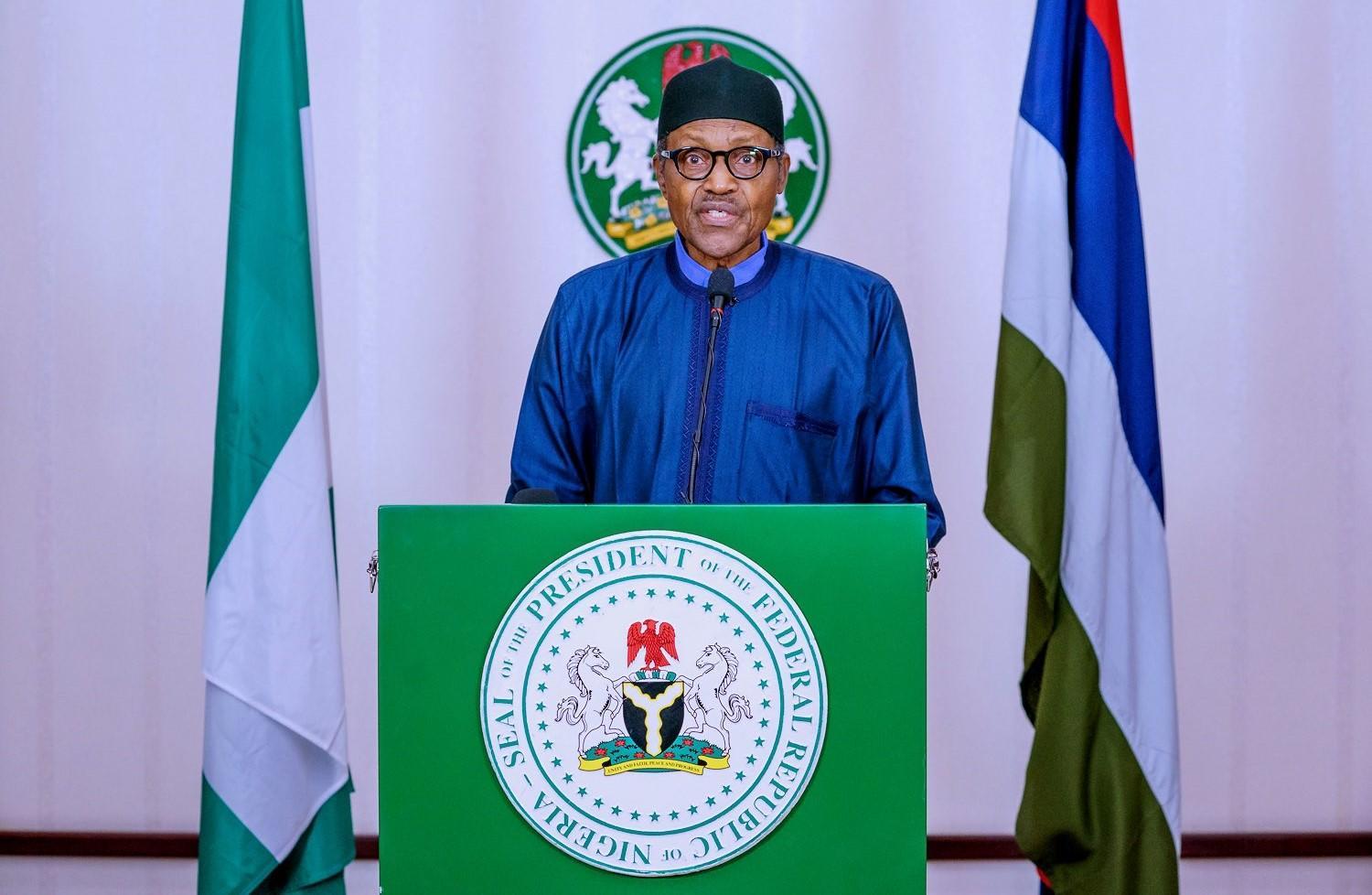
Before the nationwide broadcast on Monday, April 13, 2020, by President Muhammadu Buhari in which he extended the stay-at-home order in Lagos, Ogun and the Federal Capital Territory (FCT), Abuja by additional 14 days, many Nigerians were not expecting to hear anything to the contrary.
Their eyes were rather glued to the television screen to hear some clear-cut pronouncements on practical steps by government on how to ensure that palliative packages got to every Nigerian citizen, particularly, those resident in the affected areas.
Before the Presidential broadcast, those who daily follow the chart on the rise in the cases of COVID-19 in Nigeria, already knew that there was no way Aso Rock was going to remove the embargo placed on movements.
Truth be told, there is no indication that the country is out of the woods. If the country has only tested a paltry number of people, less than 10,000, from a huge population of over 200 million, you get close to 350 cases, with 10 deaths; it simply means that the surface is not even being scratched. Many infected Nigerians are, most probably, moving about distributing the disease, unchecked.

Many Nigerians believe him, as he rightly pointed out, that “this (the extension of the lockdown) is a difficult decision to take, but I am convinced that this is the right decision. The evidence is clear.
“The repercussions of any premature end to the lockdown action are unimaginable. We must not lose the gains achieved thus far. We must not allow a rapid increase in community transmission. We must endure a little longer.”
It is believed that having contained the cases that were traced to people that came in from foreign countries (index cases) and those who made direct contact with them, it is now time to trace community contacts. These are those, who may have come in contact with infected people without knowing. The thinking is that within the next two weeks, such people would begin to manifest the symptoms and probably report themselves to the appropriate centres.
Although the President said what was expected of him, by telling Nigerians, particularly those resident in Lagos, Ogun and the FCT to still stay at home for the next 14 days in their own interest, he missed the momentum by not addressing the vexatious issues of biting hunger in the land and how the much-stated stimulus from the Federal Government could get to every Nigerian.
An analyst, who x-rayed the speech, said: “He dodged the opportunities to inspire a populace that is falling in depression over failure of our governments to recognise the pangs of hunger that have formed a more dangerous virus, the hunger virus.

“He frittered another chance to create hope and confidence of the people in their President. The President’s speech was full of no measures; half measures and tentativeness that suggested that we still needed weeks to plan for palliatives that Buhari announced during his first broadcast of 30 March 2020. How does he explain these? Does he care? Does he know, indeed, what Nigerians are going through.”
Recall that in the last two weeks, the stimulus or palliative packages rolled out by the Federal Government have been a subject of controversy. Not just that the masses repudiated the method of distribution, the leadership of the National Assembly also took exception to the bogus claim of those saddled with the responsibility of sharing, that huge amount of money had been distributed to a large number of unverifiable beneficiaries.
Nigerians had cried out, using various means, especially the social media, telling the government at the centre, to use the house-to-house method used when politicians go out to campaign for votes; or use the ward method, or use the Bank Verification Number (BVN) to transfer money to them. These were issues on ground before the broadcast and Nigerians had expected the President to speak to those issues. But he never did.
Nigerians, who listened attentively, thinking that the President was going to address the alleged lopsidedness in the distribution and the “ethnicisation” of the palliative, were disappointed when they did not hear any of such.
Observers say that the President’s refusal to address the welter of allegations swelling around the stimulus package may have inadvertently empowered those in charge to continue their alleged racketeering.
The closest Buhari came to the palliative issue was when he noted that “no country can afford the full impact of a sustained restriction of movement on its economy. I am fully aware of the great difficulties experienced especially by those who earn a daily wage such as traders, day workers, artisans and manual workers.”
“For this group, their sustenance depends on their ability to go out. Their livelihoods depend on them mingling with others and about seeking work. But despite these realities we must not change the restrictions,” he further said.
He also said that the palliatives would be sustained without talking about how they should be equitably distributed. He lost Nigerians when he said: “In the past two weeks, we announced palliative measures such as food distribution, cash transfers and loans repayment waivers to ease the pains of our restrictive policies during this difficult time. These palliatives will be sustained.”
He also spoke about a register which many Nigerians have criticised and alleged to have been compiled along party line. He really appalled many when he said: “I have also directed that the current social register be expanded from 2.6 million households to 3.6 million households in the next two weeks. This means we will support an additional one million homes with our social investment programs. A technical committee is working on this and will submit a report to me by the end of this week.”
Recall that the anger over the failure of the Federal Government to provide for the citizens unlike other nations that openly announced various packages for their people and the faulty method of distributing whatever was available, sparked all sorts of reports on the social media.
Some commentators berated some of the philanthropists who donated huge sums of money into the coffers of the Federal Government towards the fight against the COVID-19; saying that they should have donated directly to the suffering masses instead.
To worsen the situation, the Federal Government, through the Inspector-General of Police, decided to declare war against anyone who dares foment trouble while the lockdown lasts.
But complaints are rife that many households are going through excruciating pain at the moment.
Capturing the gloomy situation of things at the moment, Ikeddy Isiguzo, a media guru, in his article on ‘Coronavirus broadcast – Nigerians await President Buhari’s broadcast on hunger’, said: “Official statistics rate Nigeria as the poverty capital of the world.”
According to him, “By noon on 14 April 2020, about 95.9 million Nigerians are living in extreme poverty, that is 47.6 percent of the population. Extreme poverty, also known as deep poverty, abject poverty, absolute poverty, destitution, or penury, according to the United Nations’ 1995 report of the World Summit for Social Development is characterised by severe deprivation of food, safe drinking water, sanitation facilities, health, shelter, education and information. Nigeria earned the unenviable title of the world’s poverty capital in June 2018 when the number of the extremely poor was 86.9 million. It has clung to the title ever since.”
As it stands at the moment, some Nigerians are taking the same decision the four lepers at the gate of Samaria took as recorded in the scripture, in the search of food to satisfy their hunger: “If we go into the city we will die of starvation. If we surrender to the enemy they may kill us also. What do we have to lose?”
This is where many Nigerians are at the moment: a pessimistic view of life. “Death is death— whether COVID-19 or hunger.” It appears, they are ready to die of the former than of the latter.
ZEBULON AGOMUO