A one-week project inspection tour of Akwa Ibom State last week by the ‘Livelihood Improvement Family Enterprises in the Niger Delta (LIFE-ND)’ seems to hold high hopes.
This seems to show that the intervention of the International Food for Agricultural Development (IFAD) in Nigeria’s food security programme may be a big success. The first phase which just ended is said to have met high targets but three states (Akwa Ibom, Rivers, and Imo) were left out due to finding denials for over six years by the Niger Delta Development Commission (NDDC), until the Samuel Ogbuku-led management came to the rescue late 2024, relasing over $7.5m so far out of the $30m to be borne by the Commission.
Akwa Ibom State is regarded as one of fastest performing states in the second group, with impressive reports filtering out of the state. The state targeted commodities include four key agricultural value chains of cassava, oil palm, poultry, and aquaculture.
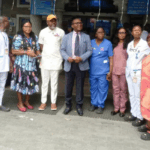
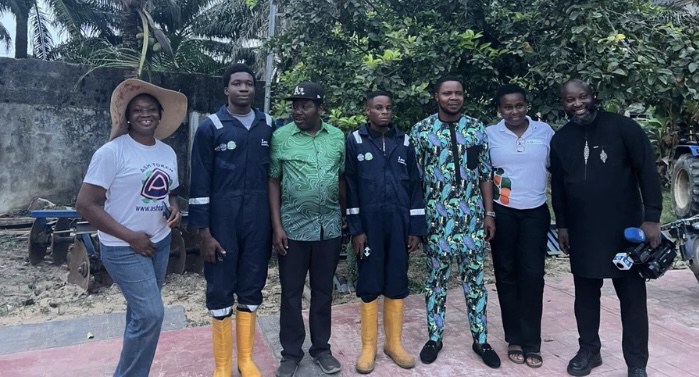
When officials of the Livelihood Improvement Family Enterprises in the Niger Delta (LIFE-ND) visited Ibetu area of the state during the latest tour, they seemed impressed with what Mfon Anietie Umohka, State Knowledge Management and Communication Officer for the LIFE-ND Project in the state showed them.

Speaking on behalf of my State Project Coordinator at Ibetu Farms, said to be one of their incubation centres in the LGA, she said their incubation centres had trained about three batches of beneficiaries already in the state. “The first set of incubates were 10 persons here, and they were under the poultry commodity—brood and sell, and also poultry production.
“The first batch has been trained and they have been empowered. They are currently in their own farms. And if you are interested, we can also take you to one or two to see what they are doing. They are doing very, very well. This place has recorded some of our success stories on the project in the last one year.”
Currently, she stated, they have another set, which is in the third batch. “We have 10 people still here, and you will have the opportunity to meet with them. It’s an integrated farm; we have other things they do, but for the project, they are handling our beneficiaries in the poultry enterprise and value chain all through.
“See for yourselves how the incubation centre has been doing so well in churning out agri-preneurs for food sufficiency in the Niger Delta and also Akwa Ibom State.”
The scheme trains both males and females including physically challenged persons. She went on: “The project is targeted at three sets of people: Youths between the age of 18 and 35 years (male and female), persons with disability, and women-headed households. The officials say they have their gender disaggregation methods.

“We are looking at underemployed or unemployed youths between the age of 18 and 35. So, irrespective of your qualification, once you show you are interested in being trained—because the commodity determines the duration of the training you are getting. Like, we have two sets of people. We have what we call short-term and the long-term. For those in brood and sell, their commodity is short-term. So there are different centres and different ways that we try to train the different persons.”
Challenges:
The knowledge coordinator said there were challenges. “Initially, when the project came in, we got some stiff opposition because they were used to or tired of seeing government coming to communities promising to do this and that. And they were like, ‘No, no, no, please go.’
“Some communities were outright in chasing us away, saying, ‘You people come and the only thing you do, you are holding papers and trying to get stuff,’ you know? So they were not really receptive.”
From rejection to enthusiasm:
Now, she said, the same community people that rejected the call have now turned to hunt for the scheme. She said: “But as at when members of the first batch were now empowered, they saw the kind of empowerment, and we practically have to hide to go to selected communities now! This is because when you are passing through a community that is not benefiting, they practically stop us. They say, ‘See them, see them!’
“They want you to join the scheme because of the impact. The project has, of a truth, been so, so impactful. And the people are excited and are hoping and are requesting for a scale-up and an expansion. Currently in each state in the Niger Delta, we are only looking at a pilot for 10 LGAs. And each of the LGAs produce 10 communities. So that basically has been our current challenge.”
The startup:
She explained thus: “In the poultry value chain/commodity, we gave them 250 day old chicks (DOCs) to groom into brood and sell. They were supported with 18 bags of feed to take per person. We have evidence to back up.
“Then for those that are in the egg production, we gave them Point of Lay (layers) and layers mash. We gave them gave them growers then layers mash for when they start to lay. And they are all doing very, very well. The set you are meeting now is from those that are currently undergoing training.
“Akwa Ibom is one of the states sponsored by the NDDC and state government contributions.
|So, NDDC comes in with our national office, we undertake monitoring from time to time to find out because they all have their logbooks. The trainers were given training manuals. So we come to monitor to find out how they are doing. If they’ve even learnt anything at all.”
She explained some of the due diligence processes that have ensured that beneficiaries did what they were empowered to do. “For instance, day old chicks need a lot of warmth, they need a lot of comfort. So, we do due diligence. We have the monitoring and evaluation team supported by the state officers. So we do a lot of checking. We have Local Government Desk Officers that also monitor these people in the field. And we also do that on our own as the State Project Coordinating Office.”
Sje said there is nowhere without challenges. So, they devised methods of tackling any. To her, success stories are things that are verifiable. “By the time you go into the farm and see the kind of training, you will marvel. Where we are now is their classroom. On a normal day, they are here, they are taught, you know, and they have their manuals. The incubator has the manual, has the logbook. You needed to see those things.
“The first empowerment was in May/June. They have sold up the first set and are ready to sell this December batch. We, even as staff, we buy eggs from them. As I’ve come, I will buy something before I leave, just to support their business.”
Mood:
She captured the mood in the project area. “The beneficiaries are excited. They can’t believe this is happening to them. For example, we just got back from Abuja last week. We went to showcase the impact of the project. And each state was asked to bring five incubatees. The Minister of Agriculture, Senator Abubakar Kyari, himself communicated and spoke with them one-on-one and he was excited because he saw results. And they are hoping to upscale, from his talk.
“Some of the beneficiaries now tell us they didn’t believe it would be up to this level of empowerment.
“This is because it is not just about giving money to these persons. During their training, monthly they were given stipends to alleviate their logistics burden and motivate them. And at the end of the day, once they are done with whatever they are doing, we try to make them see the roadmap. The training is not just by the incubators. We have mainstreaming areas of nutrition, climate change, etc, to try to tell them the best practices in their commodity areas. So there’s a lot to talk about and for you to see.”
Background:
The Livelihood Improvement Family Enterprises in the Niger Delta (LIFE-ND) project in Akwa Ibom aims to enhance incomes, food security, and job creation for rural youth and women through agri-enterprise development. The project is a collaboration between the Federal Government of Nigeria, the Niger Delta Development Commission (NDDC), and the International Fund for Agricultural Development (IFAD).
The goal is to transform the rural economy in the Niger Delta, allowing the rural population to derive prosperity and equal benefit through community-based on-farm and off-farm business activities.
They target unemployed/underemployed rural youths aged 18-35 and women-headed households with children under 15.
Akwa Ibom is one of three states (along with Imo and Rivers) funded by the NDDC, which pledged $30 million for the project in these states.
The project uses an “incubator” model, where selected beneficiaries (incubatees) are trained by established local farmers/processors (incubators) using a community-based master-apprenticeship approach.
Each participating state is expected to empower a total of 4,250 beneficiaries over the project’s six-year implementation phase, targeting 10 local government areas and 10 communities per LGA.
The project officially launched and began implementation, including community sensitization and identification of beneficiaries, in Akwa Ibom in late 2024/early 2025 after initial funding delays. As of late 2025, 1,420 persons had reportedly benefited.