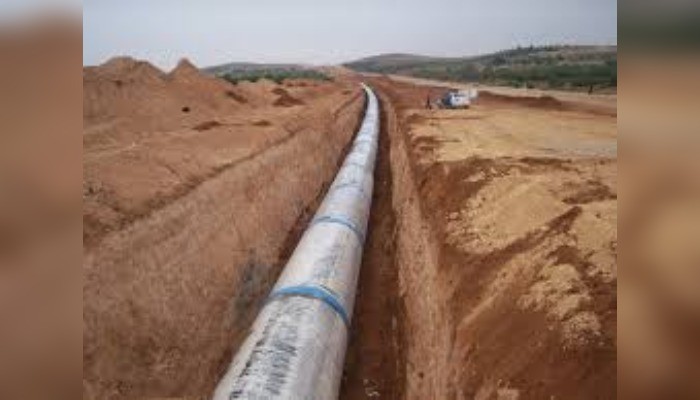
Oil prices surged to more than two and the half-year high of $67 on Tuesday after an explosion at a pipeline carrying crude to Libya’s biggest export terminal curbed the Organisation of Petroleum Exporting Countries (OPEC) nation’s production.
The pipeline will need about a week for repairs, two people familiar with the situation told Bloomberg.
The price of Brent Crude spiked following news of an explosion at a Libyan crude oil pipeline that feeds the Es Sider sea terminal, home of the largest oil depot in Libya, while the reasons for the explosions haven’t been determined yet, media reports are suggesting that it was possibly a terrorist attack.
International benchmark Brent crude rose by $1.81, or 2.8 per cent, to $67.06, after hitting an intraday peak of $67.10, its highest level since May 2015. While the U.S. West Texas Intermediate crude futures jumped to $59.97 indicating an increase by $1.50 or 2.6 per cent, having traded as high as $60, the best level since June 25, 2015.
READ ALSO:Iran, Libya make oil strides as Nigeria drags
“Supply disruptions are more likely to push up prices as a result of a market which is already tightened, so if Libya does not repair its pipeline soon, the oil price is likely to go even higher in coming months,” said Luqman Agboola, Head of Energy and Infrastructure, Sofidam Capital.
The explosion caused the country to lose 70,000 to 100,000 barrels a day of production (BPD); Libya produced 973,000 barrels a day in November, according to OPEC’s latest monthly report.
The Akhbar Libya news outlet reported that the gas pipeline belonged to the al-Waha oil company, the group’s press service claimed that the explosion could have been caused by a terrorist attack, adding that the communication with an engineering crew working on the scene had been lost.
Despite Libya oil production rising to about 1 million BPD, which is the country highest level in four years. Libya’s oil fields have endured sporadic shutdowns and disruptions due to protests, power blackouts and fighting. Any drop in production due to the blast that occurred 130 kilometres (81 miles) south of Sidra will ease pressure on OPEC-led efforts to drain a glut.
“For us domestically, there is no budget allocation for subsidy in the 2018 budget, so unless the government decides to either do crude regulation or perform some level of price modulation, Nigerians are going to pay more for refined petroleum products in 2018 because the international price for oil keeps increasing,” said Agboola.
READ ALSO:Five impacts of Libyan pipeline explosion
Yemi Osinabjo, Nigeria’s Vice President had previously clarified on Monday that the Federal Government was not bearing the subsidy on the importation of petrol products in response to BusinessDay’s question on who is bearing the subsidy of N26 per litre, the Nigeria National Petroleum Corporation (NNPC) had claimed is for each litre of petrol.
Luqman Agboola responded, “If the NNPC an institution that belongs to the federal government is footing the subsidy bill, where are they getting the money from? Because every oil income is expected to go into the federation account, this implies that NNPC has not been fully remitting to the Treasury Single Account (TSA) which is another form of corruption.”
Oil crashed in 2014 and 2015 and reached a low of $26 a barrel in 2016. Prices slowly rebounded after the 14-member cartel, Russia and nine other exporting nations recently extended an agreement to keep 1.8 million barrels a day off the market to help shrink brimming stockpiles of crude around the world.
Libya is one of two OPEC members, along with Nigeria, that was exempt from the deal to cap production this year. Both countries have suffered oil supply outages related to internal conflicts.

OLADIPO OLADEHINDE