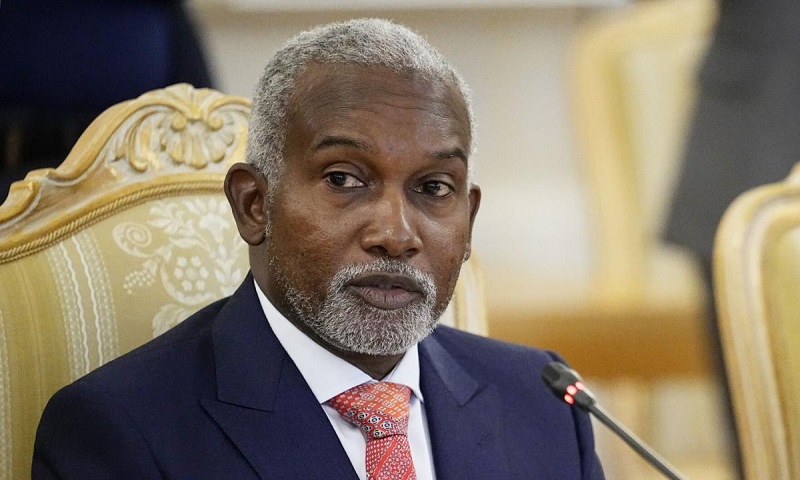
There are men who chase opportunity wherever it shines brightest. And then there are men who see opportunity at home even when home does not yet believe in itself.
As Leo Stan Ekeh turns 70, one defining decision in his life stands out. He once studied abroad, gained global exposure, and could have chosen the safer path overseas. Yet he returned to Nigeria, determined to build, rather than inherit, a future here. That choice, more than any award or balance sheet, may be the boldest line in his story.
“For me, Nigeria has always been the frontier worth fighting for. I could have stayed abroad and pursued a comfortable life, but I knew my calling was here, to create opportunities, systems, and structures that would outlast me,” Ekeh told BusinessDay in a recent interview.
From student abroad to systems architect at home

Ekeh’s international education exposed him to highly structured systems, advanced technologies, and disciplined business environments. “Studying abroad showed me how the world could operate. But I came back because I wanted to apply that knowledge where it mattered most, which is Nigeria, where the gaps were widest,” he said.
Upon returning, he faced a market where computers were largely imported, ICT infrastructure was fragmented, and local manufacturing was nearly nonexistent. He built Zinox Technologies in 2001, making it sub-Saharan Africa’s first WHQL-certified computer manufacturer. The certification was more than technical validation, it was a statement that Nigerians could produce technology at global standards.
From there, he expanded the ecosystem. TD Africa solved distribution inefficiencies across the continent, while Konga answered the demand for local digital retail infrastructure. Manufacturing. Distribution. Retail. Systems thinking applied at national scale.
70 and still vetting on Nigeria
Unlike many corporate leaders, Ekeh has built quietly but ambitiously. He works 20-hour days, takes minimal holidays, and focuses on frameworks rather than fanfare. That temperament explains why he chose not to host a lavish 70th birthday. Instead, he unveiled a N10 billion scholarship fund through the Leo Stan Ekeh Foundation to support 1,000 indigent but brilliant Computer Science students across Nigerian federal universities.

“This is a spirit-driven project to thank those who supported and continue to support companies within the Zinox Group. Each beneficiary will have a tech mentor from year one. We plan to partner with the Computer Society of Nigeria to ensure every vocation is engaged resourcefully. They will be from homes where parents earn below Government Level 10 or its equivalent in the private sector. The first batch starts this September,” Ekeh explained.
On the scale of the investment, he said, “It has an annual cost that shall run into billions of Naira. This is a 10-year project with other perks, including mentorship, exposure, and structured support. The full package will be revealed online on March 22, 2026.”
Applauded as Nigeria’s boldest tech education intervention
The scholarship has already drawn high praise. The Ideas Nigeria Movement (INM), a pro-innovation advocacy group, described the initiative as the first ever futuristic scholarship in Nigeria capable of addressing the digital gap between Nigeria and other developing nations.
Nadodo Abubakar, INM’s executive secretary, in a statement, said; “The concept of such structured, targeted, youth-focused scholarship is rare and laudable. For the first time in the history of Nigeria, we are seeing a scholarship of such magnitude solely dedicated to the study of Computer Science. This is not just an investment in the youths, but an expression of confidence in the future of the country.”
The group highlighted the urgency of such interventions, noting that Nigeria lags behind countries like Singapore and the Philippines in digital readiness and literacy. INM urged other private-sector actors to sponsor similar niche-focused scholarships to build a future of shared prosperity.
Ekeh described the gesture as a debt of gratitude, saying, “This scholarship is a thank-you to God, the Nigerian government, and the corporate sector for their steadfast support of the Zinox Group over the decades.”
Faith, discipline, and a long-term vision
Faith has been the silent engine behind Ekeh’s work. Born in Ubomiri, Imo State, he grew up in a disciplined Catholic household, serving as a mass servant and chorister. He frequently credits divine guidance for his success.
“God is the architect of my success. As an entrepreneur, I have strategized, stayed up late, made projections, but without His mercy and grace, there would be no success,” he said.
Ekeh’s life demonstrates a rare blend: international exposure applied locally, business acumen aligned with public purpose, and faith guiding structural philanthropy. His projects, from TD Africa’s female tech initiatives to university entrepreneurship centers, consistently focus on building systems, not temporary solutions.
A legacy measured in systems, not spectacle
To reduce Leo Stan Ekeh’s story to wealth would be a disservice. His true imprint lies in scaffolding: certified manufacturing standards, continent-wide ICT distribution networks, homegrown e-commerce architecture, and structured talent pipelines.
At 70, his story is more than a biography; it is a manifesto for Nigeria’s digital future. He could have stayed abroad, pursued personal comfort, or simply celebrated a milestone in style. Instead, he invested in people, over 1,000 potential tech leaders whose contributions could shape the country’s economy for decades.
“We need quality and tech-savvy wiz-kids who can drive the future of government and e-governance and those who will become change-makers in the private sector. Only a few God-anointed tech wiz-kids can alter the GDP of this country in five years,” he said.
In a world obsessed with spectacle, Leo Stan Ekeh’s 70th birthday reminds Nigerian leaders that true influence is measured not by applause, but by the structures we leave behind, which include the systems, the talent pipelines and the legacy that can sustain a nation.
And in that quiet, deliberate architecture, Nigeria may just find its digital revolution.