…records N5.18billion revenue in 2025, a 26.9 per cent increase from 2024.
Learn Africa Plc, a learning resource firm, has urged the federal government to take decisive action against the growing menace of piracy in a renewed effort to safeguard Nigeria’s educational publishing industry.
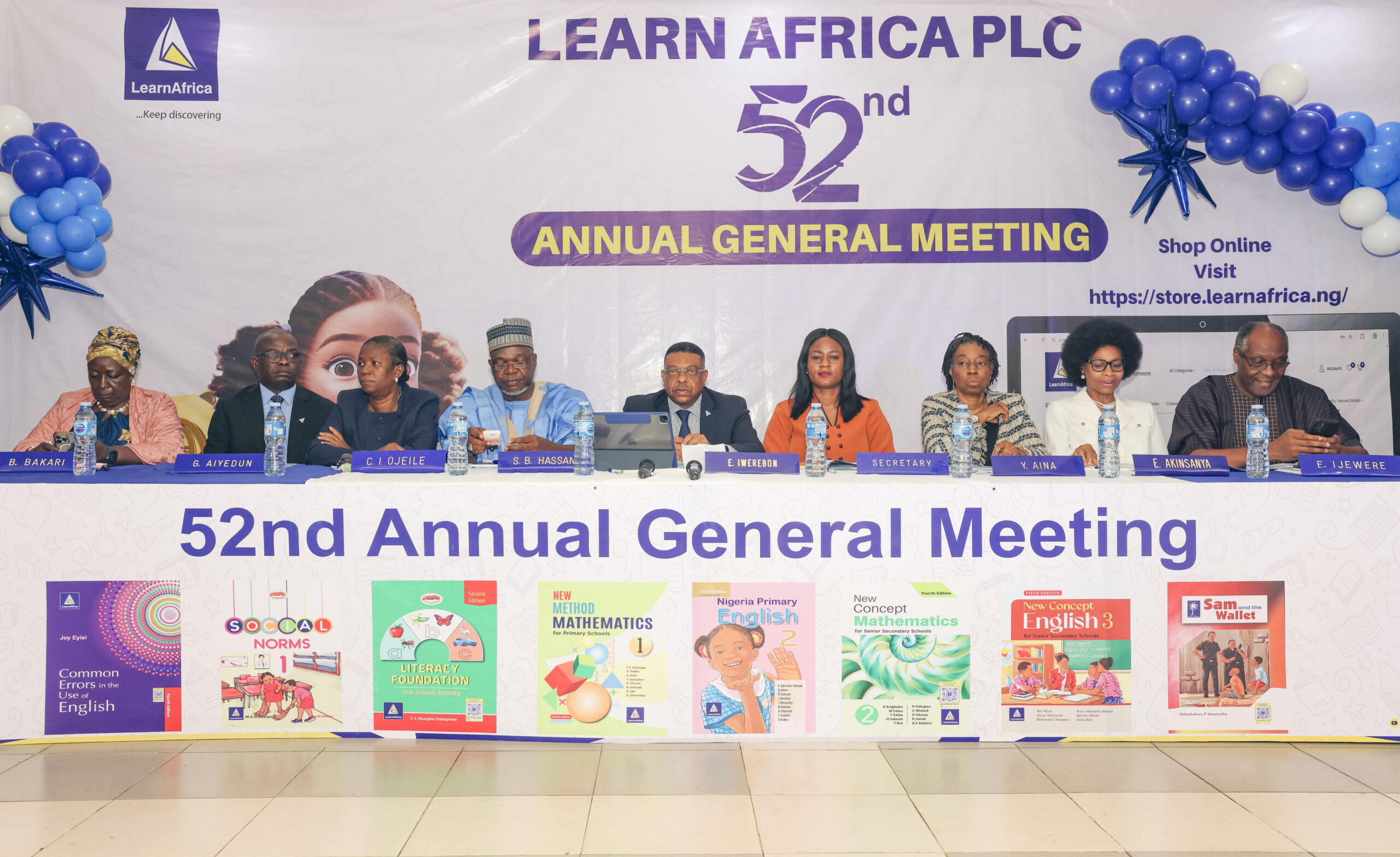
Hassan Bala, managing director/chief executive officer at Learn Africa Plc, made the call in a meeting with journalists at the 52nd Annual General Meeting (AGM) of the firm held on Thursday, September 25, when he emphasised that the unchecked intellectual property theft is not only crippling legitimate publishers but also eroding the quality of education in the country.
“The government really needs to help us to stamp out piracy because the capacity is there; if we are to sell our actual capacity, we’ll be talking about N100 billion, if not for piracy.

“The government should help us by strengthening the law enforcement agencies, especially the customs, the Nigerian Copyright Commission, Standard Organization of Nigeria, and the Nigeria Police to ensure that copyright infringement does not go unpunished,” he said.
Bala also emphasised the need to tighten Nigerian ports and land borders to block smugglers from perpetuating their nefarious acts, stressing that pirates are taking a chunk of the profits.
“Beyond sales, there are intellectual property, potential authors, and entrepreneurs who are going to abandon writing as a result of piracy. “The entrepreneurs would abandon the publishing business, the workers who would lose their jobs as a result of the negative effect of piracy on the business,” he stated.
Learn Africa, in its 2025 outlook, plans to intensify the fight against piracy, among other proposals for the year.
“In 2025, we will intensify our anti-piracy campaign through deeper collaborations with the Nigerian Publishers Association, NCC and relevant security agencies.

“In addition to enforcement, we plan to launch awareness programmes to educate schools and booksellers about the negative impact of piracy on educational quality and intellectual property rights.
Meanwhile, Emeke Iwerebon, chairman of the board of directors at Learn Africa Plc, announced the company achieved a revenue of N5.18 billion, a 26.9 per cent increase from the N4.08 billion in the previous fiscal year.
Iwerebon explained that the firm, despite a moderately challenging headwind, remained resilient and result-driven, evidenced by the company’s strong market acceptance of its titles, strategic sales initiatives and enhanced collections efficiency.
“The 2024/25 financial year was marked by significant macroeconomic volatility, both globally and within Nigeria.
“Ongoing geographical conflicts disrupted international supply chains, raised energy prices and worsened global paper shortages, factors that directly affected our production costs and pricing structure,” he said.
He explained that despite Nigeria’s GDP growth from 2.7 percent in 2023 to 3.4 percent in 2024, the increase did not translate into better living conditions for citizens because overlapping policy measures, particularly those affecting the foreign exchange market, and the removal of petrol subsidies, further eroded purchasing power and placed additional strain on business operations, the firm was able to record outstanding revenue increase.
“Profit after tax rose sharply to N474.98 million, compared to N11.19 million in the prior year, reflecting the effectiveness of the cost-control strategies and financial discipline implemented by the management.
“However, our cost of production rose to N2.17 billion, up from N1.63 billion. This increase was driven by the naira devaluation, rising logistics costs, and continued disruptions in global paper supply,” he explained.
In recognition of the company’s improved performance, and in line with its commitment to creating value for shareholders, the board of directors recommended a dividend of 35 kobo per shareholder for the financial year ended March 31, 2025.
Sunday Nwosu, a shareholder, speaking on the success in both dividend increase and shareholders’ meeting, said it was borne out of lessons learned from existing programmes.
“The nature is we learn from what happened last year to improve this year, definitely we’ll be clamoring for improvement next year,” he said.