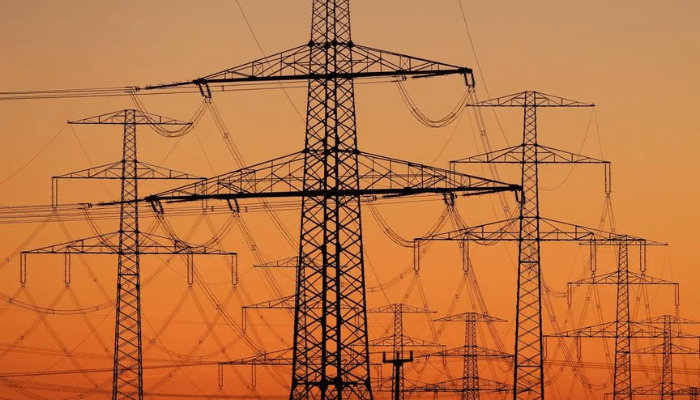
The Lagos State government has said that it hopes to raise the daily electricity supply to the state from the current 1,000 megawatts to 15,000 megawatts by 2020.
Addressing journalists at the media flag-off for the 7th Lagos Economic Summit tagged Ehingbeti 2014, on Wednesday, Ben Akabueze, the commissioner for economic planning and budget, said the projection was premised on anticipated significant investment it hoped to attract into the power sector of the state economy as one of the objectives which this year’s summit was set to achieve.
“We project that by 2020 the minimum in terms of our power requirement will be 15,000 megawatts, which means over the next six years, we expect about a 50 percent growth in the base demand that we see today. Is it possible for supply to match that demand? Absolutely, in six years it is possible if there is sufficient investment to go from 1,000 megawatts to 15,000 megawatts”, he said.
According to him, although the summit which will hold from April 8 to 10 under the theme, ‘Powering the Lagos Economy: Real Opportunities, Endless Possibilities’, would focus on power, three other key sectors where stable power would impact significantly would also come under focus during the summit. These are agriculture, transportation and housing.

Akabueze said the state government was making the attraction of investment into the power sector a lead focus at the summit in line with the global acknowledgement of efficient and reliable power system as the bedrock for economic growth anywhere in the world.
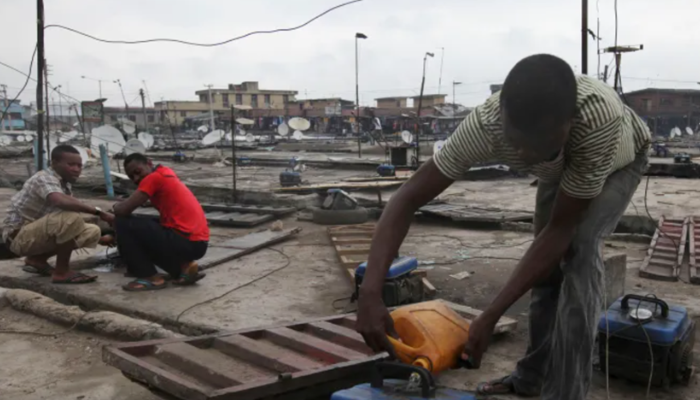
He lamented that inadequate power infrastructure was one of the factors responsible for the slow growth and development of the Nigerian economy, stressing that the current supply of 1,000 megawatts of electricity to the state from the national grid was grossly inadequate for a mega city like Lagos.
Aside, he regretted that Nigeria was still grappling with how to overcome its power challenge at this time while many countries in her class including South Africa, which is just one-thirds of the size of the population of the state, were already celebrating milestones in the production of electric power far in excess of the demand of their citizens whether for commercial, industrial or domestic uses.
The commissioner, who doubles as the co-chairman, Lagos Economic Summit Group, however, said that the state government was also exploring the summit to market the inherent opportunities offered by the power deficit to perceptive investors, adding that the state has also within the provisions of the Federal Government’s Electric Power Sector Reforms developed a number of power initiatives including three completed independent power plants and two ongoing projects.
On the implementation of the 150 resolutions reached at the six previous summits, Akabueze revealed that 144 of them had been implemented by the state government; five were still undergoing implementation while one was considered to be unrealistic. “Ehingbeti is not just a talk-shop; it is a platform for generating ideas and taking decisions”, he affirmed.

Gbolahan Lawal, the commissioner for agriculture and cooperatives, on his part said stable power was a critical input for agricultural development, especially in Nigeria and Africa, saying the four major areas of value chain to which power was crucial for the state included aquaculture, poultry, vegetable and rice production.