The hidden costs of crude lockdowns: Why blanket movement restrictions undermine Lagos.
On Saturday, July 12, 2025, Lagos State will once again impose citywide vehicular and waterway movement restrictions as part of its local government elections. Although the restriction window was recently adjusted from 3:00 AM to 6:00 AM through 3:00 PM, the fundamental question remains: Why must a city as vital, complex, and globally relevant as Lagos rely on such crude methods for electoral security?
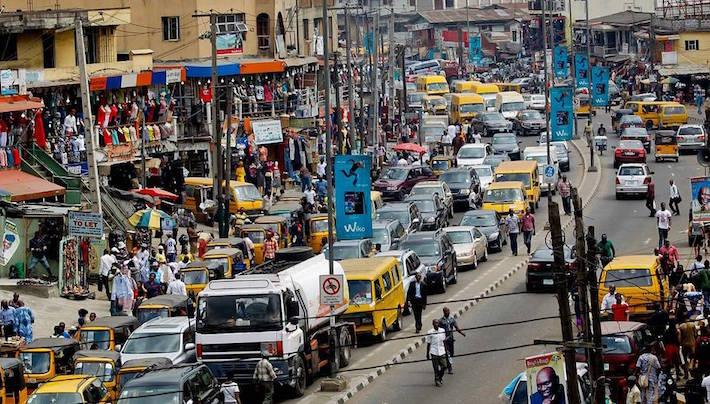
Lagos is no ordinary city. It is Africa’s largest urban economy, with an estimated gross domestic product (GDP) exceeding $250 billion, greater than that of many African nations combined. It is a hub for finance, technology, entertainment, logistics, and trade, with over 20 million residents navigating its intricate social and economic web daily. In cities of such scale, public policy must balance security, governance, and urban continuity with precision. Yet, Lagos persists in using full-scale movement lockdowns for local elections, a tool more befitting small towns or cities facing existential crises.
The practice of citywide shutdowns is neither smart nor sustainable. It is a vestige of an outdated administrative mindset that prioritizes blunt control over adaptive management. In reality, this approach imposes enormous hidden costs: lost economic output, disruption of essential services, civic disengagement, reputational damage, and a silent erosion of public trust.

While local government elections are critical to the democratic process, they should not come at the expense of a city’s entire ecosystem. Citizens should not have to choose between casting their votes and protecting their livelihoods. Businesses should not face losses running into trillions of naira for a process that can and should be secured through smarter, more localised methods.
In contrast, cities like New York, London, and Johannesburg manage their elections without bringing urban life to a halt. Through technology, targeted security perimeters, dynamic traffic management, and public communication, these cities maintain both safety and normalcy. Lagos has the capacity to do the same; it simply has not yet demanded it of itself.
This essay analyses both the immediate and long-term consequences of Lagos’s lockdown culture. It quantifies the economic impact, draws comparisons with global best practices, and offers strategic alternatives. It is a call to rethink not just election security but urban governance in Lagos as a whole.
Quantifying economic losses from citywide lockdown
While the image of empty streets and shuttered businesses may suggest peace and order on election day, the real story beneath Lagos’s citywide lockdown is one of staggering economic loss. The numbers tell a story of waste on a scale that few appreciate fully, one that, if quantified with clarity, would force any serious government to reconsider its methods.

Lagos is Nigeria’s economic engine. According to state and independent estimates, Lagos contributes approximately 30–35 percent of Nigeria’s GDP. As of 2025, this equates to a gross domestic product of over $250 billion annually. It is not just a figure; it represents the daily transactions of traders in Balogun Market, cargo moving through Apapa Port, financial services, digital startups, and everything in between.
Even before lockdowns, Lagos already lost an extraordinary amount to inefficiencies in traffic congestion. Studies by the Danne Institute and corroborated by Lagos State Government data put this loss between ₦4 trillion and ₦10.4 trillion annually. This is due largely to the hours spent in gridlocked traffic, an estimated three to four hours per day per commuter. It is a silent tax on productivity.
Now, consider what happens when, for nine full hours—6:00 AM to 3:00 PM—this already overstretched city is completely immobilised. By applying the proportion of the day affected (37.5%) to the annual congestion loss figures, we can approximate the impact of a single day of lockdown:
• Using the lower ₦4 trillion estimate, Lagos loses approximately ₦1.5 trillion in direct productivity and business activity for every lockdown day.
• Using the higher ₦10.4 trillion figure, the loss reaches nearly ₦3.9 trillion.
In dollar terms, this equates to between US $3.3 billion and $8.6 billion lost per day. That is equivalent to wiping out the entire annual GDP of a small West African nation in less than a full business day.
And these are only the headline numbers. Beneath them lie countless smaller but no less real impacts:
• Micro and small businesses, which employ the majority of Lagosians, lose entire days of income. According to Lagos MSME data, these enterprises collectively lose over ₦3.8 trillion annually to mobility issues alone.
• Individuals commuting by public transport or private vehicles incur personal costs of ₦79,000 to ₦134,000 annually per person; costs are magnified by full-day lockdowns.
• Supply chains stall. Containers scheduled to leave or arrive at ports are delayed. Perishable goods spoil. Medical supplies are trapped in transit.
Moreover, these figures assume a flat economic activity curve throughout the day. In reality, the 6:00 AM to 3:00 PM window represents peak productivity hours – when most business, trade, and economic activity occurs. This means the actual proportional loss could be even higher than 37.5% of daily GDP contribution.
While some may argue that a single election day is a small price for democracy, in a city of Lagos’s size and strategic importance, even one day of unnecessary shutdown carries lasting economic consequences. And when compounded over repeated election cycles or emergency situations, the cumulative loss becomes unsustainable.
The tragedy is that this is entirely avoidable. No city aspiring to global status can afford to lose billions of dollars in productivity because of administrative inflexibility. The cost is not just measured in lost naira, it is measured in lost opportunities, lost trust, and lost future potential.
Comparative Case Studies – How Global Cities Manage Election-Day Security Without Crippling Mobility
Lagos is far from the only city in the world tasked with balancing electoral security against the demands of urban life. Cities such as New York, London, and Johannesburg face similar challenges: maintaining public safety during high-stakes political events while keeping millions of people and billions of dollars in economic activity moving.
The difference lies in approach. Where Lagos imposes a sweeping ban on vehicular and waterway movement, these cities employ more refined, technology-driven, and localised strategies. The comparison is not academic—it offers a practical blueprint for Lagos to adopt.
1. New York City: Managed Complexity Without Paralysis
In New York City, even during national and municipal elections, the idea of shutting down Manhattan or the broader five boroughs would be unthinkable. Instead, NYC relies on dynamic traffic management models.
A major recent development has been New York’s congestion pricing initiative, which charges vehicles entering Manhattan’s core zones. The system, designed for environmental and economic efficiency, has demonstrated its capability during large events: reducing congestion by 25% and improving public transit reliability. On election days, rather than lockdowns, New York deploys precision logistics—including designated vehicle fleets for election material transport and paid-for-hire services for poll workers.
Polling centres operate with minimal disruption. Roads remain open. Public advisories are issued to encourage staggered movement, but never at the expense of the city’s heartbeat. In effect, New York trusts its systems and citizens to handle complexity—not shutting the city down, but managing it dynamically.
2. London: Localised Perimeters and Smart Technology
London operates under a hybrid model that Lagos could easily adapt. At its core is a network of Low Traffic Neighbourhoods (LTNs) and congestion charges, both enforced through smart technology.
On election days, the UK’s Electoral Commission coordinates with city transport authorities to impose localised access restrictions only around polling stations and sensitive government buildings. These restrictions are communicated well in advance and monitored using surveillance cameras, automatic number plate recognition (ANPR) systems, and police presence where necessary.
Importantly, there is no citywide shutdown. Londoners continue their daily lives—commuting, working, shopping—with minimal inconvenience. Technology, not brute-force bans, is the instrument of choice.
3. Johannesburg: Targeted Security Deployment
Johannesburg offers a relevant example from the African continent. During municipal elections, the Johannesburg Metropolitan Police Department (JMPD) does not impose movement bans across the city. Instead, it deploys approximately 3,000 officers in strategic locations—polling centres, key intersections, and known flashpoints.
Johannesburg’s approach combines manpower with infrastructure readiness. Traffic signals, public transport routes, and emergency response units remain operational, backed by pre-election simulations and drills. The principle is simple: keep the city moving, protect the vote, and intervene only where absolutely necessary.
Global lessons for Lagos
These examples highlight three critical lessons for Lagos:
1. Localised Control Is Smarter Than Blanket Bans: Managing security through targeted perimeters and dynamic adjustments respects both civic duty and economic vitality.
2. Technology Is an Enabler, Not a Luxury: From ANPR systems in London to congestion pricing tech in New York, smart infrastructure allows cities to balance openness and security intelligently.
3. Public Communication Reduces Friction: Advance warnings, clear mobility guidelines, and real-time updates reduce public anxiety and enhance cooperation.
Why Lagos must evolve
Lagos has the scale, complexity, and economic importance comparable to these global cities. Yet its reliance on archaic full-city lockdowns reflects a governance mindset stuck in the past. Rather than defaulting to crude restrictions, Lagos should be piloting adaptive models: localized election-day zones, smart traffic signals, mobile surveillance, and app-based citizen alerts. In doing so, it can join the ranks of truly global cities that have learned to secure democracy without stopping life.
Broader Systemic Consequences of Crude Lockdowns
While economic loss from a single lockdown day in Lagos may run into trillions of naira, the deeper and more corrosive effects lie in what such policies do to the fabric of the city’s governance, society, and reputation over time. These are consequences not easily measured in immediate financial terms, but they carry weightier, long-lasting implications for Lagos’s standing as a functioning, modern urban center.
1. Erosion of Public Trust in Governance
When government defaults to the blunt instrument of citywide lockdowns for elections instead of designing more intelligent, measured responses; it sends a clear signal to its citizens:
We do not trust our systems to function under pressure.
For Lagosians, this recurring pattern builds cynicism. What begins as mild inconvenience gradually hardens into deep-seated distrust. The reasoning is simple: if a city cannot manage elections without shutting itself down, can it be trusted with larger, more complex challenges?
Public trust is not an abstract ideal. It underpins civic cooperation. It encourages people to obey laws voluntarily, to engage with democratic processes, and to invest in their own localities. The more Lagosian life is shaped by coercion instead of collaboration, the weaker this essential social contract becomes.
2. Suppression of Civic Engagement and Voter Turnout
Ironically, election-day lockdowns designed to secure the democratic process may ultimately undermine it. For many residents, especially those in outer municipalities or lower-income brackets, being asked to leave home, find transportation, and vote on a day when the entire city is immobilised feels like a burden rather than a civic opportunity.
Data from Lagos’s past local government elections already indicates low voter turnout, often falling below 20% of eligible voters. While multiple factors contribute to this apathy, movement restrictions surely play a major role.
Young people, in particular, are disincentivised. For a generation that values convenience, efficiency, and responsiveness, an electoral system that causes citywide disruption feels archaic. The risk is that these future voters disengage not just for one election, but permanently.
3. Reputational Damage and Investor Sentiment
Lagos aspires to be a global financial and technology hub. Yet no serious investor wants to place capital in a city where daily operations can be halted at short notice by administrative fiat. Citywide lockdowns signal to international observers that Lagos operates on outdated principles:
• Fragile governance.
• Lack of infrastructural resilience.
• Inflexibility in crisis management.
Multinationals, logistics firms, and international financiers assess such policies as indicators of latent risk. When faced with competing African hubs like Nairobi, Kigali, or Johannesburg, Lagos risks falling behind if it does not evolve past such legacy practices.
4. Obstruction of Emergency Services and Public Utilities
Blanket movement restrictions do not differentiate between private vehicles and essential services. The unintended consequences are real and potentially life-threatening:
• Ambulances delayed in reaching patients.
• Fire services impeded in attending emergencies.
• Utility companies are hampered in responding to outages or disruptions.
Even if some exemptions exist on paper, in practice, enforcement officers often default to a rigid interpretation of orders. The net effect: a city less able to help its own citizens when help is most needed.
5. Reinforcement of Archaic Governance Models
Perhaps the most damaging consequence is philosophical: citywide lockdowns perpetuate the belief that Nigerian cities must govern through control rather than innovation. Rather than embracing 21st-century urban management tools like smart traffic systems, surveillance technology, and dynamic public communications, Lagos falls back on methods developed decades ago. This is not just inefficient; it is a strategic failure.
If Lagos is to stand alongside New York, London, or Johannesburg, it must abandon outdated reflexes in favour of solutions that reflect its size, complexity, and aspirations.
Strategic alternatives—Beyond lockdowns
The picture painted so far is clear: Lagos’s reliance on citywide lockdowns for local government elections is not just economically costly but fundamentally unsustainable. It erodes public trust, undermines investor confidence, and places unnecessary strain on both civic systems and citizen life. Yet it bears emphasising: this is not an unsolvable problem. Lagos can replace blanket movement restrictions with smarter, layered, and more adaptive security and election management strategies. What is required is not theoretical idealism but practical, implementable reform.
Drawing from global examples and Lagos’s own capabilities, here are strategic alternatives that align with the realities of a megacity.
1. Localised Security Perimeters Instead of Blanket Lockdowns
The first and most urgent reform is replacing citywide restrictions with localized security zones.
Rather than immobilizing all 20 LGAs and 37 LCDAs, Lagos can enforce:
• 500–1,000 metre controlled zones around key polling stations and collation centres.
• Dynamic perimeter management: Expand or contract zones based on real-time threat assessment, rather than static one-size-fits-all restrictions.
• Smart geofencing using Lagos’s existing traffic management systems and surveillance cameras.
This approach focuses enforcement where it is most needed, allowing the rest of the city to continue functioning normally.
2. Smart Traffic Management and Congestion Control
Instead of simply prohibiting movement, Lagos should deploy adaptive traffic management tools such as
• Dynamic traffic signal adjustment: Using AI-driven models that prioritise election-related logistics vehicles while maintaining flow for essential services.
• Temporary priority lanes: Designated for election workers, security personnel, and emergency services—modelled after Bus Rapid Transit (BRT) systems.
• Permit-based access systems: Digital permits for businesses operating within security zones, akin to London’s Low Traffic Neighbourhood schemes.
These solutions require upfront investment, but Lagos already possesses much of the necessary infrastructure. It is a matter of using it intelligently.
3. Technology-Driven Security Deployment
Lagos’s security strategy should lean heavily on technology rather than mass human deployment. This includes:
• Mobile surveillance drones to monitor polling areas and hotspots without blocking roads.
• Facial recognition and AI-powered crowd analytics: Systems capable of detecting anomalies or potential threats in real time.
• Citizen reporting platforms: Mobile apps or USSD systems allowing residents to report incidents or request assistance instantly.
Globally, such systems have moved from luxury to necessity. Lagos must treat them as core civic infrastructure.
4. Coordinated Public Communication and Civic Engagement
The success of any adaptive system depends on public cooperation. Lagos should implement:
• Comprehensive public advisories issued across radio, television, SMS, social media, and dedicated apps well in advance of election day.
• Election day mobility guides: Simple, map-based instructions showing where restrictions apply and alternative routes.
• Digital accreditation systems for essential services, medical emergencies, and critical business operations.
Transparent communication reduces public anxiety, enhances trust, and ensures compliance through understanding rather than fear.
5. Scaled Security Personnel Deployment
Instead of spreading security personnel thin across the entire city, Lagos should adopt:
• Shift-based, targeted deployment of police, civil defence, and traffic management authorities only around critical areas.
• Mobile rapid response teams capable of reaching any flashpoint within minutes—supported by traffic data and surveillance feeds.
• Coordination hubs established at LGA and LCDA levels for real-time command and control.
This aligns with global best practices and ensures that human resources are used where they are truly necessary.
6. Integrated Emergency Response Protocols
Lockdowns must not obstruct lifesaving services. Lagos must develop:
• Pre-approved rapid access corridors for ambulances, fire services, and utility companies.
• Real-time digital dispatch systems linked directly with LASTMA, LASEMA, and election coordination centres.
• Public helplines and emergency apps enabling residents to request exemptions in genuine cases.
Without such systems, even the best election management plan risks catastrophic blind spots. Lagos already possesses many of the assets required: a partially digitised traffic management authority, expanding smart city initiatives, and a young, tech-savvy population. What is missing is not capability, but mindset.
The continued reliance on blanket lockdowns reflects archaic thinking and a persistent absence of innovative, adaptive governance. It is easier to order a shutdown than to build smart systems, but ease is no substitute for excellence.
If Lagos is to rise as a true global megacity, it must leave behind the default posture of control and embrace the complex but rewarding challenge of intelligent urban management. That begins with how it handles election day.
Conclusion & call to action
Cities are not defined by their skylines or slogans. They are defined by the systems they put in place to manage complexity with intelligence, resilience, and fairness. For Lagos, a city of over 20 million people and a GDP exceeding $250 billion, citywide lockdowns for local government elections are not just inefficient—they are symptomatic of a governance model that has failed to evolve with its own scale and importance.
When a city immobilises itself to carry out an administrative process as fundamental as elections, it reveals underlying weaknesses: a lack of trust in public order, an absence of adaptive planning, and a reliance on blunt control rather than smart solutions.
The real cost is layered:
• An estimated ₦1.5 trillion to ₦3.9 trillion in economic losses per lockdown day.
• A gradual erosion of public trust in state capacity and intent.
• Suppressed civic participation and alienation of the next generation of voters.
• A compromised global image, making Lagos less attractive to investors and international partners.
• Increased risks to life and property due to delayed emergency responses.
These are not speculative harms; they are quantifiable, observable, and most importantly, avoidable.
Lagos already has elements of the solution within its grasp:
• A developing smart traffic management system.
• Expanding public transport infrastructure.
• A growing technology ecosystem that can support AI-driven security and logistics.
• A young, connected, and responsive citizenry.
What remains is the leadership and vision to stitch these elements into a coherent system, a Lagos Election-Day Management Protocol that replaces crude lockdowns with layered, localised, and intelligent control measures.
A clear call to action
For policymakers, security agencies, and state executives, this is not a matter of choice. It is a matter of duty. Lagos cannot credibly position itself as West Africa’s gateway to the world while governing with outdated methods.
Recommended Actions:
• Commission a Lagos Election-Day Mobility Reform Task Force by Q4 2025, including urban planners, security experts, civil society, and technology firms.
• Pilot Localised Perimeter Models in Select LGAs: Starting no later than Q1 2026.
• Invest in Surveillance and Smart Infrastructure: Treat election management systems as essential public service assets.
• Develop Clear Public Communication Protocols: Multi-channel advisories, digital permits, and emergency helplines.
• Engage the Private Sector: Partner with logistics, technology, and transport companies to build scalable, collaborative solutions.
For citizens and civic organisations
The responsibility is not the government’s alone. Lagosians must also raise their voices:
• Demand reform.
• Participate in public consultations.
• Support leaders and initiatives that prioritise smart governance over coercive control.
The choice before Lagos
The elections on July 12, 2025, may proceed under the old model. But Lagos’s future should not. What is at stake is not simply the convenience of movement, but the very character of the city:
• A city governed by habit or by intelligence?
• A city paralysed by fear or moving with purpose?
• A city trapped in yesterday’s solutions or building for tomorrow?
Lagos must choose not just once, but consistently. Its status as a true global city depends on it.
At its core, this is not simply a debate about vehicular restrictions or election-day logistics. It is a deeper question about how Lagos defines itself in the 21st century.
Will it remain a city governed by reflex and inherited habits, defaulting to blunt control measures that belong to a smaller, less complex era? Or will it mature into the smart, adaptive, globally competitive metropolis its citizens deserve and its economy demands?
The data presented in this essay makes one thing abundantly clear: citywide lockdowns are neither financially viable nor socially sustainable. They cost Lagos trillions in lost productivity. They suppress civic participation. They harm its international standing. And most tellingly, they reveal a lack of faith in Lagos’s own capacity to handle complexity with intelligence.
Cities like New York, London, and Johannesburg show that managing electoral security without halting urban life is not only possible, but it is the global standard. Lagos has the tools. It has talent. What it must now find is the collective will to say:
Enough. Lagos deserves better.
Elections should be moments of civic pride and democratic celebration, not signals for shutdown and disruption. Lagos’s leadership, both political and civil, must now embrace policies that reflect the city’s true status as Africa’s commercial capital, not its outdated legacy as a city of last-resort solutions.
The time to modernise Lagos’s election day governance is not tomorrow. It is today.