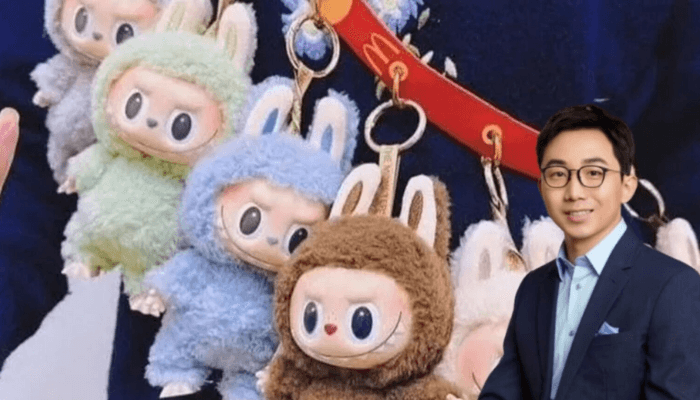
Wang Ning, the 38-year-old founder and chief executive of Pop Mart International Group, has vaulted into the ranks of China’s ten richest individuals for the first time, buoyed by soaring international demand for the company’s Labubu dolls.
According to Forbes, Wang’s net worth now stands at $22.7 billion, placing him tenth among China’s wealthiest. His rapid ascent is largely attributed to the meteoric rise in Pop Mart’s share price, which has more than tripled in 2025. The company, listed on the Hong Kong Stock Exchange, is now trading above HK$270 ($34.40), giving it a market capitalisation of HK$365 billion.
Read also: Adaeze Obiozor, Founder/Managing Partner, ASCEND Philanthropy Advisors
The unlikely engine behind this financial surge is Labubu, a mischievous, rabbit-like figurine created by Hong Kong-born artist Kasing Lung. Once a niche designer toy, Labubu has morphed into a global collectible sensation, capturing the attention of both devoted fans and international celebrities. Pop icons including Rihanna, Dua Lipa, and Blackpink’s Lisa have been spotted with the dolls, fuelling their appeal across markets in Asia, Europe and the United States.

“For a comic or toy intellectual property to break cultural boundaries and resonate with both Asian audiences and Western mainstream celebrities is extremely rare,” Deutsche Bank analyst Jessie Xu noted in a recent research note.
The frenzy surrounding Labubu has at times tipped into chaos. In April, the release of a third-edition doll triggered scuffles at a Pop Mart store in London, as fans scrambled to pay between £13.50 ($18.30) and £50 per doll.
Meanwhile in Beijing, a life-sized Labubu recently fetched 1.08 million yuan ($150,000) at auction, further cementing its status as a cultural phenomenon.
Read also: Why US-China trade deal may fall apart
In China, the doll’s popularity even seeped into the financial sector. Forbes reported that Ping An Bank offered Labubu dolls as incentives for customers who opened new accounts and deposited over 50,000 yuan. The campaign was later halted by regulators who deemed the tactic improper.
Despite the occasional controversy, Pop Mart’s trajectory has impressed investors. Deutsche Bank recently raised its price target for the company’s stock by 52 per cent to HK$303. Morgan Stanley also adjusted its valuation forecasts upward, citing strong international growth and demand momentum.

Wang, who now holds the title of China’s youngest top-ten billionaire, joins an elite club that includes Zhang Yiming of ByteDance, Zhong Shanshan of Nongfu Spring, and Tencent’s Ma Huateng.
Read also: China grants visa-free access to five countries
From modest beginnings selling designer toys in Beijing, Wang’s vision has turned Pop Mart into a cultural and commercial juggernaut. As the Labubu craze shows no signs of slowing, analysts believe his ascent among China’s business elite may be only just beginning.