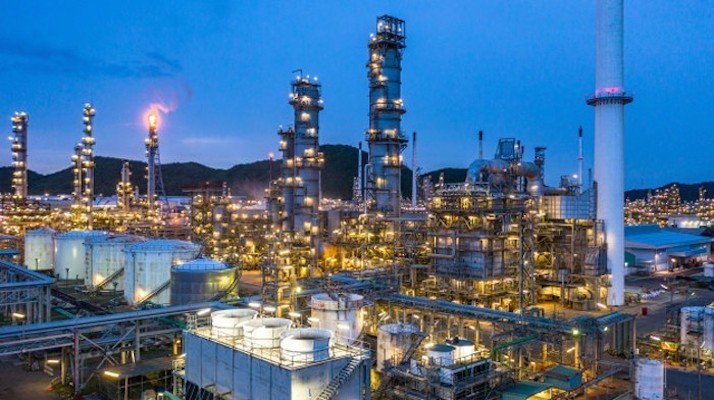
In Kuwait, the government is toiling endlessly to protect its unborn generation by either maximising potentials in the oil sector or reducing aggregate risk to the oil price.
But Nigeria is yet to come to terms with the reality of a post-oil economy as she lives as though the demand for black gold will be there forever. This is as the country keeps borrowing to bridge a budget deficit while also prioritising recurrent expenditure over capital expenditure such as building bridges, hospitals, and rail lines.
Kuwait’s Future Generations Fund, a national savings pot designed to help the country prepare for life after oil, has risen to about $700 billion, according to a report from Bloomberg. Its assets were valued at about $670 billion at the close of the last fiscal year on March 31, 2021.
While Kuwait has $700 billion to cater for a population of less than 4.2 million people and forecasted population growth of 5.3 million by 2050, Nigeria, a country with over 200 million people and a forecasted population growth of 401 million people by 2050, has an Excess Crude Account (ECA) balance standing at $60.85 million as of June 16, 2021.

The fund, managed by the Kuwait Investment Authority, has more than 50 percent of its investments in the US, where equity markets have been on a tear. The benchmark S&P 500 Index surged more than 8 percent last quarter, its fifth consecutive three-monthly gain, while the MSCI World Index gained more than 7 percent.
According to a ranking by the Sovereign Wealth Fund Institute, Norway’s Government Pension Fund is the world’s biggest sovereign wealth fund with $1.3 trillion of assets, followed closely by the China Investment Corporation, which manages $1 trillion, and the Abu Dhabi Investment Authority, known as ADIA, with $649 billion.
Also, many countries in Europe have set 2030, less than nine years away, as the time for the total phasing out of fossil fuel-run vehicles in favour of electric cars. Imperial College has scrapped its famous Masters in Petroleum Engineering in response to this new global reality.
While other countries are investing in life after crude oil, Africa’s largest economy is tottering on the brinks, and the situation appears not to be getting any better as lack of jobs, failing health care, bad roads, insecurity in various parts of the country and an epileptic power supply continues to worsen.
Fourteen years after former President Olusegun Obasanjo and his economic team led the country to exit the debt trap of the 1980 and 1990s, Nigeria is once again wallowing in a second debt trap with absolutely no idea of how to exit, as latest data from Debts Management Office (DMO) show Nigeria’s total external debts stood at $32.8 billion as of March 31, 2021.

Read also: European Union funded solar grid in Borno for commissioning
While other countries are consciously planning for life beyond fossil fuels, Nigeria’s Petroleum Industry Bill (PIB) is obsessed with applying 10 percent of revenue from acreage rents to subsidise petroleum exploration in frontier basins for reserves that may not be worth much after 2030. This is a development some experts say is elevating sectional political agenda over compelling commercial and climate change priorities.
The Nigerian Extractive Industries Transparency Initiatives (NEITI) has consistently warned that constant oil price volatility exposes oil-dependent countries like Nigeria to regular economic crises.
NEITI suggests the abolishment of the Oil Price-based Fiscal Rule (OPFR) where revenue in excess of the oil price benchmark is saved and replaced with a mandatory saving of a percentage of daily oil production like Angola does, saving proceeds from 10 percent of its daily production.
NEITI assures that this process will ensure savings at all times, whether prices are high or low, which can allow Nigeria to save proceeds of between 5 percent and 20 percent of its daily oil production.
With this, Nigeria could easily save between $1 billion and $3 billion every year even in periods of low oil prices.
“This will need collaboration and consensus not only between the executive and legislative arms of government but also among the three tiers of government,” the extractives sector watchdog says.
NEITI also recommends abolishing the 0.5 percent Stabilisation Fund and the ECA then transferring the balance in those accounts to the NSIA.
The ECA is where Nigeria pays the difference between its budgeted benchmark oil price and actual receipts. It is supposed to help smoothen out the cyclical nature of oil prices on the domestic budget.
It has however become a kind of slush fund for the executive to appropriate funds as it wishes for largely opaque expenditure.
When former President Olusegun Obasanjo left office on May 29, 2007, he left $25 billion in the ECA. However, from 2007 and to date, there has been an upward trend in withdrawals as persistent demand by states to fund various programmes, and the inability of the Federal Government to generate adequate revenue to fund its own operations had put pressure on it to draw down the account.