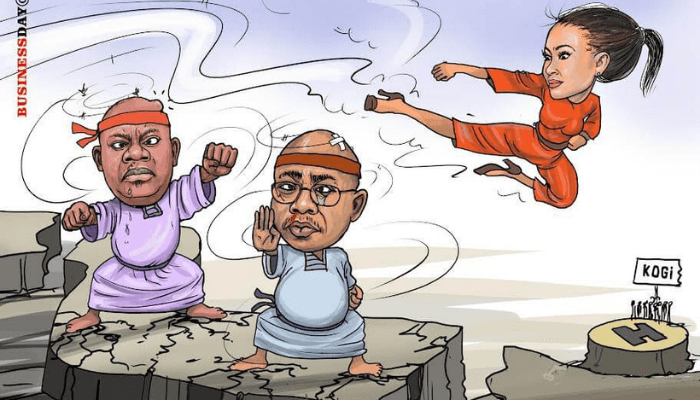
The doggedness displayed by Senator Natasha in Kogi State yesterday is commendable. However, beyond the surface, her ordeal highlights a deeper issue of female suppression in Nigeria’s political space.
Senator Natasha has been in the news for a while, even facing illegal suspension by the Senate president after refusing to give in to his alleged sexual advances. Though some dismiss her claim, I choose to believe her until proven otherwise. Akpabio’s body language alone suggests there may be truth to her accusations. This issue is not just about Natasha; it is a reflection of the systemic suppression of women in Nigerian politics.
Nigeria’s political terrain has remained hostile to women, rife with violence, religious bias, and socio-cultural barriers. Women in politics face harassment, derogatory labels, and systemic opposition aimed at breaking their spirits. Natasha’s case is reminiscent of former Senator Iyabo Anisulowo, who was slapped by a male colleague under the Obasanjo administration. The intimidation of women in politics is not new and persists despite global movements advocating for gender equality. Yet, Natasha remains undeterred despite malicious attacks, proving that courage is necessary to navigate such a hostile space.
Read also: Uromi ghost roams Nigeria; Judicial reform, and Natasha’s organic crowd

The National Gender Policy recommends at least 35% female representation in elective and appointive positions, yet implementation remains elusive. Women who secure political offices often face sabotage when they reject sexual advances. Natasha’s ordeal exemplifies this. When women refuse to conform to the whims of male-dominated power structures, they are targeted and undermined. Our institutions, rather than protecting women, often enable their oppression.
Currently, there are only seven female senators and thirteen female House of Representatives members in the 10th National Assembly; an alarmingly low percentage. This under-representation is not due to a lack of qualified women but rather a deliberate effort to sideline them. Rather than dismantling institutional constraints on women in politics, the 10th Senate appears to reinforce them, reducing women’s roles to singing and dancing at rallies. This insults the intellect and capabilities of Nigerian women who have proven themselves in various fields.
Nigeria’s failure to embrace female political participation hinders sustainable development. While other democracies advance gender inclusivity, our nation regresses. The lack of female representation is not just a women’s issue; it is a national issue. When half the population is excluded from decision-making, policies become lopsided, and development remains stagnant. Nations with greater female political participation often see improved policies in education, healthcare, and social welfare—critical areas Nigeria continues to struggle with.
This moment calls for action, not lamentation. Women’s groups must unite, resist suppression, and push for greater representation in public affairs. We must not only increase the number of women in politics but also ensure they are protected while in office. Policies must hold male politicians accountable for misconduct and make political offices safe spaces for all, regardless of gender.
How many women would dare to challenge the status quo like Natasha? Very few! Since 1999, Nigerian women have struggled to gain political footholds, often being forced out of office. The experiences of Aisha Al-Hassan and Aishatu Dahiru serve as stark reminders of this challenge. These women, despite their competence and dedication, were systematically frustrated out of contest because they dared to exist in a space that men believe belongs solely to them.

Read also: NATASHA: Suspending an elected representative is illogical
The activism of figures like Corper Raye, who championed the #30DaysRantChallenge for a #77,000 minimum wage demonstrates the power of collective action. Women must continue organising, mobilising, and leading from the front. The fight for gender equality in Nigerian politics must be relentless, and every woman who dares to challenge the status quo must be supported. If we do not rally around women like Natasha, we send a message to future generations that their political aspirations are futile.
This is not just about Natasha or the women currently in the political space; it is about the future. Young girls in Nigeria must grow up seeing strong women in politics who are not only present but also influential. They must know that political participation is not limited to men and that they too can aspire to hold the highest offices in the land without fear of harassment or sabotage.
We must demand accountability from political institutions, call out misogyny, and actively support women in leadership roles. It is time to reject outdated notions that politics is a man’s world. Women belong in politics, and they deserve to be there without being reduced to mere accessories or victims of a corrupt system.
As Thomas Sankara aptly stated, true political liberation cannot exist without the liberation of women. Until we break these barriers, Nigeria will remain trapped in a cycle of oppression and underdevelopment.
Up, Natasha! Up all Radical Women of Nigeria!
Kazeem Olalekan Israel writes from Ibadan, Nigeria.