



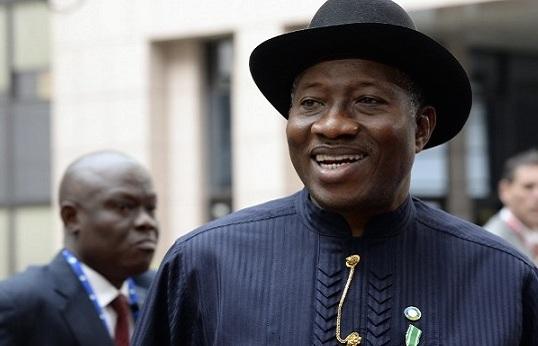
President Goodluck Jonathan may have succeeded in turning his re-election bid to the private sector as evidenced in his visit yesterday, to the Nigerian Stock Exchange (NSE) where he sounded the closing gong. It was the president’s first visit to the NSE.
Jonathan’s visit, barely two weeks to the March 28 election, comes on the heels of feelings that Nigeria’s election, already postponed once, and laden with tension, could determine investors and foreign leaders’ perception as to whether democracy has taken hold in Africa.
Ahead of the president’s visit, equity buyers raised their bets on Nigerian equities, despite analysts’ earlier view that they (investors) would book gains in the stock market.
Jonathan’s visit to the NSE was meant to commemorate the launch of X-Gen (a next generation trading platform of the Nigerian Stock Exchange, with catalyst for boosting trading in Africa), but he strategically used the opportunity to push his brand name and that of his transformation agenda closer to the private sector.

Analysts said the strategic interface with the stock market community was capable of calming investors’ fears over Nigeria’s future, as naira devaluation, oil price decline, and concerns over the outcome of the general elections continue to threaten investors’ positive sentiments at the stock market.
READ ALSO: #EndSARS: Rush to clear backlog of cargoes, return empty containers worsens traffic on Apapa roads
In company of senior Federal Government (FG) officials, a state governor, and party chieftains, Jonathan re-emphasised his administrations readiness to continued partnership with private sector, saying “This government wouldn’t want to do anything that would injure the private sector. God willing, we will win the election and we will work with Nigerians.”
Among others in the President’s entourage were: Adamu Mu’azu, national chairman of the People’s Democratic Party (PDP); Bashir Yuguda, Minister of State for Finance; Seriake Dickson, Governor of Bayelsa State; and Godwin Emefiele, Governor of the Central Bank of Nigeria.
Though the stock market gained a paltry N35bn, yesterday, ahead of the President’s visit, the effect will be determined by investors deal positions after today’s trading.

Currently, about 190 listed companies on the Nigerian Stock Exchange pay as much as N1trillion annually in taxes and they account for almost one million employees in Nigeria’s labour force –further indicating the importance of the market to the Nigerian economy.
Jonathan’s first time visit to the nation’s bourse attracted many onlookers, who crowed the popular Marina and Broad streets cheering him up in support for his reelection bid, despite the opposition party –APC forming strong forces against the President’s wish.
Addressing dealing members on the ninth floor of the Exchange, shortly before he sounded the closing gong, he said, “I was to be with you two years ago, but I missed the opportunity because I was out of the country. What I missed two years back, I am gaining today. You are doing great work for the country”. He added that the activities at the Nigerian Stock Exchange are very vital to the country because it showcases the nation to the world.
At the 20th floor of the Nigerian Stock Exchange, President Jonathan met with NSE management and other stakeholders in the nation’s capital market community, where he and other government officials responded to some market related questions like: listing of Telcos and power companies; appointment of substantive Director-General (DG) of the Securities and Exchange Commission (SEC); improving on man hour losses on roads in Nigeria’s major cities; inclusive growth to reflect the rebased-GDP; and demutualisation of the NSE.
On appointment of SEC DG, President Jonathan said, “It will not be beyond April. We must appoint somebody by April, but I don’t have anybody in mind now.”
The NSE performance indicator –the All Share Index (ASI) rose by 0.34% to 30,973.80 points from 30,869.17points the preceding trading day; while market capitalisation rose from N10.300trn to N10.335trn, adding N35bn.
IHEANYI NWACHUKWU



