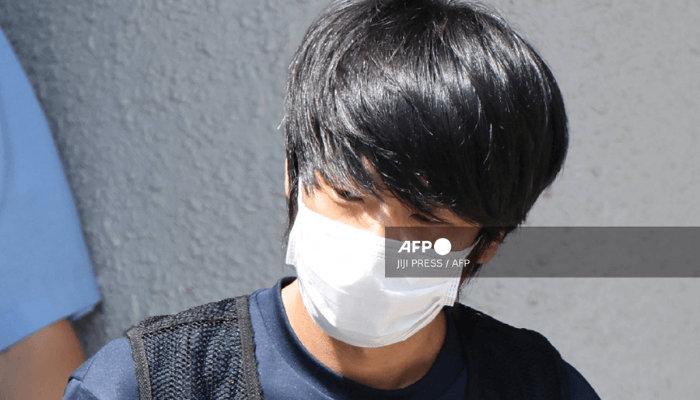
A Japanese court has sentenced Tetsuya Yamagami to life in prison for the killing of Shinzo Abe, the country’s former prime minister, bringing a grim chapter in modern Japanese history closer to an end.
Yamagami, 45, shot Abe dead at an outdoor election rally in the city of Nara in July 2022, using a homemade gun fashioned from metal pipes and tape. The killing stunned a nation where gun crime is almost unheard of and where Abe remained one of the most recognisable political figures.
Read also: Man pleads guilty to killing Shinzo Abe, Japan’s former prime minister
At the Nara district court on Wednesday, Judge Shinichi Tanaka said the attack was “despicable and extremely malicious”, noting that Abe was shot from behind while speaking to voters and was “least expecting it”, according to AFP.

Yamagami had pleaded guilty to murder at the opening of his trial last year. The central question before the court was not whether he committed the crime, but how he should be punished. Prosecutors argued that only life imprisonment reflected the gravity of the act. His defence team urged leniency, describing him as a victim of what they called religious abuse.
Read also: Japan reopens largest nuclear power plant
Yamagami told the court that his family was ruined by his mother’s devotion to the Unification Church, to which she donated about 100 million yen from life insurance and other assets. He said he came to resent Abe after learning of the former leader’s links to the church and seeing a video message Abe sent to a church related event in 2021.
Calling for a sentence of no more than 20 years, his lawyers said the killing grew out of years of despair rather than simple malice. “Everything is true. There is no doubt that I did this,” Yamagami said on the first day of his trial in October 2025.
The court rejected the plea for leniency. Nearly 700 people lined up outside the courtroom to attend the sentencing, a sign of how deeply the case has divided and moved public opinion.

Eito Suzuki, a journalist who followed almost every hearing, said Yamagami appeared worn down by the process. “He exuded a sense of world weariness and resignation,” Suzuki said, adding that Yamagami and his family seemed “overwhelmed with despair” throughout the trial.
Abe’s widow, Akie Abe, listened as Yamagami said her husband was not his original target. Suzuki recalled her reaction as one of disbelief. “It was as if she was asking whether her husband had simply been used to settle a grudge against a religious organisation,” he said.
In a statement read to the court, Akie spoke of a loss that would never heal. “I just wanted him to stay alive,” she said.
Abe’s killing also triggered a wider reckoning. Investigations into the Unification Church exposed allegations of financially ruinous donations and revealed links between the group and politicians from the ruling Liberal Democratic Party. Several cabinet ministers later resigned.
Shinzo Abe, 67 at the time of his death, was Japan’s longest-serving prime minister. His assassination in broad daylight sent shockwaves far beyond Japan’s borders.