|
Getting your Trinity Audio player ready...
|
In my culinary journey and in the advocacy for some of our iconic Nigerian food to be recognised by UNESCO and be added to the UN Intangible Cultural Heritage List, I started speaking with indigenous and traditional people who are familiar with some of these iconic meals that can make the list. My finding is wowing! I discovered that virtually every Nigerian tribe, region, state and ethnic group have special delicacies that can fit into this list.
One of such is Issapa. My heart-to-heart discussion with one of my young friends and a volunteer, who decided to work with me and hails from the South-Western Nigeria, gave birth to this article. Special thanks to Eniola for this research work.
Eniola Grace Ayomide is an English and Literary Studies student from the Federal University of Oye Ekiti. She took time to do a thorough culinary work. She made my work as an editor, very simple. So lets go…
Culture is not just seen in traditional dances, it is not just spoken, and sung, it is also expressed in delicacies. Over the years, several culinary cultures have been identified or recognised through their different meals.

Ishapa is mostly eaten by the Yoruba people in Nigeria, specifically in Kogi state, Okun land to be precise. The key ingredient is Ishapa, which is also known as Hibiscus sabdariffa. This red and rouge calyx is used to make what most Nigerians know as Zobo drink.
The same applies to the people from Ekiti. In the heart of Ekiti State and across parts of South-West Nigeria, Ishapa is more than just a vegetable; it is a seasonal culinary treasure. Known scientifically as Hibiscus sabdariffa and related to the popular zobo plant, Ishapa is harvested for its tender green leaves, prized for their distinct sour-sweet flavour that transforms traditional soups into unforgettable meals.
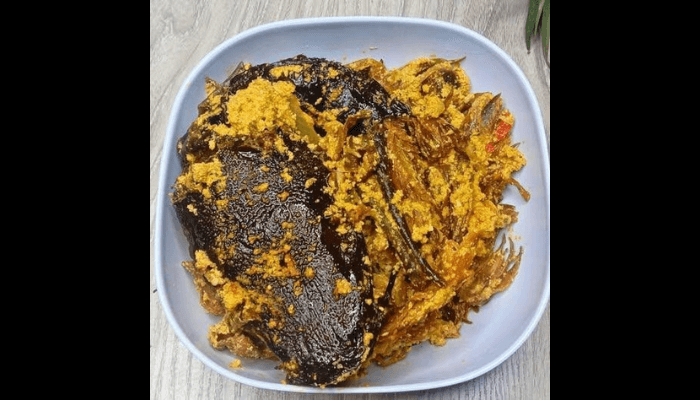
Ishapa soup is known for its unique, sharp, and zesty flavour. This is so because, before it is prepared, it is soaked in hot water for a little while. Sometimes, the soup is prepared with just the Hibiscus sabdariffa, while it is also added to Egusi in most cases. It is most often eaten with fluffy pounded yam.
However, in the days of yore, parents believed that when there was no protein, Ishapa was substituted for either fish or meat as a result of its chewy texture. Well, the narrative has shifted a little today as many types of protein are now being used in preparing the soup.
The health benefits and nutritional value of Ishapa are outstanding. It is known for its unique nature as a result of several benefits. Some of these benefits include: aiding digestion, easing constipation, improving bowel movements, supporting weight management – this is because it is low in calories and rich in fibre. The anti-inflammatory and antioxidant effects of Ishapa is equally unique as it contains polyphenols and flavonoids and helps reduce internal inflammation.

Ishapa contains macronutrients, which supply energy and assistance for growth and preservation of the body system. These include calorie, hydrating and refreshing water, carbohydrates, protein, fat, vitamin C, vitamin A, vitamin B1 (Thiamine, which helps convert food into energy), vitamin B2, calcium (Strengthens bones and teeth), iron (Aids in blood formation and prevents anemia), magnesium (supports muscle and nerve function), potassium (maintains healthy blood pressure), phosphorus (works with calcium for bone health).
As a cultural staple, this leafy soup has transcended generations, Ishapa soup has been a marker of community identity and rural heritage. It is often served during family gatherings, festivals, and ceremonial feasts, most famously paired with pounded yam.
Beyond the plate, Ishapa represents knowledge passed down through generations, from how it is cultivated in home gardens to how it is cooked with palm oil, pepper, melon [egusi] seeds, and assorted meats or fish.
Ask food historians and they will tell you that the dish embodies the Yoruba philosophy of harmony in cooking: balancing taste, texture, and nutrition in a single bowl.
Its tangy profile stimulates the appetite, making it a favourite for convalescents and anyone seeking a nourishing, comforting meal and a nutritional powerhouse.
Why should Ishapa make the UNESCO list?
Ishapa is held in high esteem among the Yoruba people due to its value. In other words, it is not just a food, but a means of cultural expression. The recipes were written down, but passed down orally from mothers to daughters. It is also often served at traditional occasions and local festivals. Ishapa is known to be cultivated and prepared traditionally; it is not a commercial meal. With a documentation like this and others, Ishapa soup can be featured as a global culinary delights.
This soup can be exposed to tourists, diaspora and foreign chefs, food journalists, food critics, celebrity chefs, influencers, and food bloggers in promoting the soup.
Encouraging the cooking of the soup beyond the shores of Nigeria to other shores is a great idea too. Exportation of Ishapa to other countries can improve its recognition. Definitely, the recognition would help to spark, speak, teach, and educate the coming generation and will help keep this special meal alive.
Suffice it to say that from the local kitchens in Kogi, Ekiti, Ondo and other South Western Nigeria to UNESCO’s radar Ishapa can comfortably make this list.
As Nigeria advances efforts to safeguard its culinary traditions, Ishapa stands as a strong candidate for UNESCO’s Intangible Cultural Heritage List. This designation would acknowledge the dish not merely as food, but as a cultural practice rooted in sustainable agriculture, biodiversity, and community life.
UNESCO’s criteria emphasize living traditions that strengthen cultural identity. Ishapa meets these standards through oral transmission of recipes and preparation methods, passed from elders to younger generations; agricultural knowledge and agro cultivation of Ishapa reflects indigenous farming insight and wisdom; social rituals that involve the preparation and consumption of the soup are tied to festivals, communal gatherings, and rites of passage.
Recognizing Ishapa at this level would preserve both the plant and the culinary wisdom surrounding it, ensuring that future generations can savour its taste and significance.
There are however various types of cooking tradition of preparing this leafy delight. The traditional Ishapa soup begins with fresh leaves washed and shredded, then simmered in palm oil enriched with onions, ground melon seeds, pepper, and assorted meats or fish. The leaves are added towards the end of cooking to preserve their vibrant colour and tangy taste. The dish is served hot, most often with pounded yam, a soothing companion and pairing partner that captures the soul of Ekiti and Kogi hospitality.
From the farmlands where it is grown to the kitchens where it is transformed, Ishapa remains a testament to Nigeria’s rich, diverse food culture. Its journey from local delicacy to potential global recognition is a reminder that our culinary heritage is as valuable as any monument, and just as worthy of preservation. Let’s visit the kitchen…
Recipe for 5 servings
1. 4 cups ground Egusi
2. 2 large bunches of Ishapa [soaked]
3. 4 Smoked fish [deboned]
4. 1 kilogram of goat meat
5. 3 wraps of Iru [any type]
6. 1 bowl of mixed blended pepper, tomatoes, and onions.
7. 1 large onion [sliced]
8. Salt and seasoning
9. 2 cooking spoons of palm oil.
10. 1 cup of assorted ponmo, and other offals.
Method
1. Cut Ishapa and detach the seeds. While you wash and season your meat, smoked fish, and other assorted ingredients.
2. Bring them to boil until well-cooked,
3. Wash and soak the Ishapa in hot water.
4. After a while, rinse and soak in cold water for 10-15 minutes.
5. Take out the Ishapa and rinse to remove the tangy taste.
6. Strain the washed Ishapa and set aside.
7. Pour the roasted and blended Egusi into a bowl, add a little water, some sliced onions, and stir until it comes together.
8. Pour the palm oil into the pot and heat slightly.
9. Add some sliced onions to the heated oil.
10. Cut the egusi into small lumps and add to the pot.
11. Fry for two minutes, and add the blended tomatoes, pepper, and onions.
12. Fry for about two minutes, stirring at intervals to prevent the Egusi from burning.
13. Add the omi eran, that is, add the stock of the meat into the Egusi.
14. Cook for a few minutes.
15. Taste for salt and seasoning if needed.
16. Add all other ingredients before adding the Ishapa.
17. Stir properly, simmer covered.
18. Uncover and serve alongside warm pounded yams