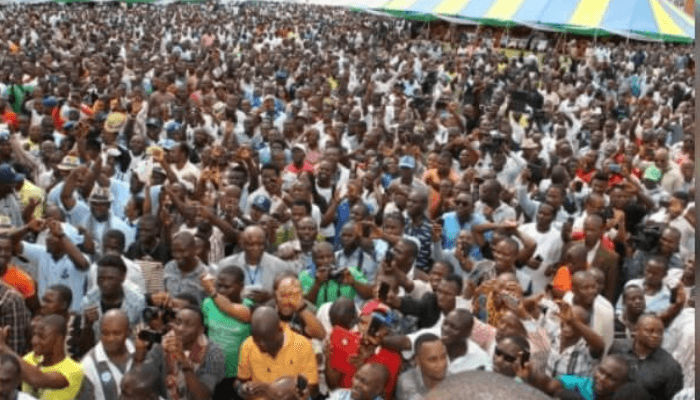
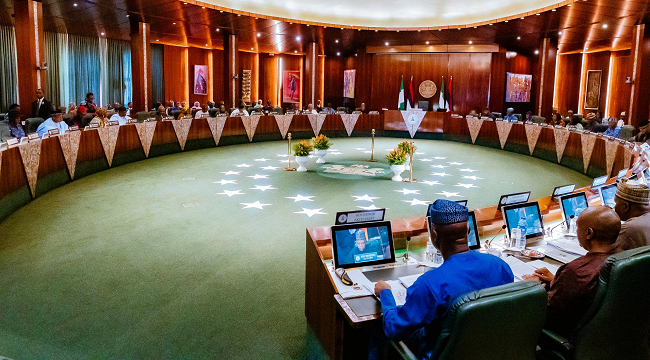
On Wednesday 25th June, BBC World Service anchored a debate at the Transcorp Hilton Abuja on the topic, “Is Nigeria Ready to Lead Africa?” Facilitated by the journalist Mary Morgan, the debate was led by three panelists: Interior Minister Abba Morro, economist Hauwa Mustapha and former Finance Minister Kalu Idika Kalu. I myself had been invited to be part of the panelists, but could not make it due to an unavoidable commitment in Brussels. The audience consisted of Governors Rotimi Amaechi of Rivers and Aliyu Babangida of Niger; journalists, civil-society people, youth groups and others.
Ironically, the event took place just an hour after the bomb attacks on the popular Emab Plaza in Abuja. Against that somber mood, it was nonetheless a lively debate, albeit with an outcome that was somewhat inconclusive.
Is Nigeria, indeed, ready to lead Africa?
There are those who would insist that, by sheer virtue of our demographic size, economic prospects and soft-power influence in sports, film and music, Nigeria is already the leader in Africa. Yes and no.

Without recourse to cheap jingoism, I would say that Nigeria’s record in Africa is an honourable one. Without Nigeria’s leadership, the struggles for liberation on our continent might have turned out differently. From the very first year of our independence in 1960, the Balewa administration made African unity and anti-colonialism a fundamental pillar of its foreign policy.
Although South Africans hate to hear this, Nigeria’s leadership was decisive in getting the entire continent to rally behind the liberation movements in Southern Africa. When Nelson Mandela fled his country in the early sixties to gather arms and resources for the liberation of his people, Nigeria was one of his first ports of call. He spent about a year in our country. Nigeria was the first African country ever to provide financial support to the ANC. From Leslie Harriman to Joseph Nanven Garba, Nigeria spoke with a firm voice in the councils of the United Nations as leader of the “Frontline States”. Brilliant young men such as Bolaji Akinyemi and Ibrahim Agboola Gambari became the leading foreign policy lights who infused a new dynamism in our foreign diplomacy.
Nigeria’s place in the world was not in doubt. After the fall of Kwame Nkrumah in February 1966, Nigeria rather than Ghana became the Mecca for African freedom fighters. Nigeria provided money, resources and succor to liberation movements throughout our continent. As school children, we donated some of our pocket money while workers had their salaries deducted upfront for the liberation movements. Nigeria went through its own trials and tribulations, but we were very firm in the conviction that our freedom and dignity as a people meant nothing if the rest of our continent was under bondage by racist-fascist tyrants. In places such as the Congo, we committed troops to UN peacekeeping. Our officers and men acquitted themselves with distinction in Liberia and Sierra Leone. In those two countries alone, we spent over $10 billion and lost 5,000 of our young men.
In the economic sphere, Nigeria used its new-found oil wealth to provide financial assistance to many countries not only in West Africa but in the rest of the continent and as far afield as the Caribbean. Between 1970 and 2000, Nigeria provided as much as US$60 billion in financial assistance to Africa and other developing countries. Yakubu Gowon, together with his friend, late Gnasingbe Eyadema of Togo, was the brain behind the creation of ECOWAS, by far the most successful regional community in Africa. Nigeria underwrites nearly 70 percent of the operating budgeting of that regional body. For several years, Nigeria singlehandedly shored up the finances of the then OAU, when the organization was virtually bankrupt. Nigeria has deployed its treasure in support of many continental institutions, from the African Development Bank to NEPAD and other regional initiatives.
In spite of everything, Nigerians are generally loathed in most parts of Africa. Some of our citizens have not helped matters either. There are a few scoundrels who are into all sorts of chicaneries. But they are not the majority. However, people prefer to dwell on the few bad eggs to make unfair generalisations about all Nigerians.

Various external interests are involved in an iniquitous conspiracy to destroy Nigeria’s image throughout the world. A few years ago, when the debate was heating up on a single currency for West Africa, some fake currencies started appearing in Abidjan. I was living and working there in the early 2000s. The French started circulating pernicious rumours that these fake currencies were being fabricated by Nigerians and that their CFA, controlled and countermanded by the French treasury, would be ruined if Ivoirians were not careful with “les nigerians”. You and I know that these countries are by and large under the economic and geostrategic stranglehold of France. It was in France’s vested interest to orchestrate anti-Nigerian sentiments in the Francophone countries. It is an open secret that foreign powers dread the prospects of Nigeria as an emerging world power.
Nigeria has its own problems, but I have always told my African friends that we have never invaded our neighbours, even when we would have been justified under international law on one or two occasions. We have always come to the aid of our African brethren whenever the need arose. Nigeria is the most hospitable country to foreigners, in contrast to the rabid xenophobia that pervades the new South Africa.
The Nigeria of today — with its image as a violent, corrupt and lawless nation — is in no position to lead the New Africa. These days, people take Rwanda more seriously than they do Nigeria. We can only lead our continent if we reinvent our nation as a responsible democracy founded on law, justice and morality. South Africa is in a more advantageous position, but they are hamstrung by an insufferable arrogance that has no basis in culture or intellect. The status of a leader is earned, not arrogated.
OBADIAH MAILAFIA