|
Getting your Trinity Audio player ready...
|
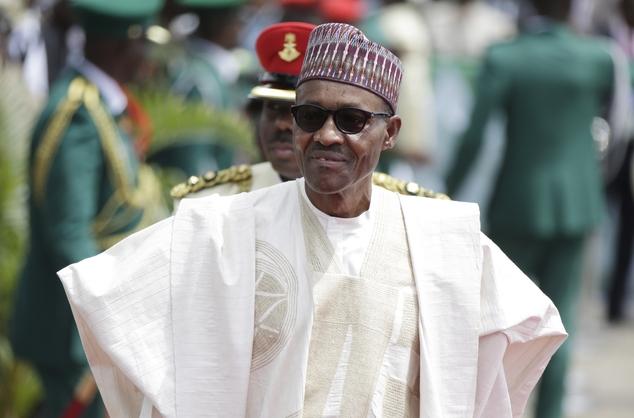
Many Nigerians and foreigners are, increasingly, raising concerns that the administration of Muhammadu Buhari is tearing Nigerians farther apart and entrenching a culture of hate in the polity.
It is being alleged that President Buhari is not pretending over it as his appointments, utterances and body language speak volume of his divisive tendencies.
Certainly, Nigeria has established ethnic fault lines dating back to the mid sixties which were partly responsible for the two military coups that ended the first civilian and military governments.
However, there is the contention that the country is more divided today along ethnic lines than ever before due to the appointments made by President Muhammadu Buhari as well as his utterances and body language.
Many Nigerians are also pointing fingers at the President for the recent upsurge in brutal and often fatal attacks by Fulani herdsmen and a push for state governments to create grazing reserves.
One indisputable fact is that President Buhari publicly affirmed his preference for people of Hausa/Fulani extraction in appointments showing his disdain for the constitutional federal character in appointments.
There are more appointments for Northerners than for the Southerners and the president does not seem to be perturbed by the growing public outcry against what is being seen as his administration’s ethnic agenda.
An analyst, who spoke on condition of anonymity, said: “There are many instances that lend credence to the fact that the government of today has further divided the country along ethnic and religious lines. Some people believe that the Federal Government is using the security agencies to protect the Fulani herdsmen while leaving farmers unprotected, a situation that has emboldened the herdsmen to plunder, maim and kill at will. Don’t forget that he is said to be the grand patron of the herdsmen.”
Okwesilieze Nwodo, first civilian governor of old Enugu State and pioneer national secretary of the People’s Democratic Party (PDP), in a recent interview noted that Nigeria is becoming more polarized than ever.
Lamenting the situation, Nwodo said: “One of the issues with the herdsmen is that they feel that their own man or brother is the president. It is not that the president asked them to be doing that, but the notion that ‘my brother is in charge, what you can do to me? is the major factor fuelling this menace. There must be a point at which we are going to take the destiny and the responsibility of ourselves in our own hands; for the country, as it is now, is becoming more polarised. The law in this country does not allow an individual to purchase an AK47 rifle without licence, but these herdsmen carry it around without anybody questioning them; it is worrisome.
Lately, the seemingly quiet Fulani herdsmen have taken to arms, killing and maiming people. They have attacked in Benue, Enugu, Delta, Niger, among other states, leaving sour images of several deaths.
“For the fifth time in a short time, Enugu State has been attacked by Fulani herdsmen, who seem to have been given a licence to kill whoever they want to kill in any part of Nigeria and get away with it,” Ben Durueke said in a report.
Ben Nwabueze, a renowned lawyer, professor and senior advocate of Nigeria (SAN), strongly believes that most of the groups agitating for one thing or the other in the South East and South-South geo-political zones of the country are purely doing so to vent their anger on the perceived marginalisation by government.
“I am not sure these agitators really want to secede. I think they are merely reacting to marginalisation by the government, especially in the appointments,” he said.
Nwabueze, who also is the president of Patriot, a revered group of intellectuals and elder statesmen campaigning for good governance, also advised Buhari not to drag the country into religious crisis hiding under fight against terrorism.
“Don’t make the fight against terrorism a religious issue. We are all against terrorism but don’t drag this country into one religious group because of terrorism or because we are fighting terrorism. We cannot use the war on corruption as a justification for everything. We should be very careful. I have said all that I need to say on this issue of hiding under fight against corruption to do all sorts of things including assaulting the constitution,” he said.
Femi Fani-Kayode, a former minister of Aviation and presidential spokesman, in his recent essay decried the divisiveness of the present administration and the danger such a tendency holds for Nigeria.
Fani-Kayode made a reference to a recent letter written by a Republican Congressman, Tom Marino, to the American Secretary of State, John Kerry, on the sad developments in Nigeria, particularly the hate culture that is being enshrined.
Marino, a Republican from Pennsylvania who assumed office on January 3, 2011, said there were a number of warning signs emerging in the Buhari administration that signal “the man who once led Nigeria as a military dictator might be sliding towards former autocratic tendencies”.
According to the letter, Mario said: “Of additional concern is President Buhari’s selective anti-corruption drive, which has focused almost exclusively on members of the opposition party, over-looking corruption amongst some of Buhari’s closest advisors. Politicising his anti-corruption efforts has only reinforced hostility among southerners”.
The Congressman particularly pointed to Buhari’s pro-North, pro-Moslem appointments which consigned some parts of the country, particularly the South East, to spectators and slavish-status in the country.
“Of President Buhari’s 122 appointees, 77 are from the north and control many of the key ministries and positions of power. Distrust is already high in Nigeria and favouring Northerners for key appointments has only antagonised the issue. These appointments are also primarily Muslim in the north and Christian in the south, adding a religious aspect to long-held regional biases,” he said.
Mario was quoted as suggesting that “The State Department should urge President Buhari to form a government that represents the diversity of its citizens and allows dissenting voices to be heard. Democracy can thrive only if people are free to assemble, to express their beliefs, and voice their concerns.”
Commentators have equally expressed serious concern over the dangerous activities of these Fulani herdsmen. The leadership of the National Assembly said the frequent atrocities of herdsmen across the country are threatening the corporate existence of Nigeria. The Senate President, Bukola Saraki had said, “It is important that the violence attributed to herdsmen is addressed and curbed, to ensure the safety, well-being and unity of the people and the country.”
Similarly, the resurfaced violence in Niger Delta is threatening the peace and economic stability of the mono-product country. To date, the Niger Delta Avengers, NDA, a militant group in the Niger Delta, has killed several soldiers and destroyed property worth billions of naira.
Only last week, Vice-President Yemi Osinbajo, attributed the current economic recession in the country to the loss of almost 60 percent revenue due to the activities of pipeline vandals in the Niger-Delta region. He was quoted as saying that “One of the key reasons why we are in recession is the fact that we lost about 60 percent of our revenue due to the vandalism of the pipelines in the Niger-Delta and we lost almost 40 percent of the gas. But I have strong belief that by the grace of God, we will be able to resolve that and arrest all the mischievous pipeline vandals.”
The ongoing destruction of oil facilities by NDA compelled Nobel laureate, Wole Soyinka, to describe the action by the boys as ‘senseless’. Unlike the Movement for the Emancipation of the Niger Delta (MEND), Soyinka was yet to find out what exactly the militants wanted.
He noted in a TV interview that the only thing he had seen was the unjust destruction of the nation’s oil facilities.
Reports say the “NDA have attacked oil producing facilities in the delta, causing the shutdown of oil terminals and a fall in Nigeria’s oil production to its lowest level in twenty years. The attacks caused Nigeria to fall behind Angola as Africa’s largest oil producer. The reduced oil output has hampered the Nigerian economy and destroyed its budget, since Nigeria depends on the oil industry for nearly all its government revenues.”
Deadly Boko Haram in the northeast Nigeria founded in 2002 with the aim of establishing Islamic region and which has killed thousands of people since then has doused expectations of its seizure of fire on enthronement of the present administration. Instead, it has continued on its lethal attacks, beheading and wiping out families, with the Chibok girls still in its custody.
The Islamic extremist group has metamorphosed into increasingly sophisticated attacks, initially against soft targets and public buildings by suicide bombings.
On the heel of these group’s dangerous activities that have kept Nigeria uneasy and have frustrated investments, comes agitation for Biafra in the southeast Nigeria.
President Buhari had severally said that the agitation for Biafra State is a plan to disintegrate Nigeria, which the forefathers fought hard to unite. He, therefore, vowed that his government would fight again if need be to secure the unity of Nigeria. The President said that there was a serious need for Nigerians to work hard to prevent the country from collapse.
In a report, Buhari said: “That boy (Nnamdi Kanu of the Indigenous People of Biafra, IPOB), who is calling for the separation of Nigeria, he was not born when we fought for the country’s unity during the civil war.” He said that it was quite unfortunate that over two million people were killed during the civil war, all in an effort to maintain the unity of the country. He said division is “a situation we cannot allow to repeat itself.”
“I am ready to fight back to defend the country from those agitating for the creation of Biafra State, even if we will get drowned,” the president stated.
The Indigenous People of Biafra, a non-violent group so far, had also accused Buhari of dividing and dismembering Nigeria through his lopsided appointments since he assumed office.
A member of the House of Representatives, Nkeiruka Onyejeocha, has stated in a report that all the factors that led to the civil war in the country had resurfaced and were capable of causing havoc in the polity, if not arrested immediately. There appears to be tension as Christians and Muslims cannot again preach freely in their land. In some places, open support for any political party could result to violence. Religions are asking for freedom to allow their students alter school uniforms and wear different uniforms and this is causing tension.
Apart from foregoing groups in different regions, Buhari is also contending with socio-political hostility, short of open warfare. Some individuals and institutions, which supported the coming of Buhari administration, seem to have backed down. In fact, the Buhari administration, more than ever before, is openly discussed in different circles by both informed and uninformed in society. Social media has become a major platform.
The character and body language of Buhari and his government may largely be contributing to the many ‘wars’ on his hands and the divisions being experienced.
Buhari rode to power on the back of welter of promises to Nigerians. After waiting for 16 months, those promises are yet to be fulfilled, a development that has given vent to disillusionment, anger and utter disappointment. Analysts also say that the persistent hate words against the immediate past administration of Jonathan and his party, PDP, by the current administration are also divisive and have succeeded in planting animosity in the minds of many Nigerians.
On his appointments, a commentator wrote recently that while President Buhari “received massive support from across the country to become President, he is by his appointments, presenting himself as a parochial, sectional leader.” This may have caused some discomfort in some parts of the country. The observer advised that “for the sake of the country’s corporate survival, he should rise above primordial instincts and become a father to all Nigerians.”
“We must arrest these growing visible divisions within thoughts and actions among Nigerians as Nigeria’s unity will keep the country a strong force,” the analyst observed.
Zebulon Agomuo, Daniel Obi, Samuel Ese, Yenagoa