|
Getting your Trinity Audio player ready...
|
That single statement captures one of Nigeria’s most persistent and least-discussed crises: the invisibility of millions of children who are in school — but whose schools are not counted in our official data. And even though many argue that our education debates have become too fixated on numbers, the truth is that numbers still matter.
“If we don’t count each child, they don’t count.”
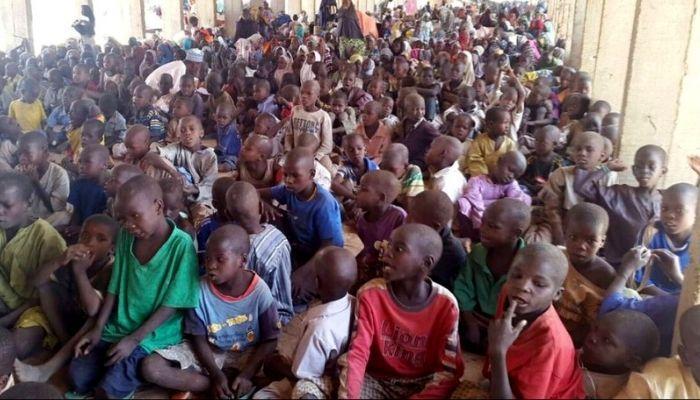
Across the country, low-fee private schools, faith-based schools, alternative learning centres, and community schools quietly fill the gaps left by the public system. They serve children from low-income families who might otherwise have no access to schooling at all. Yet these schools, and the children within them, remain largely absent from Nigeria’s Education Management Information System (EMIS).
How, then, can we design realistic pathways back to learning for those truly out of school? When education data is incomplete, budgets are misdirected, donor investments are misplaced, and national progress reports become fiction. The result? A distorted picture of who is learning, where learning happens, and how we plan for reform. In simple terms, we are building policy on quicksand.

The data architecture and the gaps within
On paper, Nigeria has a robust EMIS structure. Data is expected to flow from the Local Government (LEMIS) to the State (SEMIS) and finally to the National (NEMIS) level.
The 2021 Reviewed National Policy on EMIS and Implementation Guidelines envisioned “reliable, credible, and timely education data essential for evidence-based planning.” The Annual School Census (ASC), redesigned under the Nigerian Education Sector Renewal Initiative (NESRI), was meant to capture all learners in all schools.
But in practice, that promise remains unfulfilled. Many states still exclude most non-state schools, particularly affordable and community-based ones, from their EMIS datasets. The reasons vary: bureaucratic bottlenecks, limited manpower, weak coordination, and, in some cases, bias against the non-state sector.
Instead of working to regularise and include these schools, officials often focus on closing “unapproved” ones, effectively erasing them from the data.
Take Makoko, for example. Schools that educate thousands of children in this Lagos lagoon community do not appear in the state’s EMIS records. If they don’t exist on paper, how can they access safety nets, teacher training, or learning resources? And when demolition threats by the government loom, how can displaced children be reintegrated into the system if we don’t even know how many schools, or how many learners, are in that community?

This disconnect makes national data unreliable. How can we claim 20 million out-of-school children when we don’t even know the true number of in-school children?
The consequences of invisibility
The implications of these data gaps are profound:
- Overstated out-of-school numbers: When children in affordable non-state schools aren’t counted, Nigeria’s statistics are inflated.
- Misallocated resources: Governments and donors design interventions on flawed data, leaving excluded schools without teacher training, grants, or school feeding.
- Weak crisis response: During emergencies, from floods to epidemics, unregistered schools fall outside rapid response systems.
- Distorted accountability: Without complete data, policymakers cannot track progress toward SDG 4 or national education targets.
In Lagos State, non-state schools reportedly outnumber public ones 22:1, and about 70 percent of them serve low-income families. If that scale of education activity remains invisible in EMIS, imagine the extent of undercounting nationwide.
And yet, there is hope. In Kenya, Alternative Providers of Basic Education and Training (APBET) schools are formally recognised by the government and integrated into national databases, proof that inclusion is both possible and transformative.
What Nigeria must do differently
As states prepare their 2026 education budgets and another round of the annual school census, now is the time to fix the cracks in EMIS before another year of invisible children slips by.
Here’s what government at all levels must do, starting this year, to make every child count:
- Clarify definitions:
Differentiate between registered and approved schools, allowing for phased formalisation rather than blanket closure. - Support school registration, regardless of approval status:
Every school—approved or not—should be supported to register with its State Ministry of Education and automatically link to EMIS participation. A framework for grading these schools should also be developed. - Incentivise data compliance:
Tie access to professional development, grants, or learning materials to EMIS participation. Make data reporting rewarding, not risky. - Simplify and localise data collection:
Deploy mobile tools and community-based validation to make EMIS accessible, even in remote or informal settlements. - Invest in technology and capacity:
Equip EMIS units with GIS mapping, trained personnel, and stable connectivity. Publish transparent education dashboards for accountability. - Collaborate with the non-state sector:
Engage affordable school associations, NGOs, and civil society in planning and data collection. Build trust through partnership, not policing. - Validate and audit regularly:
Conduct annual verification with independent partners — and make results public to rebuild trust in education statistics.
The government must commit to building systems that recognise, include, support, and engage all types of non-state schools, the four pillars of SEED Care & Support Foundation’s RISE Framework.
The numbers game
Nigeria’s oft-quoted figure of 20 million out-of-school children deserves honest scrutiny. Even the revised 15 million figure cited by the Minister of Education, Dr Tunji Alausa, rests on incomplete evidence — because it assumes that every child currently in school has already been counted.
If affordable non-state schools remain invisible, then our out-of-school numbers are inflated and our interventions misdirected. Nigeria’s education crisis is not only about out-of-school children; it is also about unrecognised in-school children.
Both crises are urgent. Both are solvable. But only if our data tells the whole truth.
Counting every child — and beyond
When we fail to count every child, we deny them visibility, opportunity, and value. Excluding affordable non-state schools doesn’t just distort data; it distorts destiny.
To achieve true Renewed Hope in education, Nigeria must count and support every child in every type of school. We must go “All In for All Children”.
Because we know that enrollment is not learning, access is not transition, and counting alone is not the full solution. Beyond counting, we must drive system shifts that move us from data collection to data use — from visibility to value.
This broader reform agenda will be unpacked in subsequent publications.
For now, the urgent task is to reform EMIS to include all learning spaces, state and non-state alike, laying the foundation for smarter spending, safer schools, and a credible education story that attracts global investment.
Every time we ignore an uncounted school, we lose not just data, but a generation’s potential.
Counting every child is not just good policy; it’s justice.
About the author
Olanrewaju Oniyitan is the Founder/Executive Director of SEED Care & Support Foundation, a non-profit advancing access to quality education for underserved children by supporting affordable non-state schools through advocacy, evidence, and a learning network (www.seedfoundation.ng). She is also the CEO of W-Holistic Business Solutions, a development advisory firm (www.w-hbs.com), and a passionate advocate for grassroots education reform.