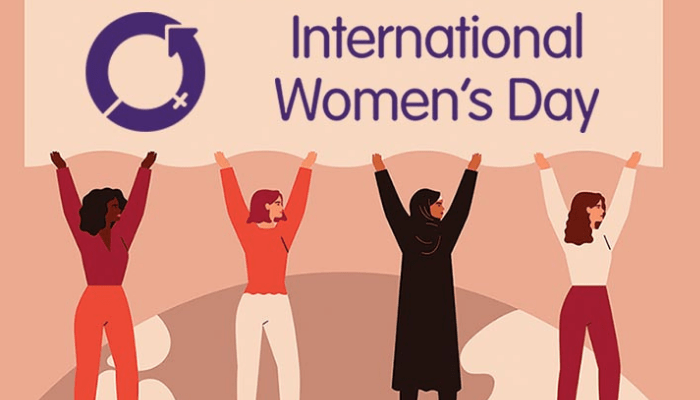
Tomorrow, March begins, and every March, we celebrate women, we praise resilience, we share quotes, we wear themed colours, and yet, things remain largely unchanged.
To be clear, awareness, celebration and visibility matter, especially for role models whose stories remind us of what is possible. But these are not the same as action. This is the one space where being an enthusiast about women’s issues is simply not enough.
Enthusiasm can start a conversation, but practice is where change begins. We hear it often: women are our mothers, our sisters, our daughters. These words are familiar and comforting, even. But loving women is not the same as backing women. If your organisation only shines the spotlight on women and their issues in March, it is not pro-women. It is latching onto a trend. And unlike trends, these issues do not pass.
Reframing International Women’s Month

This year’s International Women’s Day theme, “Rights. Justice. Action. For All Women and Girls”, is not symbolic. It speaks directly to the gap between what women are promised and what they actually experience: laws that fail to protect them, systems that move slowly when harm occurs, and norms that excuse inequality as tradition.
So, what does it look like to be a True Gender Equality Advocate in 7 practical ways?
Being an Everyday Champion
This is not about vilifying men or turning gender equality into a social media battleground. It is about ordinary moments. Many years ago, long before I had the language or courage to call myself a feminist, I was on a bus when a young woman stood up at her stop and revealed a stain on the back of her dress—she was on her period. What followed was not empathy, but shame. A common, biological reality became a moment of public humiliation.
What should have happened was simple. Someone could have offered support, covered for her, and chosen kindness over ridicule – that someone became me. Especially in a world full of the women we often describe as mothers, sisters, and daughters, this lived experience should not have been unfamiliar. This is what being an everyday champion looks like.

Transforming Norms
Transforming norms does not mean erasing culture or tradition. I once attended a village family meeting where I was advised not to sit with my legs crossed in the presence of chiefs. That norm is not harmful because it did not strip me of dignity, agency, or opportunity, but simply a cultural expectation in a specific setting.
The problem arises when norms quietly limit potential. When girls are expected from a young age to do the bulk of household chores, while boys are excused. Nursery rhymes place mummy in the kitchen cooking and daddy in the parlour watching the news. These patterns may seem harmless, but condition girls into care work and responsibility, consuming time and energy that could be spent learning, exploring, or resting, while boys are conditioned away from care, domestic skills, and shared responsibility. Transforming norms, then, is about questioning what we pass off as “normal” to prevent inequality from being reproduced long before adulthood.
Taking Women’s Lived Experiences Into Account
Women’s lived experiences are shaped by their bodies, roles, responsibilities, and social positioning. They are daily, practical, and often invisible. This is where equity comes in.
Equality is often misunderstood as sameness. But equality is not about uniformity; it is about fairness. It recognises that people start from different places and experience life differently. Equity responds to those differences with intention, empathy, and support.
This distinction matters, especially for those who argue that men and women can never be equal. Gender equality is not about erasing difference; it is about ensuring that difference does not translate into disadvantage.
A female mentor once shared how she worked continuously through her pregnancy, right up until delivery. When colleagues visited her at the hospital after she had given birth—ostensibly as a gesture of care—they came with files in hand. There were no structures to account for her reality. The expectation was uninterrupted availability.
This is what happens when systems may acknowledge women’s lived experiences in principle, but the people within them act at variance with that understanding. Equity asks a different question: what support is required for people to participate fully, humanely, and with dignity at different stages of life?
Challenging Toxic Masculinity
Toxic masculinity refers to harmful norms that restrict men from expressing their full humanity and limit their potential. It promotes rigid ideas of manhood that reward dominance, emotional suppression, and control, while framing empathy, vulnerability, and care as weakness.
In this framing, anything perceived as feminine is devalued. Yet femininity is not a flaw, nor is it exclusive to women. It is first a set of human traits—empathy, emotional expression, gentleness, collaboration, and care. When men are discouraged from embodying these traits, they are denied emotional wholeness, and women often bear the consequences through even harm.
Addressing toxic masculinity is not about blaming men. It is about challenging norms that narrow men’s humanity and create conditions that sustain inequality.
Rethinking Sexual Harassment
Sexual harassment is often narrowly understood as rape or extreme physical violence. But this limited framing overlooks the everyday behaviours that make spaces unsafe and unequal for women.
Sexual harassment includes inappropriate jokes, unwanted comments about women’s bodies, catcalling, ignoring personal boundaries, sexualised language in professional or public spaces, and behaviour that causes discomfort, fear, or humiliation. These actions are frequently dismissed as harmless, playful, or “just how things are.”
When everyday harassment is minimised, it is normalised. And when it is normalised, it thrives. Addressing sexual harassment demands confronting the daily behaviours and social norms that excuse them.
Unequal Power Dynamics and the Role of Allyship
At the heart of gender inequality lies an uncomfortable but necessary truth: relations between men and women have historically been shaped by unequal power dynamics. These dynamics are not always intentional.
In an earlier piece, we defined male allyship as the deliberate use of influence and authority to challenge norms and structures that consistently disadvantage women, and to create enabling environments where women’s expertise and potential are fully recognised and allowed to thrive. This definition is rooted in an honest understanding of power.
Differences between men and women, whether physical, social, or structural, are not the problem. The problem emerges when difference is organised into a hierarchy of strong and weak, dominant and subordinate. This hierarchy creates conditions where control is normalised, voices are unevenly weighted, and inequality becomes embedded in everyday systems.
Unchecked, these unequal power dynamics become the breeding ground for oppression and all forms of violence. Not because difference exists, but because difference is used to justify imbalance.
Addressing this requires men to recognise how historical and social advantages have shaped uneven power relations, often invisibly. True allyship, then, is not about speaking for women, but about creating space by closing power gaps, redistributing opportunity, and actively dismantling structures that reward imbalance. This is how power shifts. And without power shifts, equality remains out of reach.
Women’s Physical Appearance Is Not for Entertainment
Reducing women’s value to their physical appearance is deeply harmful. It distorts self-image, narrows identity, and teaches girls, often from a young age, that how they look matters more than who they are or what they can become.
I often say this to young girls: you are more. Yet society repeatedly reinforces the opposite—that a woman’s worth is conditional and tied to meeting narrow and rigid standards of beauty. I know girls who have died on the operating table trying to perfect their bodies, driven by body-shaming and the pressure to conform.
When women’s bodies are treated as objects of constant commentary, consumption, or judgement, a dangerous message is reinforced: that women exist for entertainment. But whose entertainment? And at what cost? When appearance is rewarded above intellect, character, skill, and curiosity, priorities are distorted. Girls learn to invest in being seen rather than becoming whole.
This conditioning has consequences. It discourages girls from pursuing physically demanding careers for fear of appearing unattractive. It produces rigid, often unattainable beauty standards that are exclusionary by design. And it causes many girls to underdevelop the parts of themselves that build confidence, agency, and long-term value.
Final Thoughts
As we go into Women’s Month, remember a better world for women will not be built by celebration alone, but by what we choose to practise long after March ends.