Since independence, Nigerian university communities have grappled with the seemingly intractable issues of religion and ethnicity. Most of the key appointments are tailored towards ethnic inclinations.
The education sector seems to be suffering from nepotism and other nefarious scenarios bedevilling the political scene in Nigeria. This is so, simply because education is directly connected to the development of a nation. Hence, it is very easy for people to make connection with the education fraternity.
Besides, the education system is not divorced from the politics of the nation. We have repeatedly witnessed a system where the education stakeholders were the electoral umpires and vice-versa.
… research has shown that the protest was merely a culmination of the deterioration that started four decades ago as federal universities gradually became centres for the promotion of ethnic, religious, and regional agenda, rather than the projection of learning, and sharing of ideas, and diversity
Anyone would be forgiven for the expectation that Nigerian universities, especially the federal ones, should be primarily centres for the advancement of learning. That they would be communities of scholars and students engaged in research, teaching and the promotion of cultural and religious tolerance. That the focus of the universities would be the instruction of skills and the promotion of the power of the mind.

However, many have come to accept the mediocre, pedestrian, and generally poor quality of behaviour from our universities. Instead of being focused on how to stretch the human mind for the purpose of Nigeria’s development, the primary focus, in the last four decades has been the establishment of ethnic and religious hegemonies.
The agitations towards nativisation in the appointment of key university officeholders are trending because people see these appointments as honey-pots in the education sector, which they believe should be tailored to favour their region.
Moreover, we believe the people have been succeeding in this drive because the political environment in Nigeria gives impetus to that.
The systematic and perverse inclination to side-line people from the system brings about the agitations we see in various federal universities. They are not agitating because their persons have the capacity to do better but for considerations which border on self-service in the system.
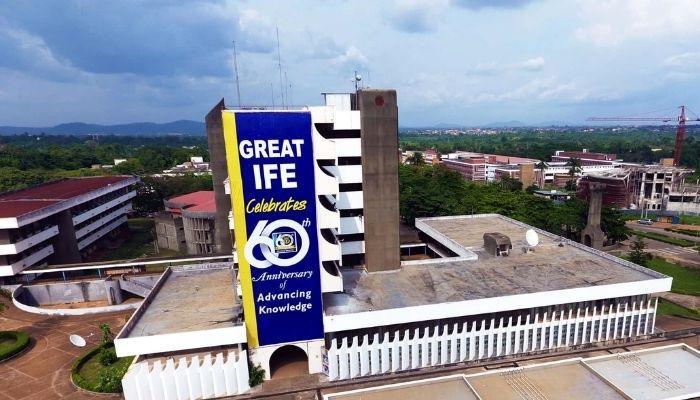
For instance, the recent protests and agitations by sections of Ile Ife indigenes demanding the appointment of Rufus Adedoyin, a professor of physiotherapy, as the 12th vice-chancellor of the Obafemi Awolowo University (OAU), Ife, was the culmination of the ethnic and religious hegemonic pattern that started four decades ago.

It would be recalled here that sections of Ife indigenes had protested the appointment of Adebayo Bamire, a professor of agriculture, as the 12th substantive VC of the university, to lead the university after the tenure of Eyitayo Ogunbodede.
The way and manner in which the people went about this agitation left much to be desired. Indigenes of Ile-Ife were seen blocking the main gate of the university community, occupying some of the vital offices in the institution armed with charms and some fetish substances meant to instil fear in the staff and occupants of the ivory tower community.
However, following the nation-wide condemnation, which included prominent Ife indigenes, it could be misconstrued that OAU and many other federal universities are centres for learning and diversity and only attempted to be distracted by the ignorance of the few.
Nevertheless, research has shown that the protest was merely a culmination of the deterioration that started four decades ago as federal universities gradually became centres for the promotion of ethnic, religious, and regional agenda, rather than the projection of learning, and sharing of ideas, and diversity.
Professor Eni Njoku, the first indigenous vice-chancellor of the University of Lagos, was booted out of the office on ethnic grounds. In 1962, Njoku was appointed the first vice-chancellor of the University of Lagos. However, following a major crisis in 1965 over his re-appointment, he resigned to become a visiting professor at Michigan State University in the United States of America.
In the same OAU, all the current principal officers are from the Western part of the country, of Yoruba origin. Eyitayo Ogunbodede, the VC, M.O. Babalola, the Deputy VC for academics, O.M.A. Daramola, the Deputy VC Administration, M.I. Omosule, the registrar, F. Z. Oguntuase, the Librarian, and S. O. Ayansina, the Bursar.
Read also: ‘Foreigners’ are not welcome in federal universities
Contrary to the broad objectives of education as a means for social movement, the equalisation of opportunities, and for the benefit of societal progress, polarised education works against all three. In the last 30 years, increasing polarised education has meant stagnation of social movement as public schools continue to spurn low-income families and deny their children the opportunities required for upward social movement.
The greatest strength of any education lies in its positive ripple effect. The knowledge, skills, and ideas one person gains can be disseminated to the whole, igniting paradigm shifts, innovation, enterprise, and the potential for wealth, development, and growth. The population of the world is growing at an alarming pace, especially in regions least able to absorb a rising population.
Ultimately, the country’s polarised educational system is a microcosm of our national orientation and this partly explains why we have not caught up with the rest of the world.
Establishing educational reform as the first frontier will ensure that we as a people can grapple with our present challenges and chart a future of progress that is both inclusive and inter-sectional.
Only then, will our best chances lie with qualified individuals at the helm of strong institutions, which will see us assume our rightful place in the world and in the discourses around the various problems contending with us as a Nation.
These problems include: scarce energy resources, growing environmental stresses, a rising global population, legal and illegal mass migration, shifting economic power, and income inequalities. In order to solve these urgent problems we need to sanitise our universities with a view to ensuring that they are no longer bastions of insularity and ghettoization.
Evidently, this is about the only way to go if we want our country to keep pace with the dynamics and tones of the 21st Century.